
Litever LED Dimmer Switch
4.8Editor score
Stepless zero-to-full dimming
Twelve or twenty-four volt input
Thirty-six watt twelve-volt capacity
Barrel connector installation
This Inline LED Dimmer Switch guide compares ten options for lamp dimming, LED strip control, rotary switches, plug-in sliders, and compact PWM controllers.
An inline LED dimmer switch adds adjustable brightness to a lamp or lighting installation without requiring a full in-wall dimmer. The right model depends on the power source, bulb type, control style, cord configuration, and whether the load uses low-voltage LED strip lighting.
This guide compares ten products across rotary, slider, foot-control, and PWM dimming designs. It examines voltage, current, wattage limits, bulb compatibility, installation method, dimming range, control layout, and special features such as adjustable low-end settings.
The recommendations show how each switch fits a particular setup, from plug-in lamp control to hardwired low-voltage LED strips. Ratings reflect the supplied customer feedback, and product details and availability can change, so readers should confirm current specifications before purchasing.
4.8Editor score

4.3Editor score

4.4Editor score
The comparison below separates low-voltage LED strip controllers from plug-in and hardwired lamp dimmers, making it easier to identify the switch that matches your fixture, power supply, and preferred control method.



The weideer 2-Pack PWM Dimmer is designed for 12- and 24-volt DC LED strip, rope, and string lighting. Its customer rating of 4.2 reflects a practical product with a strong feature set, particularly the promise of stepless control from zero to full brightness and operation without noticeable low-level flicker.
We may earn a commission when you buy through this link, at no additional cost to you.
The rotary controller uses standard 5.5-by-2.1-millimeter DC barrel connectors, making it appropriate for projects that already use that connection format. It can control common 5050, 3528, 2835, and 5630 strips as well as aquarium and ambient lighting. The package includes two black dimmers, allowing separate control of two runs or serving as a spare.
Its main constraint is the two-amp limit for each color, and the listed supply voltage is strictly DC 12 to 24 volts. Connecting it to household AC would be inappropriate. The product is therefore a strong fit for low-voltage decorative strips but not for conventional table lamps or hardwired mains fixtures.
Choose this option when you want rotary low-voltage strip control, a two-pack configuration, and broad compatibility with barrel-connected LED lighting. Verify your strip voltage, connector size, and current draw before installation to make sure the controller can safely carry the intended load.
The rotary knob allows gradual brightness changes rather than a few fixed levels. That makes it useful for display cabinets, aquarium lighting, holiday decorations, and other installations where a softer output can improve the atmosphere.
Because two units are included, you can operate two independent low-voltage runs or keep a replacement on hand. Each controller supports the same stated voltage and current range.
We may earn a commission when you buy through this link, at no additional cost to you.
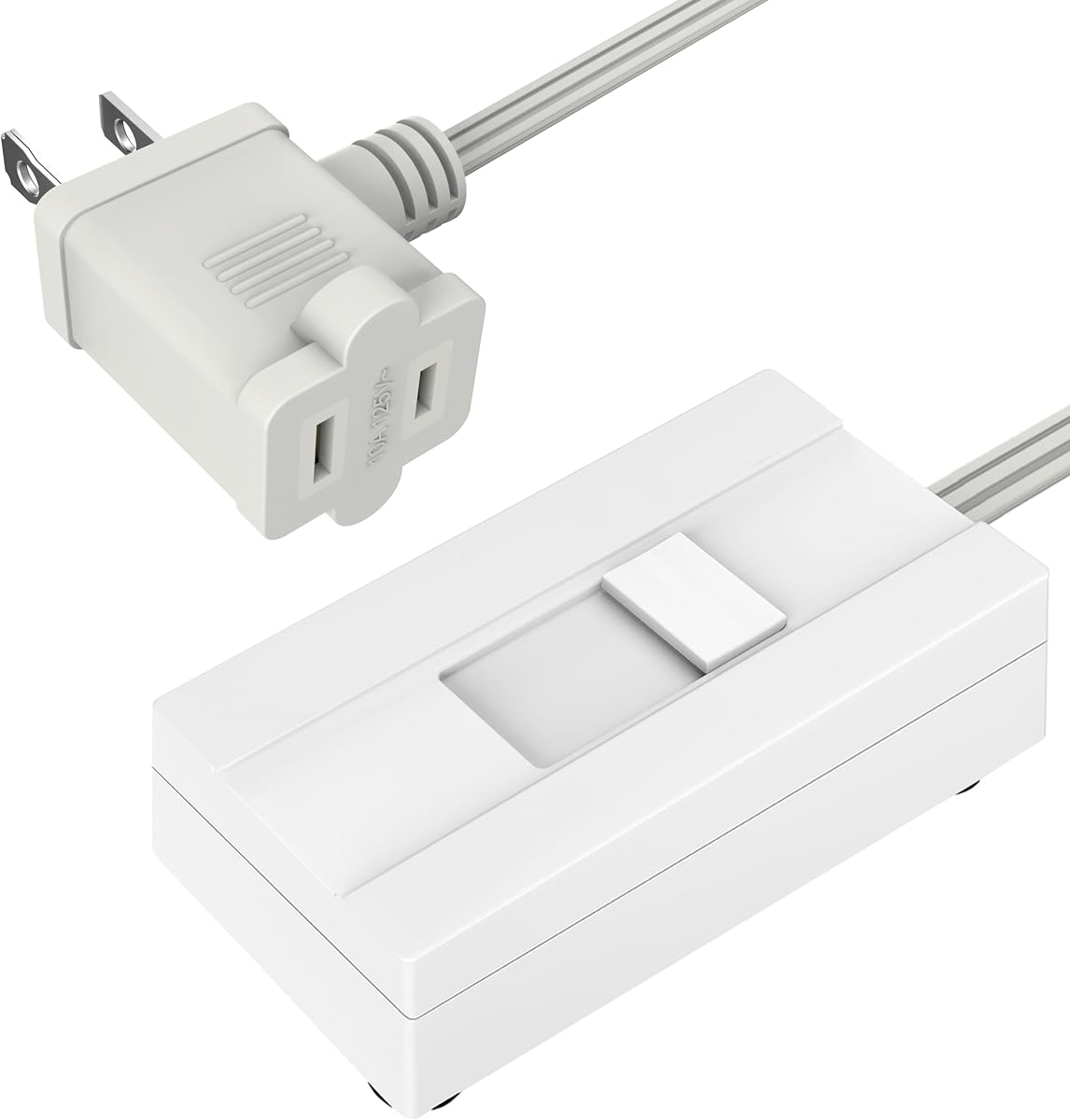
The TOPGREENER Plug-in Dimmer is an approachable solution for floor lamps, table lamps, lava lamps, and seasonal lighting that use a standard household outlet. It earns a 4.3 rating and stands out for quiet full-range adjustment, a six-foot cord, and a no-wiring installation process.
We may earn a commission when you buy through this link, at no additional cost to you.
Its stated capacity covers up to 150 watts for LED bulbs and 360 watts for incandescent bulbs at 120 volts and 60 hertz. A smooth slide control adjusts output from 10 to 100 percent, while the fire-resistant polycarbonate enclosure and ETL listing add reassurance for everyday lamp use.
The product has clearly defined exclusions. It is not compatible with motorized devices, transformers, or fans, so it should not be treated as a general-purpose appliance controller. Users should also ensure that the lamp and bulb are within the listed limits and that the cord is positioned where it will not create a trip hazard.
This is a good choice for a reader who wants a traditional lamp dimmer without opening a fixture or replacing an in-wall switch. Its longer cord makes the control easier to reach on a tall floor lamp, and the plug-in format makes it easier to move between compatible setups.
The slider is designed for quiet operation without humming, making it suitable for bedrooms, reading areas, and living rooms where abrupt or noisy switching would be distracting.
Installation requires plugging the dimmer into a compatible outlet and connecting the lamp. It avoids the work and fixture modifications associated with an in-wall dimmer.
We may earn a commission when you buy through this link, at no additional cost to you.
The DEWENWILS Plug-in Dimmer is a straightforward lighting control for users who want gradual brightness adjustment without modifying a lamp. It carries a 4.3 rating and offers a smooth slider, full-range control, and a five-foot cord that can be positioned within easy reach.
We may earn a commission when you buy through this link, at no additional cost to you.
Compatibility covers up to 100 watts for dimmable LED or CFL bulbs and up to 300 watts for incandescent bulbs at 110 to 120 volts AC. The slider brightens or dims gradually, and moving it into the off position disconnects power completely. That makes it practical for bedside, table, nursery, and holiday lighting.
Unlike adjustable-range models in the lineup, this version does not offer a dedicated setting to alter the low end for LEDs and CFLs. It also supports a lower maximum LED wattage than the TOPGREENER model. Those limitations make it more appropriate for one or two standard bulbs than for a heavily populated multi-lamp fixture.
This dimmer is a sensible pick for a reader who values uncomplicated setup and smooth control. Verify that the bulb is specifically dimmable, confirm the fixture remains within the wattage limit, and use a properly rated outlet before connecting the lamp.
Stepless slider movement offers finer control than a switch with only high, medium, and low positions. The gradual change is especially useful for reading, winding down, and decorative lighting.
The inline form sits in the lamp cord rather than inside an in-wall electrical box. Setup requires no wiring changes, making the product suitable for renters and temporary lighting arrangements.
We may earn a commission when you buy through this link, at no additional cost to you.
The UL-Certified 2-Pack Inline Dimmer is designed to convert a conventional lamp or pendant into a fixture with rotary brightness control. Its 4.1 rating reflects a functional design supported by independent UL certification and compatibility with dimmable LED, incandescent, and halogen bulbs.
We may earn a commission when you buy through this link, at no additional cost to you.
The knob adjusts from zero to 100 percent, while the inline housing saves space compared with a large in-wall control. Installation is based on peeling back the wires, stripping the insulation, inserting the conductors into the terminal channels, and tightening the screws. The stated installation time is usually less than five minutes.
There are meaningful boundaries. The fixture power must remain below 100 watts, and the product must not be used with smart bulbs, smart lamps, three-way fixtures, motor-operated appliances, or transformer-supplied devices. The hardwired construction also creates more installation complexity than a plug-in slider.
Pick this model when you want a compact rotary switch embedded in a lamp cord and value the stated UL certification. It is especially useful for replacing a worn inline switch while adding dimming, provided the existing fixture meets every compatibility condition.
The product description identifies independent lab testing and a UL certificate number, giving it a documented safety distinction compared with switches that make only general compliance claims.
The compact inline controller preserves the appearance of the lamp while placing a familiar rotary dimmer directly in its cord. It suits table lamps, floor lamps, and pendant lights.
We may earn a commission when you buy through this link, at no additional cost to you.
The Zing Ear ZE-03A Dimmer Kit is a two-wire rotary switch intended primarily for table and floor lamps, with a stated electrical rating of 120 or 240 volts AC and a maximum load of 300 watts. It holds a 4.6 rating and includes four knobs, offering useful replacement options for matching the controller to a fixture.
We may earn a commission when you buy through this link, at no additional cost to you.
The kit is positioned as a replacement for worn or defective dimmer controls. Its full-range rotary operation includes an on-off setting, and the included leads allow it to be integrated into a compatible lamp. Listed certifications include UL, CUL, and CQC, while the housing is made from plastic.
The product description specifically identifies compatibility with incandescent and halogen floor-lamp applications and says the kit is for indoor use with incandescent lighting. Despite appearing in a roundup centered on LED dimmers, it should not be assumed that modern LED bulbs will behave identically across every LED or dimmable bulb combination.
This kit is most appropriate for someone replacing an existing incandescent or halogen lamp dimmer and needing a rotary controller with replacement knobs. Confirm the lamp wiring, bulb type, voltage, and dimming compatibility before installation rather than treating the 300-watt rating as universal LED support.
Four knobs are included, which is helpful when an original controller has discolored, cracked, or become difficult to grip. The added pieces also provide flexibility when matching a lamp's existing control.
The two-wire construction and included leads are designed for integration into a compatible light fixture. It is a targeted repair option rather than a universal plug-in dimmer.
We may earn a commission when you buy through this link, at no additional cost to you.
The Litever LED Dimmer Switch is a compact PWM controller for 12- and 24-volt LED systems. It has the highest customer rating in this group at 4.8, and its central strengths are stepless zero-to-100-percent dimming, a three-amp maximum current, and a straightforward connector-based installation.
We may earn a commission when you buy through this link, at no additional cost to you.
The specified maximum output is 36 watts at 12 volts or 72 watts at 24 volts. Male and female DC5521-style connections are listed, and the product information notes that the adapter and LED-light input should use compatible 5.5-by-2.1-millimeter DC connectors. PWM control is well suited to single-color low-voltage lighting where smooth adjustment is desired.
Its limits are equally important. It is not a mains-voltage lamp dimmer, and it depends on compatible barrel connections rather than screw terminals or an AC plug. A strip that draws more current or uses a different connector may require an adapter or another controller type.
This is the top budget recommendation for a compact, well-reviewed low-voltage dimmer. Select it for single-color LED strips and other compatible 12- or 24-volt products after checking the strip's power consumption, connector type, and the output specification of the power supply.
PWM-based control provides a continuous brightness range rather than a small set of preset levels. That makes the controller well suited to accent, display, and decorative lighting.
The three-amp rating allows more output than several lower-current inline controllers, while the stated wattage limits make expected load easier to calculate before installation.
We may earn a commission when you buy through this link, at no additional cost to you.
The DEWENWILS Adjustable Plug-in Dimmer is the editor's choice for readers who want more precise LED behavior from a simple inline lamp dimmer. It carries a 4.3 rating and adds a SET control that lets users define the usable low end for compatible LED and CFL bulbs.
We may earn a commission when you buy through this link, at no additional cost to you.
The slider offers full-range stepless dimming, and an off position removes power completely. Anti-slip pads on the underside help prevent the controller from shifting while it is being adjusted. Its listed limits are up to 100 watts for dimmable LED or CFL bulbs and 300 watts for incandescent bulbs at 110 to 120 volts AC.
The adjustable range is the key differentiator. Some dimmable LED bulbs have a relatively high minimum output or become unstable at low settings. By establishing a preferred lower boundary, the SET switch can help prevent flickering at low voltage and create a smoother usable range.
The five-foot cord allows the control to be moved to a convenient position, and no in-wall wiring is needed. Choose this model for bedside lamps, table lamps, night lights, or nursery lighting where LED compatibility and a stable low setting are more important than supporting the highest lamp wattage.
The SET switch narrows or widens the dimmer's lower range according to the bulb's behavior. This is especially valuable for LED and CFL loads that may otherwise flicker or become unusable near the bottom of the slider.
A five-foot cord places the slider within reach, while the anti-slip pads help it remain stable during adjustment. The inline design avoids permanently modifying wall wiring.
We may earn a commission when you buy through this link, at no additional cost to you.
The DEWENWILS Foot Dimmer is a plug-in dimmer intended for users who prefer adjusting brightness without reaching for a hand control. It has a 4.3 rating and combines a foot-operated slider with an adjustable low-end range for compatible LED and CFL bulbs.
We may earn a commission when you buy through this link, at no additional cost to you.
The switch supports up to 100 watts of dimmable LED or CFL bulbs and up to 500 watts of incandescent bulbs at 110 to 120 volts AC. It provides stepless adjustment and includes a SET switch and indicator light for establishing a comfortable low range. Anti-slip pads help prevent movement during use.
Compared with a conventional inline slider, the larger foot-control housing needs to be placed where it can be reached and will not create a trip hazard. It works best beside a table or floor lamp where the control can sit on the floor or a low surface. Its listed incandescent capacity is the highest among the DEWENWILS models in the roundup.
This is a strong option for a reader who wants frequent, convenient adjustments while seated. Confirm that the lamp uses a compatible bulb, remains within the wattage limit, and can be positioned with safe access to the foot control.
The foot slider allows brightness changes without interrupting other activities. That convenience is especially valuable for reading, working, or relaxing near a lamp.
The SET control and indicator light let users establish a lower brightness boundary that reduces the chance of low-level flicker with compatible LED and CFL bulbs.
We may earn a commission when you buy through this link, at no additional cost to you.
The SUPERNIGHT 12V Dimmer is a single-channel PWM controller designed for higher-current 12-volt LED strip installations. It carries a 4.3 rating and stands out through its eight-amp channel capacity, aluminum housing, rotary control, and ability to work with amplifiers for extending the load.
We may earn a commission when you buy through this link, at no additional cost to you.
It supports common single-color SMD strip types, including 3528, 5050, 5630, 5730, and 3014. Screw-in input and output terminals make the electrical connection more permanent and flexible than a barrel-plug controller. Pre-drilled mounting holes also help secure the unit in a fixed lighting project.
The important limitation is that it is for 12-volt DC single-color strips, not RGB strips. Users should also account for the relationship between current and power when sizing the controller and power supply. The stated output is a constant-voltage and constant-current arrangement that can be extended with compatible amplifiers.
Choose this product for a fixed low-voltage installation where a permanent terminal connection and greater current capacity matter. It is less appropriate for a quick tabletop experiment or for color-changing RGB strip, but it provides a solid rotary option for appropriately sized single-color projects.
The eight-amp channel is more generous than the current limits of several other low-voltage controllers in the guide, making the unit relevant to longer or more heavily populated strips.
Screw terminals and predrilled mounting holes suit installations intended to remain in place. They offer a tidier and more secure approach than a temporary plug-in arrangement.
We may earn a commission when you buy through this link, at no additional cost to you.
The niceEshop 12 Volt Inline PWM Dimmer is a dedicated controller for 12-volt single-color LED products. It has a 4.3 rating and its defining feature is broad compatibility within that category, allowing it to dim 12-volt DC LED products rather than being tied to one specific strip layout.
We may earn a commission when you buy through this link, at no additional cost to you.
Its inline construction and DC jack connection provide a straightforward path between a compatible power source and the LED product. PWM control supports gradual brightness adjustment, while the two-amp output is sufficient for many common decorative and accent-light installations.
The specification is narrower than that of some alternatives. It operates at 12 volts rather than a broader voltage range, is intended for single-color applications, and has a two-amp current limit. Longer runs or higher-power strips should be checked against the controller's limits before connection.
This is a compelling premium pick for a user who values broad single-color compatibility and a clean inline format. It is best suited to a known 12-volt installation with matching DC connectors and a load safely within the two-amp rating.
Because the controller is described as universal for 12-volt DC LED products, it can be useful when the project may include more than one type of single-color lighting accessory.
The DC jack format keeps the controller within the lighting cable run. PWM adjustment then provides smooth brightness control without adding a wall-mounted control box.
We may earn a commission when you buy through this link, at no additional cost to you.
The correct inline dimmer depends first on the type of lighting being controlled. Voltage, wattage, connectors, bulb compatibility, installation method, and control preferences then determine which model can be used safely and effectively.
Voltage is the most important distinction in this category. A conventional table lamp usually runs on 120-volt AC, while many LED strips use 12- or 24-volt DC. These systems are not interchangeable, and a low-voltage PWM controller must never be connected to household AC. The weideer, Litever, SUPERNIGHT, and niceEshop options are intended for low-voltage DC lighting, while the plug-in and hardwired lamp models target mains-powered fixtures.
In summary, match the dimmer to the exact voltage supplied to the lighting, and treat DC and AC models as separate categories rather than interchangeable versions of the same product.
Check both the current and wattage limits published for the dimmer. The Litever supports up to three amps, the SUPERNIGHT lists an eight-amp channel, and the weideer and niceEshop controllers are rated at two amps. Mains-powered options use bulb wattage limits that vary by model. A load below the maximum is important, but using a controller near its ceiling can also leave little margin for inrush or power-supply variation.
In summary, calculate the normal operating load first, compare it with both current and wattage ratings, and choose a model with a suitable amount of headroom.
Connection style determines whether a product will work with little effort or require rewiring. Plug-in dimmers use a standard two-prong plug and an extension cord. Barrel-style low-voltage controllers need matching DC connectors, while the SUPERNIGHT uses screw terminals. The UL-certified and Zing Ear models are hardwired inline replacements for compatible fixtures. A connector or terminal arrangement that does not match the installation can rule out an otherwise capable dimmer.
In summary, inspect the power cord, adapter, and controller connections before choosing a model, and favor the method your existing installation already supports.
Not every light source behaves identically with every dimmer. Plug-in products generally require dimmable LED or CFL bulbs where LED support is claimed, and some are also compatible with incandescent lamps. Low-voltage PWM controllers are intended for single-color strips and should not be assumed to control RGB equipment. The Zing Ear kit is specifically described for incandescent and halogen lamp applications and indoor use.
In summary, verify the exact bulb or strip type, color capability, and any restrictions listed by the manufacturer before making a final selection.
A rotary knob provides precise, tactile adjustment and works well in a fixed installation. A slider offers a visible response and is convenient for plug-in lamp use. A foot control reduces the need to reach down, while a large inline housing may be better for users who value a substantial grip. The SUPERnight and Litever controls also use rotary knobs, whereas the DEWENWILS products use sliders or a foot-operated mechanism.
In summary, select the interface you will be comfortable operating repeatedly, taking into account grip, reach, cord placement, and the location of the lamp.
Basic range control is not always enough for LED loads. Some dimmable LED bulbs have a high minimum output or flicker near the bottom of the slider. The DEWENWILS adjustable-range model includes a SET control to define a more stable low end. PWM-based low-voltage controllers are designed for smooth adjustment, while products advertising low-brightness flicker control may be useful where visible banding or instability would be distracting.
In summary, look for adjustable low-end settings, stepless movement, or PWM control when LED compatibility and smooth low-level output are priorities.
For a hardwired or plug-in device connected to household electricity, independent certification is an important consideration. The TOPGREENER and selected DEWENWILS models are ETL certified, and the UL-certified two-pack includes a stated certificate number and test report reference. The Zing Ear kit lists UL, CUL, and CQC certification. Low-voltage DC products have different electrical considerations, but they should still be matched correctly to their power source.
In summary, prefer documented safety certification for mains-connected switches, and follow all installation instructions rather than relying on appearance alone.
The physical location of a plug-in dimmer affects usability and safety. A six-foot cord may reach from a nearby outlet, while a five-foot cord can make the control easier to position beside a bed or sofa. A foot dimmer needs stable floor placement and should not create a trip hazard. Hardwired inline switches save cord space, but installation requires opening the fixture and working with electrical leads.
In summary, measure the distance from the outlet or lamp, ensure the controller is easy to reach, and keep cords and controls where they will not be pinched, pulled, or stepped on.
Begin by identifying the lamp or strip, its power source, and the total load. Confirm that the voltage, connector, bulb type, and current or wattage fall within the dimmer's stated limits. For any mains-powered hardwired model, disconnect power before touching the wiring and follow the manufacturer's installation instructions.
Install the dimmer where it can be reached without pulling on the cord. Plug-in models should sit securely on a stable surface, foot controls need unobstructed access, and low-voltage controllers should be mounted without stressing their connectors or terminals. After installation, test the full brightness range and the off position before leaving the setup unattended.
Operate the slider or knob gradually, especially with LED bulbs, and use the low-end adjustment feature if the supplied model includes one. Keep the controller dry, avoid pinching its cord, and do not exceed its electrical ratings. Low-voltage controllers should be connected only to a matching DC supply, while low-voltage DC equipment must never be attached to household AC.
No. The lamp's bulb should be explicitly marked as dimmable, and its wattage must remain within the dimmer's limit. LED bulbs that are not designed for dimming may remain at full brightness, flicker, or behave unpredictably. Always check the compatibility notes for the exact model and fixture.
No. A 12-volt DC strip dimmer is designed for a low-voltage DC lighting system, not 120-volt AC household wiring. Connecting the two systems together could damage the controller and create a serious safety hazard. Use a listed lamp dimmer for mains-powered fixtures and a compatible low-voltage controller for strips.
PWM dimming is common in low-voltage LED strip controllers and reduces perceived light output by pulsing the LED current rapidly. Triac dimming is used with many 120-volt lamp fixtures and controls power delivered to the load. The two systems are not interchangeable, so the dimmer must match the lighting technology and power supply.
The bulb's minimum load and the dimmer's low output may not overlap reliably, which is common with some LED and dimmer combinations. A model with an adjustable low-end range can help establish a stable usable minimum. If flickering persists, test a different compatible dimmable bulb and verify that the total load is within the stated limit.
The single-color controllers in this guide are not intended for RGB strips, and the SUPERNIGHT explicitly excludes RGB use. RGB lighting usually requires a multichannel controller with separate color controls. Confirm that the controller supports every color channel and the strip's electrical configuration before purchasing.
A properly rated plug-in dimmer can be convenient because it requires no wall-wiring changes, but safety still depends on correct wattage limits, bulb compatibility, outlet condition, and proper operation. A hardwired inline or in-wall dimmer may be preferable for a permanent installation. Either approach should follow the manufacturer's instructions and local electrical requirements.
Calculate the combined wattage of all connected bulbs rather than looking at one socket alone. A 60-watt bulb in one socket may be acceptable, while two 60-watt bulbs may exceed a 100-watt limit. Also check whether the fixture, socket, and bulb type are compatible with dimming.
Turning off the supply removes the electrical hazard while wires, terminals, or connectors are being handled. For low-voltage DC systems, disconnecting the power supply also prevents accidental energization during connection. Even when a connector appears simple, it is safest to disconnect power before making any change.
The Litever LED Dimmer Switch is the best budget-oriented choice for compact 12- or 24-volt PWM control, while the DEWENWILS Adjustable Plug-in Dimmer offers the most practical feature set for a mains-powered LED or CFL lamp. The niceEshop controller earns the premium recommendation for readers who want broad 12-volt single-color compatibility in a simple inline format.
Prioritize electrical compatibility before control style. Confirm voltage, current or wattage, bulb or strip type, and connector method, then choose the dimming behavior that fits the installation. A rotary knob suits precise control, a slider works well for reachable lamp cords, and an adjustable low-end setting can materially improve LED performance.
Product specifications, ratings, and availability can change, and current pricing should be checked at the time of purchase. Comparing the dimmer with the actual fixture and power supply will prevent most mismatches and help ensure a safer, more satisfying installation.
