
Uniden BC365CRS
4.2Editor score
500 conventional analog channels
Integrated FM radio and clock
Priority channel monitoring
This expert guide compares 10 fire and police scanner for home use options, covering analog and digital reception, programming, alerts, displays, and setup.
A home fire and police scanner can provide timely awareness of local emergencies, severe weather, public safety traffic, and other broadcasts, but the right model depends heavily on the radio systems used nearby. Analog scanners are simple and affordable, while digital trunking models support more modern agencies and offer richer programming tools.
This guide compares ten scanners based on reception capabilities, channel capacity, system support, programming methods, weather functions, displays, alert features, and suitability for home use. It includes conventional analog units, portable digital scanners, location-aware handheld models, and base or mobile scanners designed for more demanding monitoring.
Each review explains the standout capabilities, practical limitations, and ideal buyer for every model in the ranking. The selections also reveal why radio-system compatibility should matter more than headline channel counts, while current product details and pricing should be confirmed before purchasing.
4.2Editor score

4.2Editor score

4.5Editor score
The comparison below highlights each scanner's radio-system support, programming approach, channel capacity, and home-use features. It is designed to clarify which model fits an analog market, a modern digital market, or a mixed monitoring environment.




The Uniden BC365CRS combines a 500-channel conventional analog scanner with an FM radio and alarm clock, earning a 4.2 rating among buyers. Its appeal for home use comes from the balance between useful scanning features and a straightforward desktop format. The backlit display, clearly arranged buttons, and built-in clock make it particularly natural for bedside or office monitoring.
We may earn a commission when you buy through this link, at no additional cost to you.
Preset service groups give users quick access to non-digital police, fire, emergency, weather, marine, aircraft, amateur radio, railroad, and other bands. Thirty FM stations can also be stored, while priority channels are checked every two seconds during a scan. That combination makes the scanner more useful than a bare monitoring radio without requiring a complex digital programming workflow.
The important limitation is that this is a conventional analog scanner. It cannot receive Project 25, DMR, NXDN, or digital trunking traffic, so it may not follow many larger-city police and fire departments. It also lacks the advanced alert customization, replay, and location-aware programming found in higher-end models. Those trade-offs are acceptable for buyers in areas where local agencies still operate analog systems.
This is a strong budget pick for a home listener who wants fire, police, weather, aviation, marine, railroad, and FM reception in one compact unit. Check the radio systems used by local agencies before ordering. If they remain conventional analog, the BC365CRS offers one of the most approachable ways to begin home scanning.
The integrated FM radio and alarm clock make the BC365CRS more versatile than a dedicated scanner. It can wake to a scan, weather channel, or favorite FM station while keeping emergency and public-safety presets close at hand.
Its clear backlit LCD and accessible button layout reduce friction in low-light settings. That makes the unit especially practical for a home office, kitchen, or bedside area where a portable scanner would be less convenient.
We may earn a commission when you buy through this link, at no additional cost to you.
The Uniden BC355N is a 300-channel base/mobile analog scanner with a 4.0 rating. It serves as an approachable entry point for listening to conventional police, fire, emergency medical, marine, aircraft, weather, and CB traffic. Unlike a fixed desktop-only design, it includes an AC adapter, DC power cable, and automotive power plug for flexible placement.
We may earn a commission when you buy through this link, at no additional cost to you.
Close Call RF Capture is the model's most useful discovery feature. Instead of relying only on a known frequency list, the scanner can tune to nearby transmitters and reveal active channels. Users can store up to 300 frequencies alongside the preset banks, allowing local discoveries to be added to the appropriate service category. The aircraft range and NOAA weather coverage add value for home monitoring beyond emergency traffic.
Its main weakness is the same limitation that affects many affordable conventional scanners: it cannot decode Project 25, DMR, NXDN, or digital trunked systems. Local agency technology must therefore be checked before purchase. It also lacks the integrated alarm clock, FM radio, customizable digital alerts, and instant replay offered by some newer alternatives.
The BC355N fits buyers who want a traditional scanner that can move between a home and vehicle and can find active analog frequencies without extensive manual programming. It is a sensible value-oriented choice for areas with conventional systems, but it is not a good match for a modern trunked public-safety market.
Close Call RF Capture helps new users locate active nearby transmitters without starting from an entirely blank program. The feature makes local discovery more accessible, although it does not make an analog scanner compatible with digital agencies.
The included home and vehicle power options make this scanner adaptable for a fixed listening post or mobile use. A backlit display supports low-light operation during overnight monitoring.
We may earn a commission when you buy through this link, at no additional cost to you.
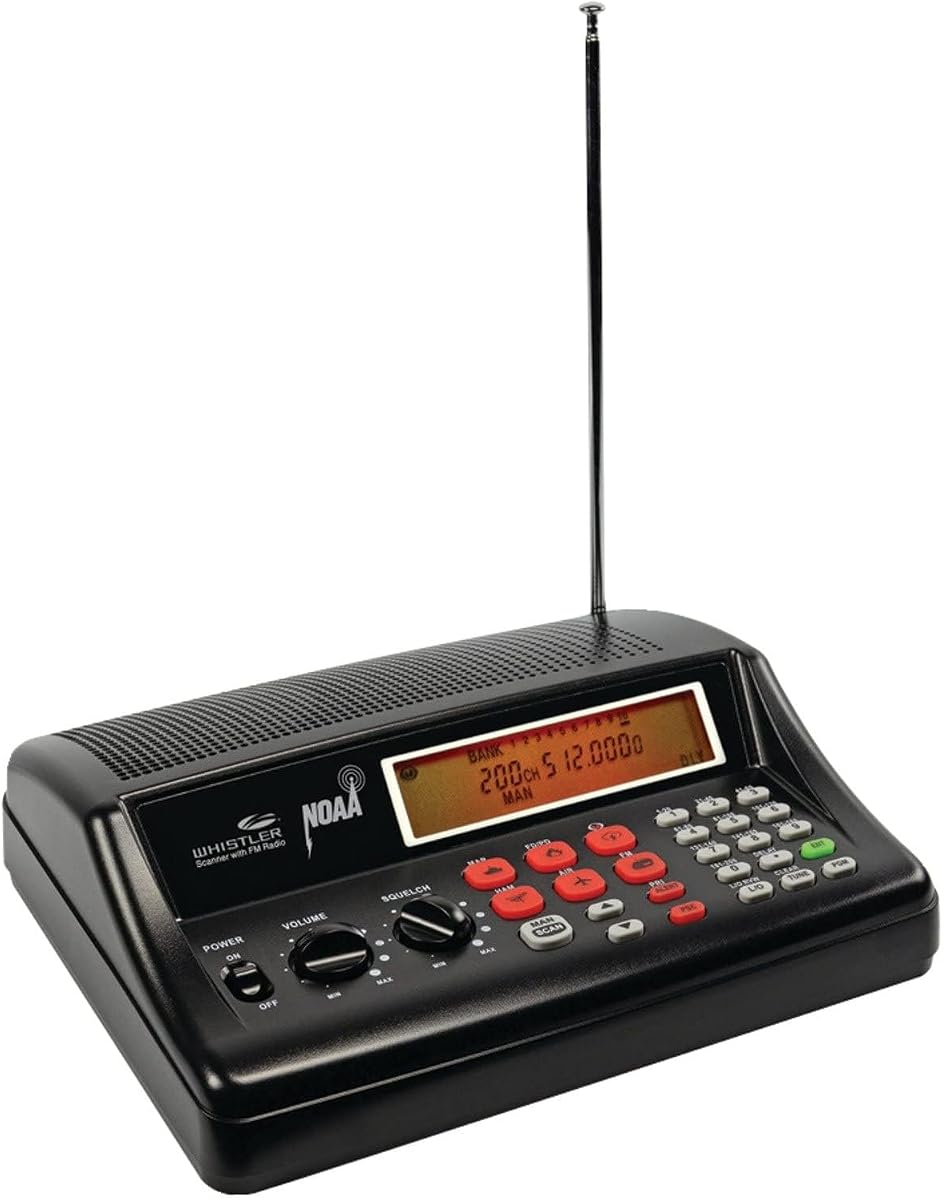
The Whistler WS1025 is a programmable 200-channel analog desktop scanner rated 4.1 by users. Its controlled feature set focuses on core scanning functions rather than the clock, radio, and large channel bank offered by the BC365CRS. That specialization makes it relevant to listeners who already understand frequency programming and want a dedicated police, fire, and weather receiver.
We may earn a commission when you buy through this link, at no additional cost to you.
A priority channel can be checked every two seconds while the scanner continues searching other programmed frequencies. Its two-second scan delay pauses before moving to another channel, which helps listeners hear brief replies that might otherwise be missed. The Tune function begins searching from a selected frequency, making it possible to explore new and unlisted activity.
The WS1025 is analog-only, so it cannot follow modern digital trunking systems or digital talk groups. Its 200-channel limit is also more modest than the 300- and 500-channel conventional models in this list. The supplied information specifically recommends it for experienced desktop-scanner users, which suggests buyers should be comfortable entering frequencies and organizing their own lists.
Home users should choose the WS1025 when they want a compact, dedicated analog desktop scanner and already have a programming strategy. It may be a better fit than a feature-heavy all-in-one device, but modern metropolitan areas may require one of the digital-capable alternatives instead.
The two-second scan delay gives dispatch replies and brief follow-up traffic more time to begin. This is particularly useful when monitoring tactical or rapidly moving conversations on conventional channels.
Starting a tune operation from a chosen frequency helps experienced users investigate local activity. It is less beginner-oriented than a database-driven scanner, but it offers direct control.
We may earn a commission when you buy through this link, at no additional cost to you.
The Whistler WS1065 is a 4.2-rated digital desktop scanner that combines 1,800 memory channels with support for major trunked radio systems. It is a compelling middle ground for home users who need modern digital reception and detailed control but do not necessarily want a large color-screen base unit. Its programmable multicolor alert LED is especially useful for watching several agencies at once.
We may earn a commission when you buy through this link, at no additional cost to you.
Automatic Adaptive Digital Tracking is designed to follow shifting P25 signals affected by multipath and fading, while digital automatic gain control helps maintain usable audio. NAC filtering can reduce unwanted transmissions. The radio supports Motorola, EDACS, LTR, and P25 Phase 1 trunked systems, along with talk-group and individual-call monitoring.
Its programming model is more involved than the location-based database interfaces of the HomePatrol-style scanners. It does, however, provide menu-driven help, USB transfers, cloning between units, a spectrum sweeper, and a free-form memory structure. Users must understand system IDs, talk groups, frequencies, and other programming concepts to use its capabilities fully.
The WS1065 is best for a dedicated home listener whose area uses supported digital trunking and who wants advanced alerts and signal management. It is a stronger choice than an analog desktop unit for modern public-safety monitoring, provided the buyer is comfortable with scanner programming.
Adaptive digital tracking adjusts as signals shift, which can improve continuity on difficult P25 systems. Digital AGC and NAC filtering also make it easier to hear intended traffic clearly.
The customizable alert LED supports up to eight user-defined colors, while programmable audible alerts can distinguish important events. This is particularly helpful in a home setup where visual notifications may be noticed before audio.
We may earn a commission when you buy through this link, at no additional cost to you.
The Uniden HomePatrol-2 brings approachable database-based programming to a color touchscreen digital scanner and holds a 4.1 rating. Instead of requiring the user to build every frequency list from scratch, it lets listeners browse radio services and choose the agencies or systems they want, making it one of the most approachable advanced scanners in this roundup.
We may earn a commission when you buy through this link, at no additional cost to you.
The scanner supports unencrypted, non-proprietary APCO P25 Phase I and Phase II, Motorola, EDACS, LTR, conventional analog, and P25 digital channels. Sentinel software helps manage favorites lists, database updates, firmware, and other settings. It can also monitor aircraft, military, weather, ambulance, and other unencrypted traffic, subject to legal and technical limitations.
The touchscreen is convenient compared with navigating a dense physical keypad, although its age may be apparent to buyers accustomed to newer devices. The unit cannot receive encrypted or proprietary radio systems, so it is not universal. Its performance and usable features also reflect a digital platform that predates some newer models in the ranking.
HomePatrol-2 is a compelling pick for listeners who want a digital scanner without manually researching every system. It combines easy service selection, weather functions, broad radio-system support, and a large database covering the United States and Canada. For a buyer prioritizing approachable programming over the newest hardware, it remains a well-rounded choice.
Selecting services from the touchscreen dramatically reduces the work required to find local agencies. The included Sentinel software keeps the underlying system database and firmware current for supported regions.
Support for P25, Motorola, EDACS, LTR, and conventional analog traffic makes the scanner adaptable to many regional systems. Encryption and proprietary networks remain outside its capabilities, however.
We may earn a commission when you buy through this link, at no additional cost to you.
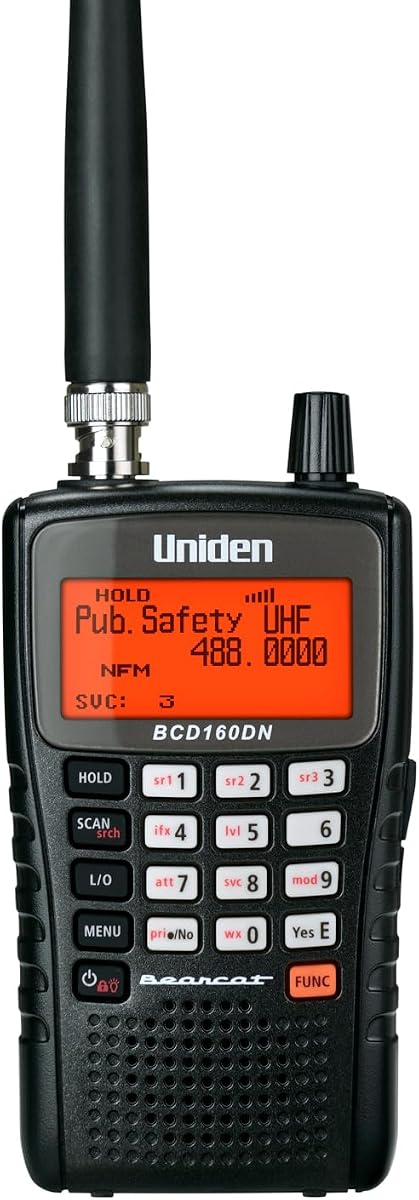
The Uniden BCD160DN is a compact handheld digital scanner with a 3.2 rating, making it the least favorably rated model in this list. It nevertheless offers a focused set of tools for DMR and NXDN users, including rapid decoding, narrow-band reception, custom frequency searching, and a Band Scope function designed to identify active systems and channels quickly.
We may earn a commission when you buy through this link, at no additional cost to you.
Its 1,000-channel capacity gives listeners substantial room to organize local systems. Preloaded DMR and NXDN support allows the scanner to begin working with compatible conventional digital traffic without extensive configuration, while free Uniden software can manage profiles, favorites lists, databases, and firmware updates.
The most consequential limitation is explicit: APCO P25 trunking is not supported. Although the scanner includes 1,000 channels, it cannot follow the major P25 trunked systems used by many police and fire departments. Its 3.2 rating also suggests more mixed buyer experiences, making it important to evaluate the return and warranty terms offered at purchase.
BCD160DN is most appropriate for a listener whose local agencies use conventional DMR or NXDN and who values portability, preloaded protocols, and rapid signal discovery. It is not the strongest choice for broad public-safety coverage in a modern metropolitan area, where P25 compatibility is often essential.
DCS and CTCSS rapid decode, Band Scope tagging, and narrow-band reception help users identify unfamiliar signals. These features can shorten the process of building a useful local program.
Two rechargeable AA Ni-MH batteries are included, and the scanner can also operate with alkaline cells. Its handheld format makes it easy to move between rooms or take on a trip.
We may earn a commission when you buy through this link, at no additional cost to you.
The Uniden BCD436HP is a 4.2-rated HomePatrol-series digital handheld that combines database-driven simplicity with advanced monitoring tools. Entering a zip code lets the radio select relevant nearby systems, while Radio Reference data and Uniden's selection methods help it identify systems in the United States and Canada without conventional manual programming.
We may earn a commission when you buy through this link, at no additional cost to you.
Its extra-large display presents useful system information, and TrunkTracker V can scan at a stated 85 channels per second. GPS connectivity enables location-based system selection, while Discover and Radio System Analysis modes help users investigate nearby activity. The scanner also supports up to 240 seconds of instant replay, allowing recent transmissions to be heard again.
Custom alerts are unusually flexible. Users can select from nine tone patterns, 15 volume settings, seven colors, and three flash patterns, with alerts tied to channel or unit IDs, Close Call hits, emergency transmissions, or tone-outs. These features are excellent for focused home monitoring, although some functions still require programming and familiarity with digital systems.
BCD436HP is an excellent match for a buyer who values both simplicity and advanced handheld features. It may be used around the home, carried while traveling, or placed near a window with a suitable GPS receiver. Its older hardware and handheld battery requirement are the main reasons to consider a newer desktop alternative.
GPS support can automatically select relevant systems as the user moves. This is particularly useful for travel, since the scanner can refocus on communications appropriate to the current area.
Instant replay can retrieve the most recent transmissions when a key detail is missed. It adds a useful safety net during fast-moving incidents without changing the fundamental need to monitor continuously.
We may earn a commission when you buy through this link, at no additional cost to you.
The Uniden BCD996P2 is a powerful base/mobile digital scanner rated 4.2, with a stated capacity of 25,000 dynamically allocated channels. That capacity makes it appropriate for listeners who maintain extensive regional favorites, travel between areas, or want room for many conventional and trunked systems in one programmable platform.
We may earn a commission when you buy through this link, at no additional cost to you.
TrunkTracker V supports APCO P25 Phase 1 and Phase 2, X2-TDMA, Motorola, EDACS, LTR, conventional analog, and P25 digital channels. Close Call RF Capture identifies nearby transmissions, while its Do-Not-Disturb behavior checks for Close Call activity without interrupting the current channel. A four-line alpha display shows more descriptive information than many older mobile scanners.
S.A.M.E. weather alerts can issue location-specific severe-weather warnings. When linked to a compatible GPS receiver, the unit can automatically choose programmed systems according to the user's exact location, reducing the need to select systems manually while moving. The GPS receiver is an optional accessory rather than a standard part of the stated package.
BCD996P2 is a strong home installation for listeners who want extensive capacity, mobile flexibility, and broad digital-system coverage. Its older control layout and programming demands make it less approachable than the touchscreen HomePatrol-2, but more rewarding for users who need advanced control and broad regional monitoring.
Dynamic memory allocation makes the scanner's channel capacity more practical than a fixed-bank figure. Users can organize extensive regional interests without wasting memory on unused channel slots.
S.A.M.E. alerts provide area-specific emergency warnings, while external GPS support improves automatic system selection. Together, they support more location-aware home monitoring.
We may earn a commission when you buy through this link, at no additional cost to you.
The Uniden BCT15X is a 4.0-rated base/mobile scanner built around 9,000 channels, TrunkTracker III, and Close Call RF Capture. It supports Motorola, EDACS, and LTR trunked systems, offering a different technical profile from the conventional-only and modern P25-focused models in this list.
We may earn a commission when you buy through this link, at no additional cost to you.
State-by-state preprogrammed channels for local police, Department of Transportation, and Highway Patrol frequencies make the BCT15X especially useful for travel. A compatible GPS receiver can trigger location-based scanning, and 100 system Quick Keys with ten-channel group keys help users move through favorites quickly. Continuous band coverage extends from 25 MHz to 1.3 GHz, excluding UHF television and cellular bands.
Despite having trunking features, the supplied information explicitly states that the BCT15X is not a digital scanner. It therefore cannot decode modern digital public-safety formats such as P25, DMR, or NXDN. That limitation may make it unsuitable for many current metropolitan agencies, regardless of its large nominal channel count.
BCT15X makes sense for a buyer seeking an established mobile scanner with strong travel presets and support for older Motorola, EDACS, or LTR systems. For a new home installation in a modern market, a digital model such as the BCD436HP, BCD996P2, HomePatrol-2, or SDS200 will usually offer more relevant compatibility.
Preprogrammed state-by-state police and highway-patrol frequencies reduce setup time away from home. GPS-based scanning can further refine the list as the vehicle changes location.
The scanner remains relevant for Motorola, EDACS, and LTR trunked traffic. Its lack of modern digital decoding, however, narrows its usefulness in areas dominated by P25 systems.
We may earn a commission when you buy through this link, at no additional cost to you.
The Uniden SDS200 receives a 4.5 rating, the highest among the ten scanners reviewed, and stands as the premium choice for a serious home monitoring setup. Its Software Defined Radio architecture and True I/Q technology are designed to provide dependable digital decoding, including under the difficult conditions associated with simulcast systems.
We may earn a commission when you buy through this link, at no additional cost to you.
The large 3.5-inch color display can be tailored field by field, allowing users to show only the information they need. The unit includes a HomePatrol database of known US and Canadian radio systems, with the main database updated weekly. Favorites Scan supports combinations of saved lists and the full database, while custom programming is available through Sentinel, ARC-536, or direct front-panel entry.
Location can be entered by postal code or GPS coordinates, and Auto-locate helps when the user does not know their exact position. An external GPS receiver enables more precise system selection as the user travels, although that receiver is not included. The package is well suited to a fixed installation, offering an AC adapter, multiple DC power cords, a desk stand, and a telescoping antenna.
SDS200 is the best fit for an enthusiast who wants exceptional digital performance, a polished home display, and extensive programming freedom. It combines database convenience with the depth needed for custom work. The advanced hardware and feature set justify a premium position for buyers who need the strongest overall platform rather than a basic analog receiver.
True I/Q decoding and Software Defined Radio architecture help the SDS200 handle digital simulcast and changing signal conditions. This is its clearest technical advantage over simpler scanners.
Each display field can be adjusted for color and available information. Favorites scanning then lets the user balance a focused home program with access to the broader national database.
We may earn a commission when you buy through this link, at no additional cost to you.
Choosing a home scanner begins with the radio systems used by nearby agencies, not with channel count or display size. After confirming compatibility, consider programming ease, alerts, weather functions, portability, and the amount of control you want over frequency organization.
A conventional analog scanner can receive simple FM-style public-safety channels, but it cannot decode digital formats such as APCO P25, DMR, or NXDN. Modern scanners may support one or more digital protocols, and trunking support is a separate requirement from decoding a conventional digital channel. Identify the systems used by local police, fire, ambulance, and other agencies before deciding on a model.
Choose analog only when local agencies are known to use conventional analog systems. Choose a digital trunking model for broader modern coverage, and avoid assuming that every digital scanner supports every protocol.
Trunked systems share frequencies among multiple talk groups, and the scanner must follow channel assignments to follow activity continuously. Support varies among models: P25, Motorola, EDACS, LTR, and other technologies are not interchangeable. Confirm both the protocol and phase supported by the scanner, especially for large-city P25 Phase 2 systems.
A trunking-capable model is essential for areas where agencies use central dynamic channel assignments. The BCD436HP, BCD996P2, HomePatrol-2, WS1065, and SDS200 cover different combinations of modern systems, so regional compatibility remains the deciding test.
Database-driven scanners use a current list of radio systems and allow users to select services by location. This removes much of the work involved in locating frequencies, control channels, talk groups, and system IDs. The HomePatrol-2, BCD436HP, and SDS200 are particularly oriented toward this approach, although update quality and regional coverage should be verified.
Favor database setup if you are a beginner or want the scanner to identify local systems quickly. Manual programming offers more control but requires greater radio knowledge and more frequent maintenance.
Channel count is useful when comparing memory, but dynamic allocation and organization tools often matter more. A scanner with searchable groups, favorites lists, and quick keys can be more practical than one advertising a larger raw total. Consider how many regional systems you expect to monitor, whether you travel, and how much time you want to spend editing lists.
A 200- or 300-channel analog unit is adequate for a simple local program, while 1,000 to 25,000 channels accommodate larger digital favorites. Judge capacity alongside database integration, memory allocation, and programming tools rather than treating the number in isolation.
Home monitoring is more useful when important traffic can stand out from routine conversations. Look for priority channels, programmable unit and channel alerts, distinctive tones, visual notifications, emergency warnings, and replay capabilities. S.A.M.E. and NOAA weather functions can provide localized severe-weather information, but they supplement rather than replace official emergency notifications.
Choose a model with programmable visual alerts if you monitor from another room. Keep audio-only operation in mind for nighttime use so that routine traffic does not repeatedly disturb the household.
A fixed desktop scanner usually offers a larger display, a stable antenna connection, and simpler continuous power. A base/mobile design adds flexibility because it can also operate from a vehicle, while a handheld is convenient for portable listening. Consider available home power leads, mounting options, display readability, and whether the unit will sit in a bedroom, office, or living area.
For permanent home use, prioritize a stable base, readable screen, and comfortable controls. For portability, consider battery type, charging method, and the amount of space the scanner takes when stored away.
Programming determines how easily a scanner can follow local systems and recover when frequencies change. Database scanners update their underlying files through vendor software, while advanced programmable models may offer faster transfers, cloning, spectrum analysis, and custom memory structures. Confirm that the relevant computer software is available for the model and that updates are actively maintained.
Beginner users should prioritize location-based database operation and clear on-screen help. Experienced listeners may value USB cloning, custom programming, and detailed signal analysis more highly.
Receiving radio traffic is limited by law, technical encryption, and proprietary systems. A scanner cannot decode encrypted police communications or proprietary networks merely because it supports P25 or another digital format. Users should comply with applicable listening laws and avoid recording or sharing traffic in ways that violate privacy or operational rules.
Confirm that the scanner supports the specific unencrypted systems you intend to receive. Do not purchase on the assumption that every digital channel, including encrypted talk groups, will be accessible.
Begin by confirming the radio systems used in your area, then place the scanner where it can receive a clear indoor or outdoor signal without obstructing the antenna. Create a short favorites list containing only the local police, fire, EMS, weather, and other services you actually want to monitor. This makes priority alerts more meaningful and reduces the repetition of less relevant traffic.
Set a sensible volume and configure alert tones, visual indicators, and weather warnings before leaving the scanner unattended. Test the display and buttons, note the quickest way to reach priority channels, and keep the power connection stable. If using GPS, follow the manufacturer's setup instructions and allow the receiver to acquire a stable position before relying on automatic system selection.
For care, keep the scanner in a dry, ventilated location away from direct heat, moisture, and dust. Handle the telescoping antenna gently and avoid pulling it beyond its normal range. Update software and firmware through the manufacturer's official utilities, back up custom settings when possible, and check the rechargeable batteries periodically if the model uses them. Clean the case with a soft, dry cloth rather than harsh liquids.
No. A scanner must support the exact radio system used by each department, and encrypted or proprietary communications cannot simply be decoded by a general-purpose model. The BC365CRS and BC355N are conventional analog only, while digital-capable models vary in their P25, DMR, NXDN, Motorola, EDACS, and LTR support. Confirm local systems before making a purchase.
Digital capability is more relevant where local agencies use digital systems, but it does not guarantee that every transmission will be understandable. Encryption remains inaccessible, and protocol support varies by model. An analog scanner can still be a good choice in regions with conventional agencies, aviation, marine, railroad, and other analog traffic.
The Uniden BC365CRS is the simplest dedicated option in the group because it combines conventional scanning with an FM radio and alarm clock. Among digital models, the HomePatrol-2 and BCD436HP offer more approachable database-driven setup, although they support more complex radio systems. Ease of use depends heavily on the user's comfort with programming.
GPS is optional for a stationary home installation because a scanner can often be configured by postal code or selected manually. It becomes more valuable when traveling, when the scanner should automatically change systems based on location. The BCD436HP, BCD996P2, BCT15X, and SDS200 support GPS-related functions, but compatible receivers are generally additional accessories.
A priority channel is checked more frequently while the scanner searches other frequencies, making it more likely to catch activity on a selected channel. Instant replay stores recent audio so a user can listen again to a transmission that was missed. The BCD436HP provides the latter capability, while several conventional and digital models offer priority monitoring.
These general-purpose scanners cannot decode encrypted police conversations. Even a scanner that supports APCO P25 digital traffic cannot open encrypted talk groups, and proprietary systems may require specialized equipment and authorization. Radio-system compatibility should therefore be understood as coverage of specific unencrypted formats rather than universal access to every public-safety transmission.
The required number depends on whether the scanner stores individual frequencies, talk groups, and system entries. A local analog program may fit comfortably in 200 or 300 channels, while regional digital monitoring and travel can justify thousands of memory locations. Dynamic allocation, favorites lists, and database integration can be more important than a large headline channel count.
Choose a stable location with a clear path for the antenna and keep the unit away from metal cabinets, dense electronics, and thick walls. A higher or more central position may improve reception. Use an approved external antenna only if the scanner supports one and the installation follows the manufacturer's guidance.
The Uniden BC365CRS is the best budget option for straightforward conventional monitoring, the Whistler WS1065 is the editor's choice for flexible digital desktop use, and the Uniden SDS200 is the premium selection for advanced decoding and a customizable home display. Each suits a distinct need, from a simple bedroom scanner to a serious base-station installation.
Prioritize compatibility with the radio systems used by local police, fire, ambulance, and weather services before considering channel count or extra features. After that, decide whether you value beginner-friendly database setup, portable operation, advanced programming, custom alerts, replay, location awareness, or a polished home interface.
Product specifications, software databases, and current pricing can change over time. Before purchasing, verify local agency technology, confirm that the model supports the required systems, and review the current product listing for package contents, updates, warranty terms, and present pricing.