
Professional 2/3-Way Stereo Crossover
4.3Editor score
Stereo and mono operating modes
Balanced XLR connections
Per-band gain and phase
40Hz low-cut filters
Our audiophile active crossover options guide compares ten processors and crossovers by signal type, control, connectivity, power handling, and system fit.
An audiophile active crossover separates an audio signal into frequency bands so each amplifier and speaker receives only the range it is designed to reproduce. The right unit can improve clarity, reduce distortion, protect drivers, and make system tuning more precise, whether the installation serves a listening room, home theater, studio, or vehicle.
We compared the ten products by architecture, crossover flexibility, input and output options, phase and level controls, low-frequency protection, power handling, installation requirements, and likely system fit. The list includes true active processors, car-audio crossovers, passive networks, and a supplementary high-frequency device, making architecture and intended use especially important.
Each review shows what distinguishes the product within the broader field and where it is less appropriate. The Marchand XM66 leads the dedicated audiophile options, while the Behringer CX3400 stands out for affordable professional functionality. Ratings, availability, configurations, and prices can change, so verify the current listing and electrical requirements before purchasing.
4.3Editor score

5.0Editor score

3.9Editor score
This side-by-side comparison covers dedicated audiophile processors, professional PA crossovers, car-audio units, and passive crossover networks, with particular attention to architecture, crossover range, routing controls, connection types, and appropriate speaker applications.




The Marchand XM66 is the most directly targeted audiophile active crossover in the group, with a 5.0 rating and a design built around fully analog signal processing. Its digital display does not make the crossover digital; it simply provides a clear readout of the selected crossover frequency. The result is a focused two-way processor intended to divide a stereo signal cleanly without an elaborate feature set that may distract from critical listening.
We may earn a commission when you buy through this link, at no additional cost to you.
The core strength is the combination of a 20Hz-to-4000Hz setting range and 24dB/octave slopes. That gives an installer considerable latitude when pairing a dedicated bass driver with midrange or high-frequency speakers. RCA inputs and outputs are provided, while balanced inputs and outputs are available, making the unit relevant to installations that value long cable runs or reduced susceptibility to interference. A 20Hz infrasonic filter adds another layer of low-frequency management.
The principal limitation is architectural: this is a two-way crossover, not a three- or four-way processor. It cannot independently supply low, mid, and high bands to a more elaborate multiway system. It also has a stated custom-made lead time of approximately five days, so buyers who need immediate stock should confirm availability. The digital display and balanced-option configuration should also be verified against the final order because available variants may differ.
This is the strongest recommendation for a listener who wants a purpose-built, fully analog crossover for a serious two-way stereo installation. It is less suitable for a complex home theater requiring multiple independently controlled bands, but for its defined task, the XM66 offers a focused feature set, flexible low-frequency positioning, and an audiophile-oriented design.
The fully analog processing keeps the signal path focused on crossover behavior rather than digital conversion. A digital display gives the installer an unambiguous visual reference for the selected frequency without changing the underlying analog architecture.
A 20Hz lower setting, 4000Hz upper limit, and 24dB/octave slopes make the unit especially useful for aligning a woofer or subwoofer with a midrange or full-range main speaker.
We may earn a commission when you buy through this link, at no additional cost to you.
This professional crossover earns its place for versatility. Its 4.3 rating reflects a flexible unit designed to operate as a two-way or three-way stereo processor and as a four-way mono crossover. That makes it useful for stage systems, installed sound, live venues, recording spaces, and mobile DJ configurations, particularly when a system needs to change roles or speaker arrangements.
We may earn a commission when you buy through this link, at no additional cost to you.
Each band has independent output gain, phase inversion, and a 40Hz low-cut filter. These controls are more than decorative conveniences: they let an installer match levels, correct polarity relationships, and prevent low-frequency energy from reaching drivers that should not reproduce it. Balanced XLR input and output support cleaner signal transfer over longer cable runs and reduce noise sensitivity in professional environments.
A front-panel LED matrix makes the active crossover mode and signal status easy to check, which is valuable during setup or a live event. The stated rugged enclosure also suits touring, fixed installation, and outdoor use. The tradeoff is that the product is framed primarily around professional PA work rather than a domestic audiophile aesthetic, and the supplied information does not identify the power supply or provide detailed noise and distortion figures.
Buyers seeking one processor for many configurations should look here first. It is a strong match for balanced, multi-driver systems that need per-band control. For a simple stereo listening room with two bands, however, the Marchand offers a more specialized audiophile proposition, while the Behringer CX3400 may deliver sufficient functionality at a lower cost.
Stereo two-way, stereo three-way, and mono four-way modes let the unit adapt to different amplifier counts and speaker arrangements. That flexibility is valuable for rental systems, studios, and installations that evolve over time.
Per-band gain, phase reversal, and 40Hz low-cut controls address the three adjustments most often needed after a crossover has been physically installed.
We may earn a commission when you buy through this link, at no additional cost to you.
This 4.4-rated professional crossover closely resembles the other flexible PA processor in the list, but it presents a particularly clear description of its operating modes. It supports two-way stereo, three-way stereo, and four-way mono operation, with a front LED matrix showing the active mode. Its routing structure suits stage systems, studios, conference rooms, and other environments that need a subwoofer separated from main loudspeakers.
We may earn a commission when you buy through this link, at no additional cost to you.
The processor supplies separate output-gain controls for every band, individual phase reverse switches, and a dedicated 40Hz, 12dB/octave Butterworth high-pass filter. Balanced XLR inputs and outputs suit professional signal chains and reduce the risk of noise problems over extended cable runs. Its stated construction includes high-quality components and a rugged chassis intended for demanding PA applications.
A notable constraint is its 110-volt operating requirement. That specification should be checked before purchase, particularly for international users or installations with other supply standards. The supplied information also gives no detailed frequency-adjustment ranges or noise specifications, so users who require exact values beyond the documented 40Hz filter should confirm those details with the seller or manufacturer.
The unit remains a good selection for installers who need multiple modes, balanced routing, and practical per-band corrections. It is less compelling for a conventional two-channel audiophile system that does not need XLR connectivity, and its unspecified crossover ranges may prevent confident configuration in a finely tuned critical-listening environment.
Two-way stereo, three-way stereo, and four-way mono modes let one unit support different numbers of amplifier channels and speaker bands. The LED indicator reduces setup ambiguity.
Individual phase switches and band-level controls help the installer align subwoofers with main loudspeakers and match output levels across the system.
We may earn a commission when you buy through this link, at no additional cost to you.
The 1-Way 80W Crossover has a 5.0 rating and a straightforward purpose: protecting a high-frequency driver by filtering out midrange and bass energy. It is a passive high-pass network rather than a true active crossover, yet it remains relevant to audiophile speaker-building because it addresses a common problem at a focused price. The stated operating range begins around 2200Hz and extends to 20kHz.
We may earn a commission when you buy through this link, at no additional cost to you.
Its design uses 2.2µF and 2.5µF capacitors to create a smoother high-frequency roll-off than a single-capacitor approach. A heavy-duty inductor is intended to minimize signal loss, while the flame-retardant PCB uses thick copper traces and large solder points. Pre-wired high-purity copper leads and screw-type connectors make installation less demanding and reduce the need for soldering expertise.
The main limitation is that it is neither electronically active nor a full passive multiway network. It cannot accept a line-level signal, generate separate low, middle, and high outputs, or provide frequency-dependent level and phase controls. Compatibility also depends on the driver and the rest of the speaker network. The 4-to-10-ohm range and 80W RMS figure are useful guidelines, but they do not replace checking the tweeter manufacturer’s recommended crossover network.
This is a good option for someone building or repairing a two-way car or home speaker and needing only a high-pass section for a tweeter. It is less appropriate when the goal is a complete active crossover for separate amplifiers. For that task, the Marchand XM66 is the more specialized audiophile option.
The high-pass network keeps mid and low frequencies away from the high-frequency driver, reducing excursion risk and helping the tweeter operate within its intended range.
Pre-wiring, screw terminals, large solder points, and heavy copper traces focus on reliable assembly. This makes the unit approachable for a first speaker upgrade.
We may earn a commission when you buy through this link, at no additional cost to you.
The Autotek ATK2 3X is a 4.2-rated active crossover processor designed primarily to refine a vehicle’s multi-speaker and subwoofer system. It supports both two-way and three-way configurations, includes adjustable levels, and provides an 8.5-volt output specification. Those features make it relevant to listeners who want greater control over the relationship between front speakers, rear speakers, and a separate subwoofer.
We may earn a commission when you buy through this link, at no additional cost to you.
A 180-degree phase shift can reverse the subwoofer output relative to the front and rear signals. This is valuable when a preamp or amplifier introduces a timing or polarity difference that needs correction. The included remote bass control also allows the driver to adjust subwoofer level from the passenger compartment, although it does not replace careful crossover and gain calibration.
The main limitation is focus. It was engineered for vehicle audio, not a finely specified home listening system, and the supplied data does not state slope rates, exact crossover-frequency ranges, input types, or dimensions. Those omissions make it harder to compare directly with fully documented professional processors. Installers who require those specifications should request the manual before committing.
The ATK2 3X is a practical option for a multiway car system where subwoofer phase and level need accessible control. For a home audiophile installation, the Marchand and Behringer options provide more explicit filter and routing information. It is best viewed as a specialized car processor rather than a general-purpose audiophile benchmark.
The remote control makes frequent level changes convenient without repeatedly reaching into the cabin electronics. The 180-degree phase switch provides a separate tool for polarity correction.
Supporting both configurations allows an installer to build around the number of amplification channels and speakers available, although exact frequency settings should be confirmed in the documentation.
We may earn a commission when you buy through this link, at no additional cost to you.
The Audiopipe XV-6-V15 carries a 4.5 rating and offers one of the most elaborate routing structures in the group. Its six-way architecture is designed for complex car audio systems, with separate inputs for front, rear, and subwoofer signals, front and rear high-pass outputs, and a non-fade low-pass output. A variable crossover-frequency multiplier adds broad adjustment range without a different processor for every design.
We may earn a commission when you buy through this link, at no additional cost to you.
The feature set includes adjustable low-pass gain, subwoofer bass boost, a remote subwoofer level control, and a ground-loop isolation input circuit. A power LED provides quick operating-state confirmation, while four ISO mounting holes and a removable trim ring support concealed installation. The stated total harmonic distortion of 0.04% at 1kHz and signal-to-noise ratio above 105dB are useful figures for a processor in this category.
Its complexity is the central tradeoff. A six-way processor with multiple inputs, output groups, filters, and a multiplier switch is not a natural choice for a simple two-way stereo. Car-specific design also limits its relevance to a conventional home audiophile system. Users should map the outputs to amplifier channels carefully and confirm that all required outputs are available for their chosen speaker arrangement.
This model is a compelling choice for an ambitious vehicle installation that can use dedicated front, rear, and subwoofer channels. Its combination of routing, remote adjustment, and isolation is more specialized and thorough than most alternatives. It is not the first choice for a minimalist home setup, where simpler controls are often easier to tune and maintain.
Separate front, rear, and subwoofer inputs reflect the way complex vehicle systems are commonly organized. High-pass and low-pass outputs then allow each amplifier section to receive only the appropriate signal.
The dedicated ground-loop isolation circuit can reduce unwanted noise in an electrically complex vehicle. That makes it especially relevant where multiple powered systems share a chassis.
We may earn a commission when you buy through this link, at no additional cost to you.
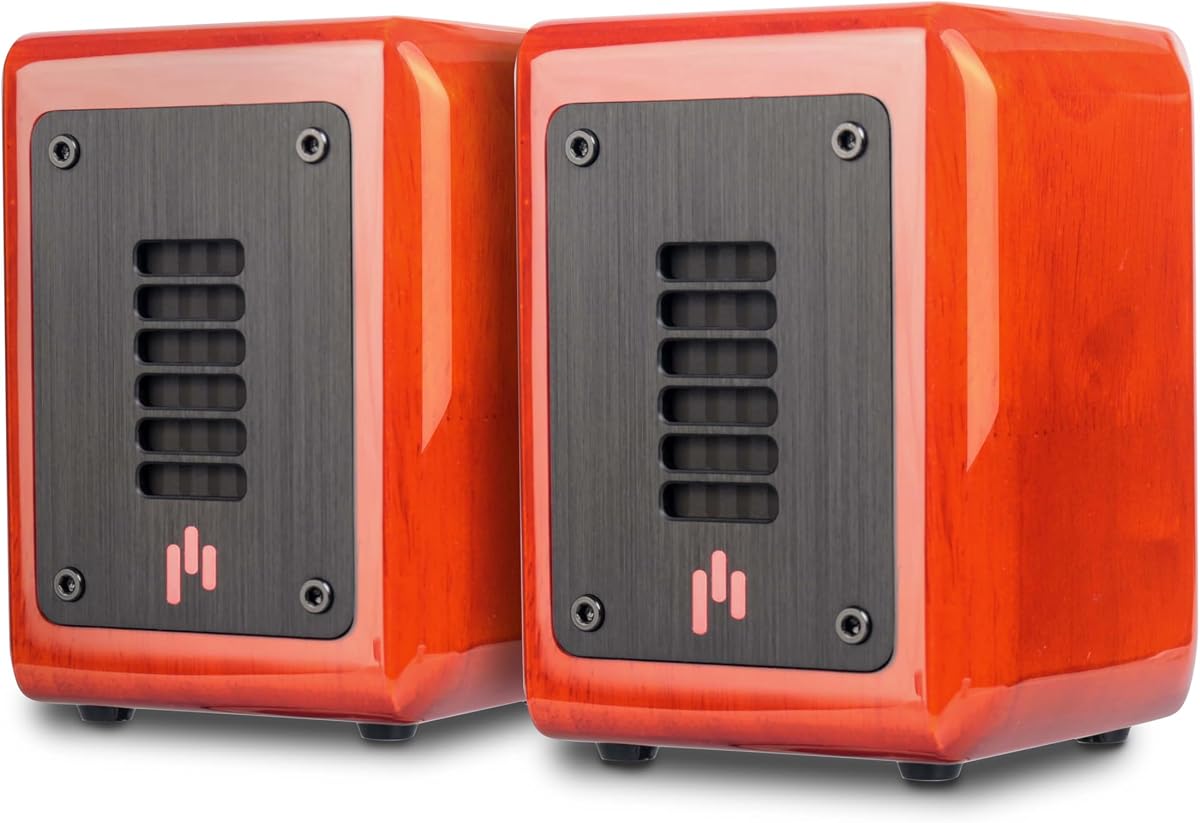
The Aperion Audio PST MKII is not an active crossover in the conventional sense. It is a pair of planar-ribbon super tweeters intended to sit on existing speakers and extend their upper-frequency response from approximately 8,000Hz to 40,000Hz. With a 4.0 rating, it serves a narrow audiophile purpose: adding subtle ambience, detail, and air to a compatible home system.
We may earn a commission when you buy through this link, at no additional cost to you.
Unlike a conventional horn tweeter, the planar magnetic design is intended to handle extreme high frequencies delicately. It uses a high-pass filter with five preset crossover points, allowing the user to match the super tweeter’s contribution to different main speakers. The stated recommendation is for speakers with 85dB to 93dB efficiency, making sensitivity a critical part of the compatibility check.
The product should not be expected to behave like a powerful main tweeter. Its purpose is a subtle addition to the upper register, and an aggressive setup could make the result unbalanced. It also does not split a line-level signal into independent amplifier channels, so buyers expecting an active crossover should look elsewhere. Placement, level matching, and the acoustic behavior of the room all influence the outcome.
The PST MKII is best for an audiophile who already owns a capable stereo or home theater system and wants to experiment with upper-frequency extension. It is not a replacement for a full crossover, and it should not be selected on the assumption that more perceived detail automatically means better sound. Those seeking genuine band splitting and per-driver electronic control should choose one of the true processors.
The super tweeter targets the narrow band above 8kHz rather than reproducing the full vocal range. Its contribution is intended to be refined and blended, not to overpower ordinary treble.
The 85dB-to-93dB efficiency recommendation and five filter presets show why speaker matching matters. A compatible main speaker and careful level adjustment are more important than simply placing the pair on top.
We may earn a commission when you buy through this link, at no additional cost to you.
This 4-way crossover is a passive frequency-divider network for a home speaker system, not an active signal processor. Its 3.6 rating is the lowest in the selection, so buyers should examine the documentation and their speaker requirements carefully. The architecture uses two high-frequency and two low-frequency paths, with stated crossover points around 2600Hz and 2650Hz that are described as adjustable.
We may earn a commission when you buy through this link, at no additional cost to you.
The network is rated to handle up to 400W and to work with speaker impedances from 2 to 6 ohms. It uses two blue-framed oxygen-free copper inductors and multiple specialty capacitors. A routing switch in the tweeter circuit provides some flexibility in how the high-frequency section is connected, while 10 solderless terminals simplify installation for people who do not want to solder every connection.
As a passive component, the unit cannot receive an amplifier-level source, split it into independent line-level bands, or provide per-band gain and phase controls. Its actual performance depends on the impedance curve of the connected drivers and the rest of the speaker network, and the stated wattage should not be treated as permission to exceed each driver’s limits. The relatively low rating also makes independent verification especially prudent.
It can be useful for a dedicated passive four-way home theater or music-speaker build where solderless connections are preferred. It is not suitable for a multi-amplifier active system, and the limited adjustment around the stated high crossover points may not satisfy careful acoustical tuning. An active processor such as the Marchand or Behringer offers more control for such installations.
The stated 400W handling and 2-to-6-ohm compatibility target capable multiway home speakers. Each connected driver still has its own lower power limit.
Ten solderless terminals reduce assembly complexity and make the passive network easier to install or revise. The tweeter routing switch adds a limited configuration choice.
We may earn a commission when you buy through this link, at no additional cost to you.
The Taramps CRX4 is a compact four-channel electronic crossover processor aimed at car audio. Its 4.5 rating is supported by a straightforward set of documented traits: RCA channels, customizable adjustments, 8-volt RMS output, and a compact enclosure measuring 190 by 145 by 40mm. At 560 grams, it is also relatively easy to position within a vehicle installation.
We may earn a commission when you buy through this link, at no additional cost to you.
Four-channel processing suits a vehicle with several independently routed bands or a system requiring a broad range of high-pass and low-pass outputs. The title also identifies bass boost, which can be useful for shaping subwoofer output, though such a control should be applied conservatively to avoid masking problems in the main loudspeakers or overdriving an amplifier.
The information supplied is more limited than for the Marchand and Behringer products. It does not list slope rates, crossover-frequency ranges, phase controls, or the exact meaning of the four channels. Those details matter greatly when matching a processor to a particular vehicle speaker plan, so the manual should be reviewed before installation. The word electronic also does not alone establish every possible filter specification.
The CRX4 is a sensible candidate for a compact multiway vehicle system where RCA connectivity and adjustable low/high routing are priorities. It is less attractive for a home audiophile build because the connection standard and tuning focus are aimed at car installations. For a home system with documented filter slopes, a standard professional crossover may be easier to plan.
The shallow, lightweight enclosure is practical where installation space is limited. Four channels provide more routing options than a minimal two-band processor.
Customizable controls and bass boost give the installer several tonal levers. They should be adjusted after crossover frequency, phase, and amplifier gain have been established.
We may earn a commission when you buy through this link, at no additional cost to you.
The Behringer Super-X Pro CX3400 is a 3.9-rated but highly capable professional crossover. It supports stereo two-way, stereo three-way, and mono four-way operation, giving it more flexibility than many simple processors. Its defining technical feature is the use of 24dB/octave state-variable Linkwitz-Riley filters, which are designed to provide precise frequency separation and an ideally flat summed response.
We may earn a commission when you buy through this link, at no additional cost to you.
Each output has its own limiter and phase reverse switch. A switchable 25Hz subsonic filter at each input protects low-frequency drivers from infrasonic content, while switchable equalization supports constant-directivity horn systems. These are practical professional features that can make the unit more than a basic home-audio crossover, especially in a studio, small venue, or PA system.
The trade-offs are its modest customer rating and the age of the design. The supplied information does not list noise, distortion, power-supply, or connectivity details, so a buyer should verify the current manual and rear-panel connections. It also does not carry the more detailed, explicitly stated control set of the newer professional processors in this roundup.
The CX3400 is the best value-oriented choice for a user who understands conventional crossover routing and wants professional filter slopes, output protection, and flexible operating modes without moving to a dedicated audiophile-only design. It works especially well for a two-way or three-way stereo. For a simple home system, its potential overkill should be weighed against the easier adjustment offered by the Marchand.
The 24dB/octave Linkwitz-Riley filters and flat summed response target accurate band integration. This is particularly useful when multiple loudspeakers share the acoustic space.
Individual limiters reduce the likelihood of excessive level reaching an output, while switchable phase reversal assists system alignment and the 25Hz filters protect low-frequency drivers.
We may earn a commission when you buy through this link, at no additional cost to you.
Choosing an active crossover requires matching the processor to the number of amplifier channels, speaker sensitivity, crossover points, signal connections, and intended listening environment. The most important distinction is whether you need true electronic band splitting or a passive, single-section network.
An active crossover processes a line-level source and creates separate outputs for different frequency bands. A passive crossover is installed in the speaker path and contains coils and capacitors, so it cannot provide independent output-level or phase controls. The Marchand, professional PA processors, Autotek, Taramps, and Behringer operate as electronic crossovers, while the 80W one-way and 400W four-way products are passive networks. The Aperion PST MKII is a supplementary super tweeter rather than either type of crossover. Match the architecture to the amplifier plan before comparing filter slopes or frequency limits.
The number of bands must correspond to the number of speaker groups and amplifier channels in the system. A two-way processor suits a woofer plus midrange or full-range speaker, a three-way processor adds a dedicated middle band, and a four-way mode can support more complex systems. The Audiopipe XV-6-V15 goes further with six-way routing, while the Aperion adds only extreme high frequencies. More bands can improve control and reduce driver excursion, but they also increase setup complexity and require accurate crossover-point selection.
Steeper filters create a sharper separation between neighboring bands and can reduce interference, but they also demand more precise timing and level alignment. The Marchand offers 24dB/octave slopes, the Behringer uses 24dB/octave state-variable Linkwitz-Riley filters, and the professional 2/3-way unit includes a 40Hz Butterworth low-cut. Phase reverse controls are particularly useful when aligning a subwoofer with the main speakers. Compare both slope and phase behavior rather than treating a higher number as automatically better.
A useful range should overlap the realistic operating range of the connected drivers. The Marchand spans 20Hz to 4000Hz, while the 80W passive high-pass network is described around 2200Hz to 20kHz. Some products do not publish their complete adjustment range, which is a meaningful limitation. In those cases, obtain the manual before assuming the unit can reach the required bass, midrange, or horn crossover point.
RCA connections are familiar in home and car audio, while balanced XLR connections are standard in professional environments and can help reject interference over longer runs. The Marchand provides RCA connections and offers balanced versions, whereas the two professional 2/3-way products use balanced XLR. The Taramps uses RCA. Connection type should match the rest of the chain, and existing cables or signal distribution requirements can be as important as the crossover’s internal design.
Independent output gain lets each band be matched to its amplifier, while phase inversion can correct a subwoofer that arrives at the listening position out of polarity with the main speakers. The Autotek includes a 180-degree phase shift, and both professional 2/3-way products provide individual phase switches. A bass-boost control may be convenient, but it is not a substitute for correct gain staging. Establish the crossover, match levels, correct phase, and only then consider tonal boosts.
Low-cut filters prevent a driver from receiving frequencies below its useful range, while output limiters can reduce the likelihood of damaging sensitive high-frequency channels. The Behringer provides a switchable 25Hz subsonic filter and per-output limiters, while several professional units include 40Hz low-cut filtering. The Audiopipe reports 0.04% total harmonic distortion at 1kHz and a signal-to-noise ratio above 105dB. When such figures are absent, treat them as missing information rather than assuming equivalent performance.
A home listening room may favor a compact two-way unit with simple controls, while a studio or PA installation benefits from balanced connections, multiple modes, LED status displays, and robust construction. Vehicle installations add constraints involving chassis grounding, space, remote controls, and the need for clean installation. The 110-volt requirement of one professional unit must be checked, while the Taramps and Audiopipe are more naturally suited to car-audio projects. Choose the product whose connectors, enclosure, and controls fit the actual installation.
Begin by documenting each speaker’s manufacturer-recommended crossover point, impedance, sensitivity, and minimum power requirements. If a driver lacks published guidance, do not guess from its cone size alone. Map the input source, crossover outputs, amplifiers, and speakers on paper before moving any signal, and confirm that every output is connected to the correct amplifier channel. This prevents a costly phase or channel-mapping error after the system is running.
Set the crossover frequencies according to the driver manufacturer’s guidance and the room’s acoustics. Apply phase correction using familiar music, then match each crossover output to its amplifier’s gain with the amplifier’s own controls or a calibrated meter. Start with bass boost and other tone controls at their neutral positions. Make one adjustment at a time and listen from a consistent seat because even a small timing or level change can be persuasive but incorrect.
Protect the processor by providing clean, correctly rated power and stable signal connections. For passive networks, turn the amplifiers off before changing speakers or rewiring terminals, and observe the network and driver power limits. For active processors, avoid repeatedly unplugging inputs while the system is powered, keep ventilation openings clear, and secure the unit away from moisture and direct heat. Periodically inspect terminals, cables, and mounting points, especially in a vehicle where vibration and temperature changes are normal.
An active crossover processes a line-level audio signal and sends separate low-, mid-, and high-frequency outputs to different amplifiers. A passive crossover is installed inside or alongside a speaker and uses coils and capacitors after the amplifier has already amplified the full-range signal. Active designs offer more control over frequency, level, phase, and channel routing, while passive networks can be simpler for a single-amplifier wired speaker.
The Marchand XM66 is the most directly audiophile-focused option because it is a dedicated, fully analog two-way active crossover. It offers a 20Hz-to-4000Hz range, 24dB/octave slopes, RCA connections, and optional balanced connections. The Behringer CX3400 is an alternative when professional routing modes, output limiters, and lower-cost functionality matter more than a specialized domestic design.
Not necessarily. A two-way crossover can separate bass from a full-range or dedicated high-frequency channel, while a three-way crossover independently manages low, middle, and high bands. The right choice depends on your speakers, amplifier channels, and the crossover points recommended by their manufacturers. More bands require more accurate tuning and should be chosen when there is a genuine need for separate midrange control.
The crossover frequency determines where one driver or band hands signal to the next. Filter slope controls how sharply that transition occurs, with steeper slopes generally reducing overlap between adjacent bands. A steeper filter can sound cleaner, but only if the phase, level, and timing relationships are adjusted correctly. Driver manufacturer recommendations and careful listening should guide the final setting.
A conventional passive crossover is normally used within a speaker circuit driven by one amplifier channel. Multiple-amplifier bi-amping or tri-amping generally requires an active crossover before the signal reaches each amplifier, or a carefully designed passive network compatible with that specific topology. Connecting a passive network to multiple amplifiers without a proper architecture can cause impedance, phase, and power-sharing problems.
Both can provide good results, but they suit different installations. RCA is common in home and car audio and works well over short, well-managed connections. Balanced XLR is favored in professional systems and longer cable runs because it can reduce interference and ground-related noise. The best choice is the one that matches your amplifiers and preamp while meeting the system’s grounding and layout requirements.
A phase switch reverses the subwoofer output by 180 degrees so it can be aligned more closely with the main speakers at the listening position. It is useful when bass appears weak, delayed, or hollow during cancellation. It does not fix every low-frequency problem, however; proper crossover frequency, amplifier gain, placement, and room treatment remain important.
A super tweeter serves a narrower purpose than an active crossover. The Aperion PST MKII extends the extreme upper-frequency range above approximately 8kHz and is intended to blend subtly with compatible speakers; it does not split the signal for separate amplifiers. It is most appropriate as a supplementary upgrade to an already capable stereo, not as a replacement for a proper multiway crossover.
The Marchand XM66 stands out as the most dedicated audiophile active crossover, offering fully analog processing, adjustable 20Hz-to-4000Hz crossover settings, 24dB/octave slopes, and a clear frequency display. The professional 2/3-way unit provides the broadest professional routing, while the Behringer CX3400 delivers the strongest combination of conventional filter quality, protective controls, and professional modes at an accessible tier.
Prioritize the architecture that matches your amplifier plan, the number of genuinely independent speaker bands, accurate filter behavior, and connection requirements. Include phase and gain controls in the comparison, but treat them as tools for system alignment rather than substitutes for choosing compatible drivers. Passive networks and the Aperion super tweeter serve different roles and should not be mistaken for general-purpose active processors.
Before ordering, verify the latest product configuration, current cost, warranty, power requirements, manual, and available connections. Ratings, crossover ranges, availability, and prices can change, and minor revisions can materially affect a complex installation. Confirming those details against the current listing and manufacturer documentation will give the purchase the best chance of producing a coherent, repeatable result.