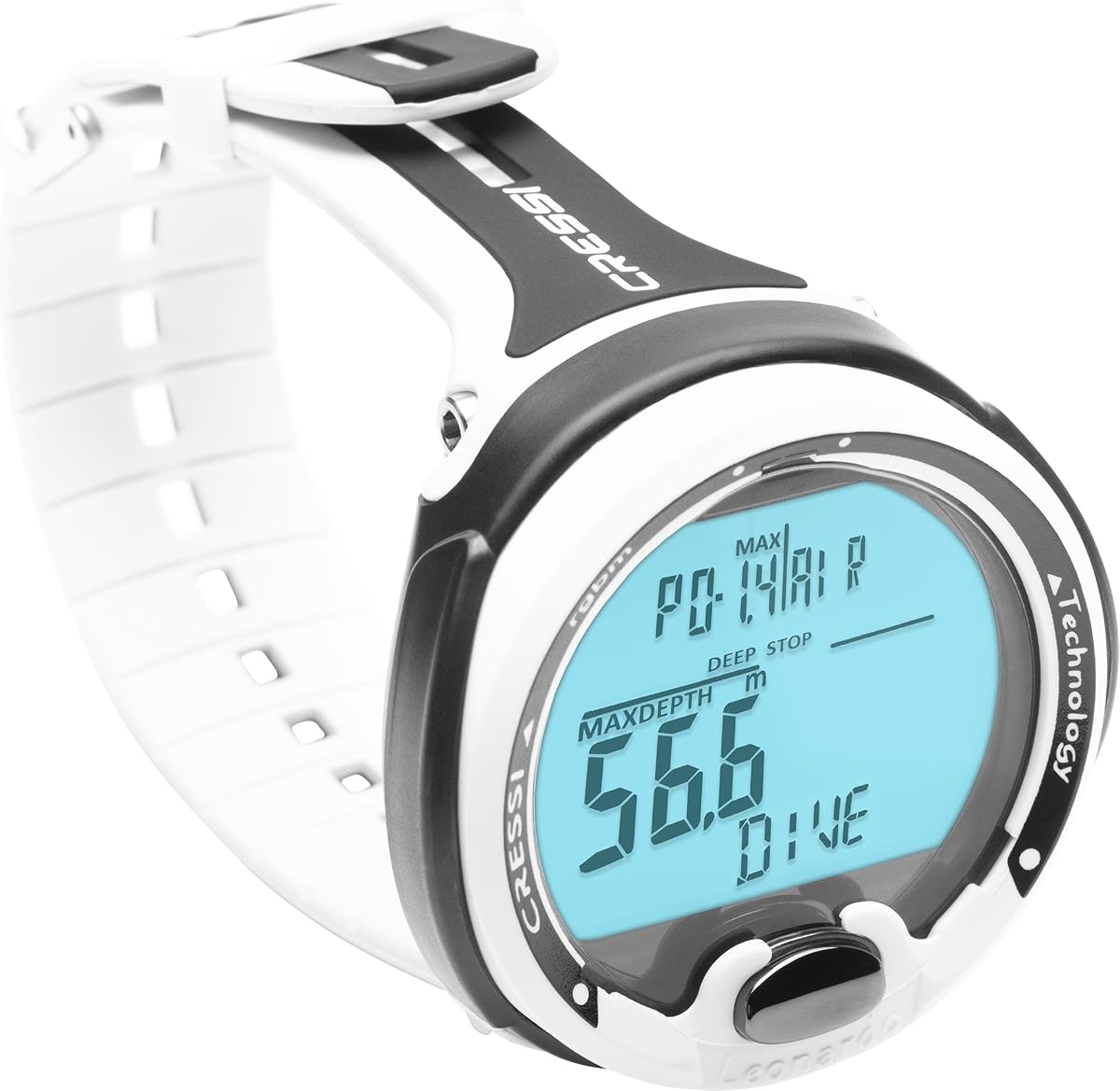
CRESSI Leonardo 2.0 G2 Dive Watch
4.2Editor score
Single-button underwater control
Air Nitrox and gauge modes
USB and infrared transfers
Dive computers for beginners can be confusing, so this expert guide compares ten leading models for navigation, displays, connectivity, safety features, and
A dive computer is one of the most important pieces of safety equipment for a new diver, yet choosing the right model can feel unexpectedly complicated. The best units balance readable information, straightforward controls, dependable dive modes, and features that remain useful as a diver gains experience and confidence underwater.
This guide compares ten dive computers suitable for beginners and active recreational divers. We evaluated the supplied specifications, focusing on interface simplicity, display visibility, supported gases, navigation tools, logging options, connectivity, battery considerations, and the balance between everyday functionality and advanced features.
Each review explains who the computer is likely to suit, where it stands out, and which compromises a buyer should consider. Product details and availability can change, and prices fluctuate frequently, so readers should confirm the current listing, included accessories, and local retailer guidance before purchasing.
4.2Editor score

4.7Editor score

4.7Editor score
The comparison below places all ten models side by side, highlighting their core displays, interfaces, gas support, navigation functions, and connectivity. It is designed to help beginners identify a computer that feels manageable now while still offering features that can become valuable as skills progress.

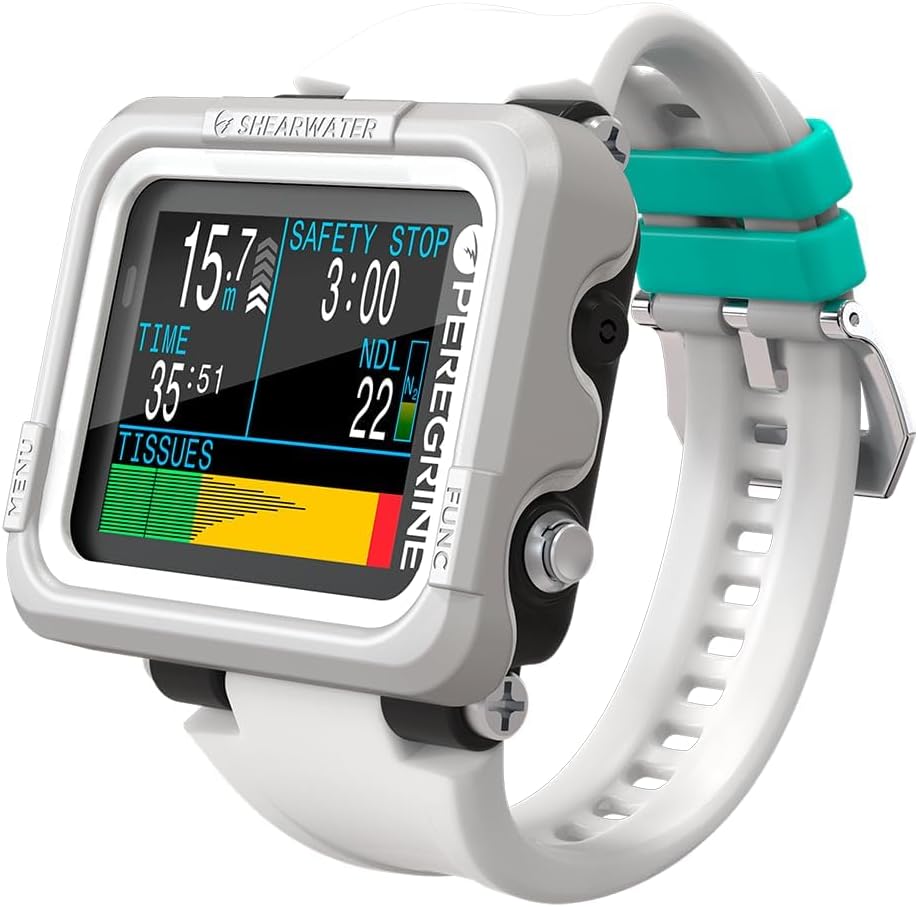


The Shearwater Research Peregrine Dive Computer combines a clear two-button interface with a substantial set of capabilities, earning it a 4.7 rating in the supplied product information. Its state-aware menu structure is particularly relevant for beginners because it reduces the need to remember hidden shortcuts or unrelated commands. The result is an interface that can be approached systematically rather than learned through random button pressing.
We may earn a commission when you buy through this link, at no additional cost to you.
Durability is addressed through 316 stainless steel buttons, while the listed battery life reaches approximately 30 hours per charge at medium brightness. A USB wireless charging station is included, reducing the need to purchase a separate charging solution. These details make the Peregrine convenient for divers who want a capable computer without carrying a collection of accessories for every trip.
The main compromise is that this model focuses on dive computing rather than the broader wearable and surface-navigation feature set found on some higher-end watches. A prospective owner who wants extensive training metrics, smartwatch functions, or built-in surface GPS should compare those requirements carefully. Even so, the streamlined menu and straightforward hardware provide a sound basis for a first serious dive computer.
This is our top overall recommendation for beginners who want a capable, dependable computer without a crowded interface. Before buying, verify the included strap sizing, charging setup, and current product configuration. It is also essential to learn the controls and configure the safety settings properly during training rather than trying to master every function between the car and the water.
The state-aware menu presents options relevant to the current mode, which can make the Peregrine easier to understand than a permanently crowded list. New divers can focus on essential information, then explore settings progressively as familiarity grows.
The included USB wireless charging station and roughly 30-hour medium-brightness battery estimate make charging easy to incorporate into a routine. Divers should still check the battery before travel and carry an appropriate backup plan for multi-day itineraries.
We may earn a commission when you buy through this link, at no additional cost to you.
The CRESSI Leonardo 2.0 G2 Dive Watch offers a straightforward introduction to scuba diving with a single-button interface and support for Air, Nitrox, and Gauge modes. Its 4.2 rating reflects a practical balance of useful functions and approachable operation, making it a sensible value-oriented choice for new divers and occasional travelers.
We may earn a commission when you buy through this link, at no additional cost to you.
Single-button control is useful because it reduces the chance of accidentally pressing multiple controls underwater. Visual and audible alarms provide prompts for important dive data, while USB and infrared transfer options make logs accessible through different workflows. Compatibility with both iOS and Android devices broadens its usefulness for divers who want to review or organize dive information after emerging.
Beginners should understand that a watch-style computer with a relatively simple control scheme still requires deliberate configuration. Gas settings, depth, units, and personal limits must be entered and checked correctly. The supplied information does not list wireless tank-pressure monitoring, so divers who want transmitter-based data should confirm that feature in a more advanced alternative.
The Leonardo 2.0 G2 is best for buyers who want essential dive modes, clear alerts, and uncomplicated controls without paying for every advanced feature. It is a strong first computer for recreational diving, provided the diver completes training and becomes familiar with the unit before relying on it underwater.
A single-button system reduces the number of separate controls a beginner must track. Presses and holds can still serve different functions, so learning the complete control language during a shallow practice session is essential.
USB, infrared, iOS, and Android support provide practical ways to manage logs. The model is therefore a compelling choice for divers who value post-dive analysis but do not need an expansive surface-navigation system.
We may earn a commission when you buy through this link, at no additional cost to you.
The SUUNTO D5 Dive Computer pairs a color display with wireless tank-pressure monitoring, vibration alarms, a digital compass, and wireless mobile connectivity. Its 4.0 rating makes it a less universally favored pick, but the combination of features gives it genuine appeal for divers who want key information delivered in a modern, connected format.
We may earn a commission when you buy through this link, at no additional cost to you.
Wireless tank-pressure support is especially useful for scuba divers who want air consumption information available on the wrist. A digital compass adds another navigation layer, while vibration alarms can provide a discreet way to notice important changes. The color screen should also make essential information easier to distinguish at a glance, although the supplied data does not specify its exact dimensions or sunlight readability.
A beginner should confirm the complete specifications, supported accessories, and operating procedures in the current product manual. The provided information is concise, so it would be inappropriate to assume features such as a particular gas range, storage capacity, or battery duration without checking the seller's detailed listing. That caution is especially important when selecting a safety device.
The D5 is best suited to a diver who prioritizes wireless tank data, a color screen, and mobile connectivity in a relatively traditional dive computer. It deserves careful comparison with the simpler Cressi and more capable Shearwater options, but its core feature set is relevant to both first-time owners and divers expanding beyond basic recreational use.
Wireless tank-pressure monitoring can help divers track remaining gas alongside other computer data. It is most useful when paired with correct setup, a compatible transmitter, and a clear understanding of the relationship between pressure and available breathing gas.
Vibration alarms offer a useful way to receive attention prompts while submerged. Divers still need to know how to distinguish the relevant alarm, what response is appropriate, and how to silence or acknowledge it safely.
We may earn a commission when you buy through this link, at no additional cost to you.
The Shearwater Research Peregrine Adventures Edition Dive Computer expands on the standard Peregrine with multiple diving modes, including Air, Nitrox, three-gas Nitrox, and Gauge. Its 4.7 rating, 2.2-inch color LCD, and customizable decompression model make it a capable option for divers who may progress beyond uncomplicated recreational profiles.
We may earn a commission when you buy through this link, at no additional cost to you.
The screen's enhanced color range and saturation can make critical information easier to organize visually. Support for the Buhlmann ZHL-16C algorithm with gradient factors allows experienced divers to adjust the model to their circumstances. Importantly for more experienced users, the supplied data states that Shearwater computers do not lock out when a dive deviates from the planned profile, though this is not a reason to abandon careful planning.
The two-button interface remains a strength, preserving the same state-aware navigation approach as the standard Peregrine. Stainless steel buttons and a supplied USB wireless charging station support regular use, while battery life is listed at up to approximately 30 hours at medium brightness. The expanded feature set still introduces concepts that may feel excessive to a brand-new diver.
The Adventures Edition is best for someone who values a large, colorful display and suspects they will use mixed-gas or advanced decompression settings. Beginners can start with its simpler modes, but only with proper training. Those who want the most straightforward Shearwater experience may find the standard Peregrine more approachable.
Air, Nitrox, three-gas Nitrox, and Gauge modes create a progression path for developing divers. The important point is that flexibility only improves safety when paired with appropriate training, careful gas planning, and a clear understanding of the selected algorithm.
The 2.2-inch LED LCD with enhanced color and saturation can make a dense display easier to scan. Divers should still learn to rely on the primary numbers rather than assuming color alone communicates safety status.
We may earn a commission when you buy through this link, at no additional cost to you.
The Cressi Raffaello Dive Computer combines a built-in digital compass, mixed-gas planning, four operating modes, and both Bluetooth and USB connectivity. Its 4.4 rating reflects a well-rounded option for divers who want more than a basic time-and-depth display but do not necessarily need a full smartwatch.
We may earn a commission when you buy through this link, at no additional cost to you.
The integrated compass removes the need to carry a separate directional instrument on many dive days. Four operating modes, including apnea and Gauge, broaden its appeal across different activities. Mixed-gas planning is valuable for divers whose skills or dive plans evolve, while dual transfer options make it straightforward to move logs between a smartphone or computer.
A particularly useful characteristic is the user-replaceable battery, with an expected life of four years. That can reduce maintenance friction compared with a sealed rechargeable design, although actual replacement intervals depend on use and conditions. The Rainbow-based mixed-gas planning system also introduces terminology and settings that a new diver may not need immediately.
The Raffaello suits a diver who wants a compass, flexible modes, and a replaceable battery in one wrist device. It is a compelling middle-ground choice, but first-time buyers should focus on the modes and functions they will actually use and avoid selecting a model solely on features they do not yet understand.
A built-in compass reduces clutter and makes a directional reference available without another instrument. It still requires calibration and regular practice because a compass is only as useful as the user's ability to interpret and maintain its heading.
The expected four-year user-replaceable battery can simplify long-term ownership. Divers should confirm the correct battery type, installation method, sealing, and replacement schedule in the official instructions.
We may earn a commission when you buy through this link, at no additional cost to you.
The Garmin Descent X30 is a large, rugged dive computer with a 2.4-inch vibrant color display, a 10 ATM dive rating, surface GPS, and support for scuba single-gas, multigas, and trimix profiles. Its 4.7 rating and extensive feature set make it our premium selection for divers who want room to grow into a sophisticated platform.
We may earn a commission when you buy through this link, at no additional cost to you.
Screen customization is a major strength because the display can show up to three data fields per page. That lets a beginner reduce visual clutter while allowing experienced divers to change information for different phases of a dive. The large housing, four metal leakproof buttons, and top-oriented button orientation are designed for legibility and operation in demanding conditions.
Surface GPS lets divers navigate to sites and mark entry and exit points, while the underwater three-axis compass supports directional orientation. NDL Aware depth metrics show how changing depth affects no-decompression limits, and surface interval tracking assists planning for multiple dives in one day. The water temperature sensor can help identify the thermocline. These tools are valuable, but each adds another concept that must be understood before use.
The X30 is best for a diver who wants a large display, robust construction, extensive dive features, and surface navigation in one device. It is more complex than a simple first watch, so a new diver should begin with a training plan, simplify the configured pages, and learn the most important alarms before adding advanced features.
The 2.4-inch color display offers ample room for key readings, while three-field page customization helps control clutter. Beginners should begin with a small set of essentials, such as depth, time, and the relevant dive limit, before experimenting with additional data.
Surface GPS can help divers navigate to sites and record entry and exit locations. It is most valuable for travel and repeated-site diving, provided the unit is allowed to acquire a satellite signal before the dive.
We may earn a commission when you buy through this link, at no additional cost to you.
The Garmin Descent G2 combines a 1.2-inch AMOLED display, sapphire lens, leakproof buttons, a 10 ATM dive rating, and extensive smartwatch features. Its 4.6 rating reflects a capable package for divers who want one watch for underwater activity, training, navigation, and everyday wear.
We may earn a commission when you buy through this link, at no additional cost to you.
The listed physical dimensions are 45.5 by 45.5 by 15.2 millimeters, and the supplied band ranges accommodate different wrist sizes. The AMOLED display should provide crisp visuals in a compact watch-style package, while the sapphire lens offers a durable viewing surface. The device supports recreational, advanced, technical, freediving, and pool apnea diving, creating unusually broad coverage.
Multi-GNSS allows divers to mark surface entry and exit points. Dive readiness estimates physical preparation using sleep, stress, exercise, and recent dives, while the Garmin Dive app supports on-device log storage and review. Smart notifications, Garmin Pay, and Connect IQ personalization add everyday utility, and the listed dive-mode battery reaches up to 27 hours. These wellness estimates are not medical measurements, which the supplied information explicitly notes.
The G2 is a strong option for a beginner who also wants training metrics and smartwatch functionality. Its many menus can create a steeper learning curve, so simplifying the layout and focusing on dive-critical data is advisable. Compared with the Descent X30, it offers a more traditional watch format and smaller display.
Smart notifications, contactless payments, activity apps, and health insights give the G2 value away from the water. Prospective owners should confirm that their preferred apps, payment networks, and connectivity features work with their region and phone.
Dive readiness and advanced training features can help divers consider fatigue and preparation alongside dive planning. These are estimates for general guidance rather than medical advice or a substitute for honest self-assessment.
We may earn a commission when you buy through this link, at no additional cost to you.
The CRESSI Dive Computer, Giotto, supports up to three Nitrox mixtures, configurable oxygen mixes from 21% to 99%, altitude diving, and a 70-hour dive log. Its 4.2 rating and broad gas configuration make it a practical choice for divers planning recreational trips beyond the simplest local conditions.
We may earn a commission when you buy through this link, at no additional cost to you.
Multi-mix Nitrox support offers more flexibility than a single-gas computer, and the wide oxygen range can accommodate different planned mixtures. Altitude support is particularly relevant for mountain lakes and high-elevation destinations where pressure assumptions differ from sea level. The 70-hour log gives divers a meaningful local record that can be downloaded to a PC for later review.
The model is a potentially strong first computer for a diver who quickly plans mixed-gas dives, although many beginners may use only one gas. The supplied data does not describe its display size, connectivity method, or full decompression configuration, so buyers should review the current manual and detailed listing. That verification is especially important when choosing a computer for a new gas configuration.
The Giotto is best for divers who value Nitrox flexibility, altitude capability, and a sizable log without moving to a high-end watch platform. It should be configured with help from a qualified instructor or the manufacturer's instructions, and every gas value should be independently checked before the dive.
Support for three Nitrox mixes and a broad oxygen range allows the computer to follow more ambitious dive plans. Users must remember that the correct oxygen fraction must match the actual cylinder mix and be confirmed before entering the water.
Altitude diving support is important for destinations where reduced atmospheric pressure affects the dive environment. Divers should learn the associated procedure rather than treating the computer as automatic permission to change depth or ascent behavior.
We may earn a commission when you buy through this link, at no additional cost to you.
The Mares Puck Lite Scuba Diving Computer combines a single-button interface, an 800-segment chip-on-glass display, the Bühlmann ZH-L16C algorithm, and Bluetooth connectivity. Its 4.4 rating and glove-friendly design make it an interesting option for divers who want a capable computer with a deliberately simple physical control scheme.
We may earn a commission when you buy through this link, at no additional cost to you.
The clear segment display is designed for visibility in varied underwater conditions, and one-button navigation can be learned relatively quickly. The ZH-L16C algorithm allows customization through gradient factors, giving experienced divers a way to adjust decompression behavior. Nitrox compatibility extends from 21% to 50%, which covers many common recreational mixtures while keeping the configuration within a clearly defined range.
The logbook stores up to 100 dives and includes graphs and detailed profiles. Mares and SSI apps provide additional tools for reviewing records, while Bluetooth supports syncing and firmware updates. A user-replaceable power source is listed as lasting through 100 dives, which is a different maintenance model from sealed rechargeable systems and should be understood before purchase.
The Puck Lite is best for divers who prioritize simple operation, long-term battery management, and a proven algorithm without a large smartwatch display. Beginners should begin with basic settings and gain confidence before adjusting gradient factors, because those customizations carry meaningful consequences that require technical understanding.
Single-button navigation and a clear segment display reduce the learning burden of a dense dive screen. The control scheme still requires practice so that a diver can find essential information without looking away from the environment for long.
The listed power source can last through 100 dives and is user replaceable, making maintenance part of the ownership experience. Divers should follow the specified battery procedure and confirm the correct replacement part before traveling.
We may earn a commission when you buy through this link, at no additional cost to you.
The Descent G1 pairs an easy-to-read monochrome display with a sapphire lens, silicone bands, multi-satellite support, and a generous 200-dive log. Its 4.6 rating reflects a rugged and versatile package that works for diving, training, travel, and everyday activities.
We may earn a commission when you buy through this link, at no additional cost to you.
GPS, GLONASS, and Galileo support allow divers to mark surface entry and exit points, which is useful when returning to a specific site or reviewing a day's itinerary. The watch supports recreational, advanced, technical, freediving, and spear-fishing activities. On-device storage of up to 200 dives gives it more local capacity than several compact alternatives.
The listed battery life reaches up to 25 hours in dive mode, 21 days in smartwatch mode, and 26 hours in GPS mode. These estimates make it suitable for regular use, but multi-day dive travel still benefits from a planned charging routine. The monochrome display favors readability over dense graphics, while the sapphire lens provides a durable viewing surface.
Smart notifications, Garmin Pay, Connect IQ customization, more than 30 sports apps, and wrist-based wellness metrics extend its value beyond diving. The G1 is a good choice for a buyer who wants a recognizable sport-watch ecosystem and strong log storage but does not require the larger color display or advanced underwater mapping of higher-end models.
Storing up to 200 dives on the wrist reduces dependence on immediate phone connectivity. Logs can still be uploaded, shared, and reviewed through the Garmin Dive app when the diver returns to a compatible smartphone.
GPS, GLONASS, and Galileo support make marked entry and exit locations more dependable across different regions. The watch should be given time outdoors to acquire an accurate position before a surface-navigation task.
We may earn a commission when you buy through this link, at no additional cost to you.
The right dive computer should make essential information easy to find, support the dives you actually intend to make, and remain dependable in the conditions where you dive. For a beginner, clarity and reliable configuration are more valuable than a long list of specialized features that will never be used.
A new diver should choose a computer whose controls can be understood quickly, especially when the display is wet, visibility is poor, or gloved hands make precise input difficult. One-button designs reduce the number of separate controls to locate, while two-button layouts can still work well when paired with a state-aware menu. The important distinction is not the number of buttons alone but whether the interface makes the current options and next action predictable.
Choose an interface that lets you find depth, elapsed time, remaining dive time, and the selected gas without excessive menu navigation. Practice every alarm and acknowledgment method during shore or shallow-water training. An elegant screen is less valuable if its menus become confusing at depth.
The display is the main connection between the diver and the computer's calculations. Large numbers, clear contrast, and information organized into predictable pages are more important than decorative graphics or a large collection of indicators. Some divers prefer a bright color screen, while others appreciate the straightforward appearance of a monochrome or segment display. Consider whether you usually wear the computer over a wetsuit, whether you use prescription masks, and how you tend to position your wrist.
Prioritize a screen that presents the most important data without zoom or scrolling. Test the layout mentally before a dive, and make sure the selected units and font size remain readable in your usual conditions.
Most recreational divers need reliable air mode and possibly Nitrox, but the correct choice depends on the training and dive plans ahead. Gauge mode can be useful for freediving or activities where the computer should not apply a conventional scuba profile. More advanced models support multiple gases, trimix, altitude diving, apnea, or technical configurations. These modes are useful only when the diver understands how to configure and monitor them.
For a first purchase, choose a model that covers your current certification and planned activities with a small, manageable margin of flexibility. Do not select an advanced gas mode merely because the computer supports it. Confirm the exact gas ranges and operational procedures in the current manual.
Dive computers use algorithms to estimate tissue loading and calculate ascent information, but the calculation does not eliminate personal judgment or the need for conservative training. Beginners should learn how their chosen computer presents no-decompression limits, stop information, depth, time, and ascent warnings. Models based on the Bühlmann framework often allow gradient-factor customization, while computers using other systems may provide fewer adjustment options.
Treat conservative personal settings as part of your configuration, but do not change them casually during a dive. A computer can support a particular algorithm and still be misused if its settings are not understood. Choose an algorithm offered by a reputable manufacturer and learn its behavior before relying on it in unfamiliar conditions.
Battery life varies with display brightness, mode, temperature, connectivity, and use. Rechargeable models are convenient for everyday wear, while replaceable batteries can be attractive for long-term ownership and predictable servicing. The stated endurance figures are best treated as maximum or typical estimates rather than guarantees, and a computer should not be taken on a dive with a doubtful battery.
Build the charging or battery check into your preparation routine. For travel, confirm whether a proprietary cable or charging dock is required and consider carrying a suitable backup power source. Learn the low-battery warning and know what the display will and will not do when power becomes limited.
A built-in compass and surface GPS can make travel diving and repeated-site visits more convenient. A compass provides direction, while GPS can help navigate to a boat, shore entry, or remembered site. These tools do not replace a conventional compass, map, depth plan, awareness of currents, or good judgment about when conditions are unsuitable.
Consider whether underwater navigation is part of your planned diving. Divers who frequently navigate at night, in low visibility, or around complex structure may value a compass and location features, while others may prioritize a simpler profile. Check whether GPS is surface-only and whether entry and exit points can be marked.
Bluetooth, mobile applications, and USB or infrared transfers make it easier to store, organize, and revisit dive records. Connectivity is helpful for reviewing profiles, but it should not be essential to the computer's core diving performance. Beginners should also consider whether they prefer to analyze logs on a phone, a computer, or directly from the watch.
Check the listed compatibility carefully. Some ecosystems work more smoothly with particular operating systems, and underwater sensors such as tank transmitters may require separate purchases. Choose a transfer method you understand, and download important logs before resetting or replacing the device.
A dive computer must tolerate immersion, pressure, movement, and contact with saltwater, but fit and intended use are just as important. Check the stated physical dimensions, wrist ranges, screen protection, button construction, and dive rating. A large watch may offer more information but feel cumbersome over a thick wetsuit, while a compact model may be easier to rotate and read.
Also consider whether you want one device for diving and everyday wear. Smartwatch features can add convenience, but they also introduce menus, notifications, and charging demands. Choose a design you will wear consistently, and inspect the strap, buckle, buttons, and seals before every extended trip.
Begin by reading the full instructions for the exact model and watching any manufacturer-provided setup guidance. Install fresh or adequately charged power, confirm the date and time, choose appropriate units, and enter personal limits according to your training and the manufacturer's guidance. Set the correct gas fraction for every dive, verify depth and alarm settings, and check that the display and buttons respond normally before entering the water.
On the surface, review the planned depth, time, gas, and ascent information with your dive plan and buddy. During the dive, monitor depth, elapsed time, remaining limits, gas status, and alarms without becoming fixated on the screen. If the computer produces an unexpected warning, respond according to your training, maintain communication with the buddy, and follow the appropriate ascent process rather than attempting to troubleshoot the device underwater.
After the dive, rinse the computer with fresh water, paying attention to buttons, straps, sensors, charging contacts, and any transmitter connection. Remove residual salt, dry the device fully, and store it away from direct heat and prolonged sunlight. Download logs, record maintenance, inspect seals and straps, and recharge or replace the battery according to the manual. Never open a sealed dive computer unless the manufacturer specifically authorizes doing so.
The easiest computer is usually the one with the clearest display, most understandable controls, and a configuration that matches the diver's actual training. A one-button model can simplify operation, while a state-aware two-button interface may offer more context without becoming complicated. Try the controls in a shop or practice with them on land before making a decision.
A dive computer is a central piece of modern recreational dive equipment and should not be treated as optional equipment. It calculates and displays information such as depth, time, remaining limits, and ascent guidance. Even with training and a dive plan, it helps the diver monitor changing conditions and remain aware of the profile in real time.
No. A higher-priced model may provide a larger screen, more gases, surface GPS, smartwatch features, or advanced customization, but those extras do not make an untrained diver safer. Beginners benefit more from a clear interface, reliable construction, proper instruction, and settings they understand than from features they are unlikely to use.
The distinction is largely about the interface and size rather than a simple difference in safety. Watch-style models often provide more buttons and a conventional display, while compact wrist computers may emphasize portability and a simpler layout. Choose the format that feels readable and comfortable over your diving suit and that you are willing to learn thoroughly.
Only if the computer explicitly supports altitude diving. Reduced atmospheric pressure at elevation changes some environmental assumptions, so the device must be configured for the destination as described in its manual. Divers should also adjust their plan, verify the correct settings, and receive appropriate altitude-diving training before the trip.
The correct interval depends on the model, battery chemistry, usage, and manufacturer guidance. Some computers use rechargeable power, while others use a user-replaceable cell with a stated expected service life. Check the battery condition before traveling, follow the prescribed replacement procedure, and never combine a dive computer with a battery type it was not designed to use.
A transmitter is not required for every diver, but it can add valuable remaining-air or pressure information when the computer supports the appropriate system. It requires correct installation, pairing, and interpretation. Divers should confirm compatibility and learn the procedure before relying on transmitter data during a dive.
Check the included accessories, strap fit, battery or charging cable, display legibility, and basic controls. Then configure the date, time, units, gas, depth limits, and personal settings according to the manual and training. A familiarization dive in a controlled environment is the safest way to learn the device before relying on it during a full excursion.
The Shearwater Research Peregrine stands out as the most balanced overall recommendation because its state-aware two-button interface, stainless steel controls, charging station, and strong rating combine accessibility with useful capability. The CRESSI Leonardo 2.0 G2 is the budget-oriented alternative for divers who want a simple one-button design, essential dive modes, alarms, and practical log transfers. For buyers who want the broadest premium toolkit, the Garmin Descent X30 provides a large display, surface GPS, extensive navigation, and advanced dive support.
Your priorities should guide the decision more than the number of features. Beginners should emphasize legible information, simple controls, correct gas configuration, dependable alarms, and enough battery life for the planned trip. It is also worth considering whether a plain dive computer, a watch-style model, or a larger GPS-equipped device best fits your wrist, travel style, and training. Whichever model you choose, learn it before the dive rather than during it.
Product availability, package contents, ratings, and prices can change, so confirm the current listing and manufacturer documentation before ordering. Also verify that your computer supports every gas, depth, altitude, and navigation feature you expect to use. A careful setup routine, regular inspection, and conservative decision-making remain essential no matter which model appears on the list.