
ELEGOO UNO R3 Super Starter Kit
4.7Editor score
22+ beginner-guided lessons
No soldering required
Broad sensor and motor selection
Explore the best Electronics Kits for Teens, comparing Arduino starters, robot kits, soldering projects, sensor sets, and beginner-friendly builds for learning.
Electronics kits for teens can turn abstract ideas about electricity, circuits, sensors, and programming into projects that light up, move, measure, and respond. A worthwhile kit matches the learner's experience, interests, and patience while providing enough guidance to make that first successful build feel achievable rather than frustrating.
This guide compares ten kits across Arduino learning, robotics, modular sensors, snap-together circuits, and hands-on soldering. We evaluated the supplied component lists, project variety, instructional support, required skills, and age guidance, covering both beginner-friendly systems and more advanced builds for teens ready to tackle realistic hardware challenges.
Each pick reveals what type of learner it serves best, from broad starter collections to focused robot and audio projects. Ratings and specifications reflect the listed product information, while availability and prices can change, so readers should confirm current listing details and included accessories before making a final purchase.
4.7Editor score

4.7Editor score

4.5Editor score
The comparison covers build complexity, learning approach, project breadth, major included components, and practical considerations such as soldering, controller requirements, and adult supervision. The table provides a quick view of all ten options, while the detailed reviews explain which teen is most likely to enjoy each kit.



The ELEGOO Mega 2560 R3 Complete Starter Kit is the strongest all-around option in this guide, combining a 4.7 rating with one of the broadest learning paths. It supports 35+ guided projects, and its component collection extends well beyond simple blinking LEDs to RFID access, environmental monitoring, motor control, distance sensing, and interactive displays.
We may earn a commission when you buy through this link, at no additional cost to you.
The controller provides 54 digital I/O pins, 15 PWM outputs, 16 analog inputs, four hardware serial ports, and 256 KB of flash memory. That capacity matters for teenagers who may want to combine several sensors, controls, and displays rather than limiting every experiment to a single input and output. The 200+ component collection includes an LCD1602, RC522 RFID module, RTC, DHT11, PIR sensor, ultrasonic sensor, water-level sensor, GY-521, MAX7219, keypad, joystick, rotary encoder, relay, servo, stepper motor, DC motor, and breadboard.
The trade-off is complexity. This is not the smallest or simplest first electronics kit, and a teen who has never handled a breadboard may need to work through the foundational lessons before tackling advanced combinations. Nevertheless, the pre-soldered modules, solderless breadboard, storage case, and small-parts box make that broader curriculum much easier to manage than a loose collection of components.
This kit is ideal for a teen who wants one platform to last through a school term, coding club, or extended home learning program. Choose it when breadth, hardware capacity, and a clear progression from guided exercises to original designs matter more than having the smallest possible parts box. It is our top overall recommendation for adaptable, long-term learning.
With 35+ lessons and more than 200 components, the kit gives learners room to progress from basic inputs and outputs to multi-system projects. A teen can study sensing, timing, display logic, access control, and motor behavior without immediately replacing the core hardware.
The Mega 2560 controller's generous pin and memory capacity makes it a better fit than a basic controller for combining displays, sensors, motors, and other modules. That extra headroom supports creative experiments and reduces the chance of quickly outgrowing the board.
We may earn a commission when you buy through this link, at no additional cost to you.
This ELEGOO UNO R3 kit pairs a 4.7 rating with an extensive 30+ project curriculum and 200+ components distributed across 63 types. It is a particularly polished choice for teens beginning a structured electronics journey but ready to work through substantially more than the classic LED-and-button exercises.
We may earn a commission when you buy through this link, at no additional cost to you.
The included ELEGOO UNO R3 controller works with the Arduino IDE, while the PDF tutorial and example code provide a structured route through LCD1602 displays, RFID access, motion detection, distance measurement, motor control, and environmental monitoring. The parts list includes an RC522 RFID module, RTC, HC-SR501 PIR sensor, ultrasonic sensor, DHT11, GY-521, MAX7219, keypad, joystick, relay, SG90 servo, stepper motor, and more.
Its main limitation is the UNO platform itself. Compared with the Mega 2560 kit, it offers less room for elaborate multi-module builds, so a teen may eventually outgrow the controller. The kit also requires meaningful setup space, but the organized case, small-parts box, solderless breadboard, and pre-soldered modules help prevent that organization from becoming a frustrating part of every lesson.
This is an excellent match for a teen who values guided instruction, wants many sensor and output types, and prefers learning with an included power supply and battery setup. It may be the most complete beginner package here, although ambitious builders should consider the Mega 2560 option for more expansion capacity.
The combination of a PDF tutorial, example code, and 30+ projects gives learners a clear sequence for understanding each component. Teens can make small code changes between lessons, turning repeatable exercises into personalized alarms, displays, and access systems.
With 200+ components across 63 types, the kit supports substantial variety without requiring immediate soldering. Pre-soldered modules and a solderless breadboard let the learner concentrate on circuit layout, programming, and troubleshooting.
We may earn a commission when you buy through this link, at no additional cost to you.
The ELEGOO Smart Robot Car Kit V4 is the most immersive robotics experience in the list, earning a 4.5 rating for a build that combines assembly, coding, wireless control, and a functional moving vehicle. Rather than teaching electronics through isolated modules, it lets a teen create, program, and drive a complete robot car.
We may earn a commission when you buy through this link, at no additional cost to you.
Its hardware includes an ELEGOO UNO R3 controller, an ESP32-WROVER-based camera and Wi-Fi module, line-tracking and ultrasonic sensors, motors, an IR remote, and a 2000 mAh rechargeable lithium-ion battery. The camera supports live FPV viewing, while the sensors and software support line tracking, obstacle avoidance, and several interactive driving modes. The ELEGOO app and remote provide additional ways to control the vehicle.
Assembly requires more patience than a breadboard starter kit. Keyed XH2.54 connectors help reduce wiring mistakes, and the illustrated tutorial and example programs guide the process from chassis assembly through programming and initial operation, but first-time builders may still need adult help. Its focused design also means teens interested in circuit theory outside robotics may find a general starter collection more versatile.
This kit is best for a teen motivated by robots, game-like challenges, and visible results. It suits family weekend projects, coding clubs, STEM classes, and maker challenges, particularly when the young builder is ready to follow a larger sequence of mechanical and programming steps. For a camera-equipped robotics platform, it is the clear choice.
The ESP32-WROVER-based camera and Wi-Fi module adds an advanced dimension that basic robot kits rarely provide. Live FPV viewing makes obstacle avoidance, route planning, and remote operation feel immediate and entertaining.
Example programs can be modified to create custom routes, reactions, and movement behavior. This gives teens a practical way to connect programming decisions with motors, sensors, and real-world navigation.
We may earn a commission when you buy through this link, at no additional cost to you.
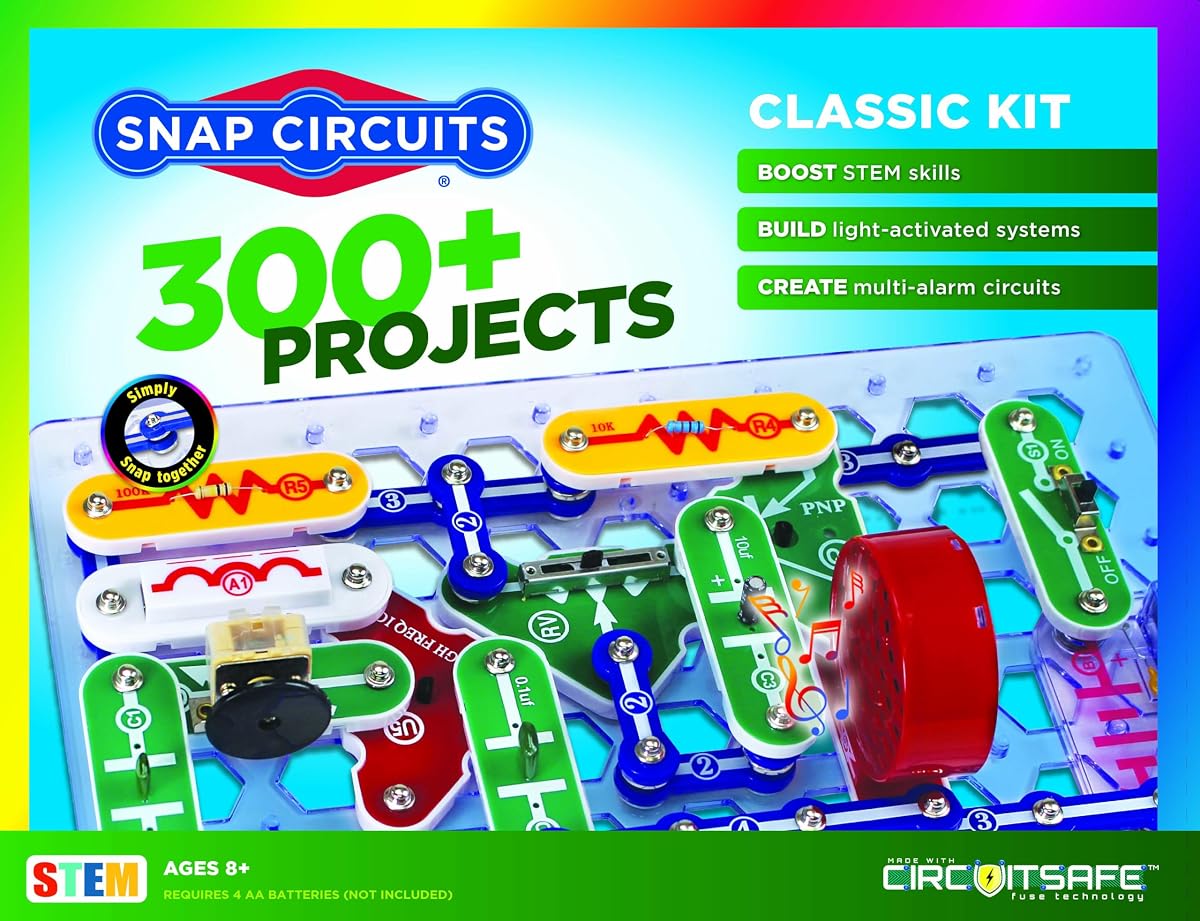
The SNAP CIRCUITS Classic SC-300 holds the highest listed rating in the comparison at 4.8, and its greatest strength is accessibility. With 60+ pieces, a color-coded instruction book, and a plastic grid, teenagers can explore electronics without facing solder joints, a command line, or complicated breadboard layouts.
We may earn a commission when you buy through this link, at no additional cost to you.
The kit supports more than 300 possible projects, including familiar builds such as AM radios, burglar alarms, and doorbells, along with electronic games. Numbered and color-coded components snap onto the grid, making it easier to follow diagrams and understand how a complete circuit is assembled. Batteries are required, so users will need to supply that basic power source separately.
The tradeoff is depth in one particular direction. While the number of projects is impressive, this is not a programmable robotics or microcontroller platform. Teens who want to write Arduino code, connect multiple sensor modules, or design a custom automated system may need to move to one of the programmable kits later. The SC-300 remains an outstanding visual, tactile introduction to circuit logic.
It is especially well suited to younger teens, homeschool learners, or anyone who wants immediate success without soldering. It also works well for family STEM time because assembly mistakes are visible and easy to correct. For a tool-free introduction with enormous project choice, it is a particularly compelling selection.
The snap-together grid turns circuit building into a physical arrangement task. Teens can see the path of each component, remove a piece easily when needed, and gain a clearer mental model of series and parallel connections.
The 300+ project possibilities keep the kit from feeling repetitive. Building radios, alarms, doorbells, and games gives each session a distinct objective while reinforcing the same core electronics concepts.
We may earn a commission when you buy through this link, at no additional cost to you.
The MiOYOOW DIY Bluetooth Speaker Kit is a focused audio build with a 3.9 rating. It offers teenagers a satisfying end goal: assemble a portable speaker with dual 3W speakers, flashing LEDs, and a clear acrylic enclosure that can actually be used after the work is complete.
We may earn a commission when you buy through this link, at no additional cost to you.
Playback is supported through Bluetooth, a TF card, and a USB flash drive, and an infrared remote is included for operation. The Bluetooth amplifier board arrives pre-soldered, allowing the learner to concentrate on soldering the LED board, connecting wires, and completing the enclosure. A detailed paper manual provides step-by-step assembly guidance.
This is not an entry-level kit. It is intended for learners with foundational electronics knowledge and hands-on skills, and the need to handle a soldering iron adds risk that should be acknowledged. The listed 3.9 rating is also the lowest here, although rating alone cannot capture the appeal of producing a functional, reusable speaker.
The product also notes that different Bluetooth module batches may use different connection methods. The updated manual addresses these variations with blue text for module-specific soldering steps, but buyers should inspect the manual and modules carefully. Choose it for a teen who wants soldering practice, audio electronics, and a practical finished object rather than a broad catalog of interchangeable sensors.
Unlike kits made primarily for demonstrations, this build results in a portable speaker that can sit on a desk, in a bedroom, or in a dorm. The practical endpoint can be especially motivating for older teens.
Soldering develops genuine assembly skills, but beginners should work in a ventilated, organized area with adult supervision and proper eye protection. A soldering iron, heat-resistant surface, and careful component handling should be planned before opening the kit.
We may earn a commission when you buy through this link, at no additional cost to you.
The ELEGOO UNO R3 Super Starter Kit is a well-balanced first programmable kit, carrying a 4.7 rating and 22+ guided lessons. It covers foundational electronics without the intimidating scale of the larger ELEGOO collections, making it a practical starting point for a teen ready to learn Arduino programming.
We may earn a commission when you buy through this link, at no additional cost to you.
The lessons move from blinking LEDs to temperature and distance readings, servo and stepper motor control, LCD displays, and responses to joystick or infrared input. The included UNO R3 controller, LCD1602 with a pre-soldered header, breadboard power module, ultrasonic and DHT11 sensors, joystick, IR receiver and remote, SG90 servo, stepper motor, relay, DC motor, fan blade, displays, LEDs, buttons, resistors, and jumper wires create a versatile component library.
It does require some computer setup, including selecting the UNO board and correct port in the Arduino IDE. That process introduces a realistic part of embedded development, although younger learners should have adult help with initial configuration. The 22+ lesson count is also more modest than the 30+ or 35+ curricula in the larger starter kits.
This kit is an excellent choice for a teen who wants to understand digital inputs, analog sensing, timing, display functions, and motor control in a guided sequence. The instruction to download the latest tutorial and code means buyers should confirm access before starting. For a manageable introduction with enough depth to create alarms, environmental monitors, reaction games, and motion projects, it offers excellent utility.
The lessons connect each concept to a physical result, helping a new programmer see why code matters. Teens can first follow working examples and then alter thresholds, speeds, and sequences to personalize the outcome.
Plug-in modules, a solderless breadboard, and a pre-soldered LCD reduce setup barriers. An illustrated component list also makes it easier to identify parts and maintain a repeatable workspace between lessons.
We may earn a commission when you buy through this link, at no additional cost to you.
The DIY Bluetooth Speaker LED Kit is a visually engaging soldering project with a 4.7 rating. Its defining feature is a 10-LED visualizer that pulses and flashes with music, giving the finished speaker a dramatic appearance that goes beyond a basic instructional build.
We may earn a commission when you buy through this link, at no additional cost to you.
The package includes a purple PCB, dual 2-inch speakers, a transparent acrylic enclosure, and the needed electronic components. A fully printed, high-resolution manual uses step-by-step photographs to demonstrate component placement, soldering, and wiring connections. The enclosure gives the build a finished, presentable result rather than leaving the circuit exposed on a workbench.
The product explicitly states that foundational soldering experience is required and that it is not intended for someone with zero soldering skills. This is a meaningful limitation, particularly for a teen attracted by the appearance of the kit before understanding the assembly process. Because every stage depends on the previous one, a poor joint or incorrectly placed component can stop progress until it is corrected.
It is best for a teen who already understands basic electronic components, wants to improve soldering confidence, and would be motivated by a speaker with synchronized lights. With the visual manual in hand, the project can also become a useful demonstration of analog signals, amplification, enclosure assembly, and the relationship between circuits and sound.
The synchronized LED display gives immediate sensory feedback and makes the completed build feel like a personal entertainment device. It can also help explain how signals move through an amplifier circuit.
High-resolution printed photographs are valuable when component placement is easy to misread. Keeping the guide open beside the work area and completing stages in order supports a more reliable result.
We may earn a commission when you buy through this link, at no additional cost to you.
The MicroKits Theremin Electronics Kit offers a distinctive learning experience, earning a 4.5 rating for a project that produces sound and music through hand movements near electric fields. It is less comprehensive than a general starter collection but more focused and memorable as a standalone science and electronics activity.
We may earn a commission when you buy through this link, at no additional cost to you.
The kit teaches electrical capacitance while using real electronic parts to create an instrument that responds to the position of the hands. A colorful 22-page instructional booklet guides assembly in stages, with breaks to check progress and learn how the circuit works. Components connect on the included breadboard, batteries are included, and no tools or soldering are required.
Its narrow scope is the main limitation. A teen interested in robotics, programmable controllers, or a wide catalog of sensors will find fewer options here, and the kit does not provide the same coding education as the Arduino products. On the other hand, that concentration helps the build reach a meaningful conclusion without requiring an adult to manage complex wiring and software setup.
It is a strong choice for a creatively minded teen who enjoys music, physical experiments, and understanding unusual scientific principles. It also works well as a weekend project, classroom demonstration, or complement to a larger electronics collection. For a self-contained, tool-free project with a distinctive final result, the theremin is hard to overlook.
The theremin creates an immediate link between an abstract property and a physical response. Moving a hand changes the instrument's behavior, making electrical capacitance easier to understand than in a purely diagrammatic lesson.
The 22-page booklet balances construction with explanation, offering enough detail for a beginner without requiring extra tools. Batteries are included, so the project can begin once the parts are organized.
We may earn a commission when you buy through this link, at no additional cost to you.
The ELEGOO 37-in-1 Sensor Modules Kit is an exceptional expansion package, earning a 4.7 rating while including 37 different modules. It is designed for a teen who already has a compatible controller and wants to experiment broadly with inputs, displays, timing, sound, motion, and control functions.
We may earn a commission when you buy through this link, at no additional cost to you.
The module selection includes GY-521 motion sensing, PIR detection, ultrasonic ranging, temperature and humidity sensing, DS18B20, flame, Hall, touch, light, sound, tilt, tracking, and obstacle-avoidance modules. It also provides an LCD1602, DS1307 real-time clock, joystick, rotary encoder, relay, buzzers, RGB LEDs, and infrared modules. Digital tutorials, datasheets, wiring diagrams, and example code support compatible UNO R3, MEGA 2560, and Nano boards.
Unlike a complete starter kit, it does not include a controller board, USB cable, breadboard, or jumper wires. It also requires careful power management: the included power module supports 6.5–9 V DC, and users should verify pin requirements before wiring. The laser emitter should also be kept away from eyes. These considerations make the kit less convenient for a first-time builder.
This is a particularly good choice for a teen with an existing Arduino-compatible setup, a classroom sensor lab, or an interest in prototyping many environmental and automation ideas. Because the modules can be added to compatible UNO, MEGA, Nano, ESP-32, or STM32 projects, it also provides a way to expand beyond one standard lesson sequence. It is best viewed as a powerful laboratory shelf rather than a self-contained first kit.
Thirty-seven modules allow a teen to create alarms, clocks, counters, status displays, environmental monitors, and automated systems. The variety supports open-ended testing rather than a single linear project path.
The lack of a controller, breadboard, and wires keeps the package focused on modules rather than complete setup. A learner should already understand basic voltage, polarity, pin mapping, and breadboard layout before connecting the components.
We may earn a commission when you buy through this link, at no additional cost to you.
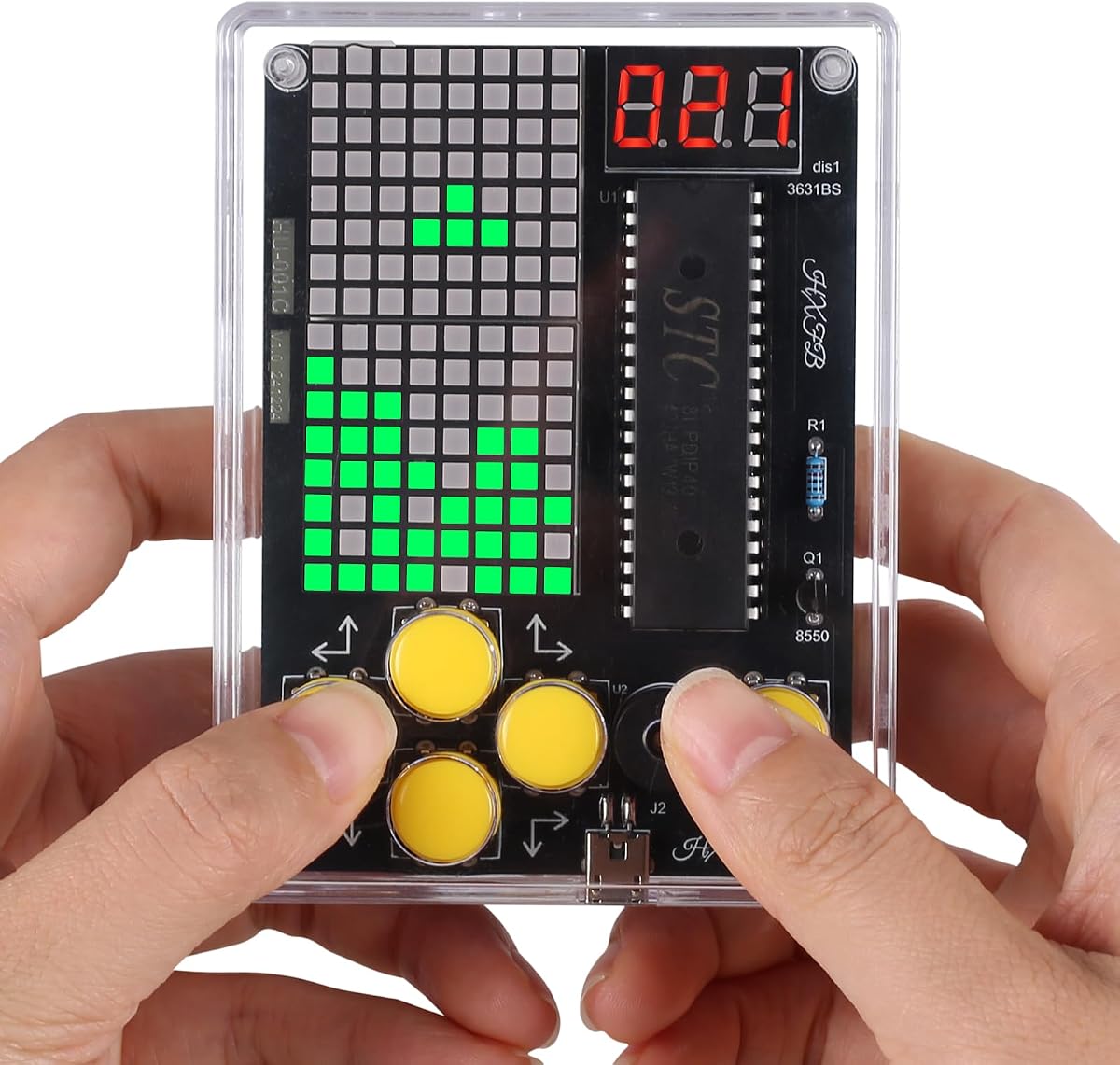
The PEMENOL 7-in-1 DIY Game Soldering Kit is a structured skills-practice option with a 4.1 rating. Rather than providing a large collection of unrelated components, it centers on one interactive electronic project with seven built-in functions and three difficulty levels.
We may earn a commission when you buy through this link, at no additional cost to you.
The learner handles real component placement, soldering, and assembly before operating the finished project. A color-printed step-by-step manual and video guidance support the process, making it suitable for individual practice, school projects, electronics workshops, and supervised group learning. The manufacturer specifically designs it for users aged 15 and above.
Compared with the Arduino kits, it offers much less opportunity for custom programming and far fewer distinct hardware experiments. The 4.1 rating reflects a narrower and potentially less flexible experience. Soldering also demands a safer, more controlled workspace, and the age guidance reinforces that this is intended for older teens with some readiness for fine motor work.
It is a sensible pick for a teen who has already tried basic breadboard electronics and now wants to improve soldering technique in a bounded project. The three levels create a useful progression, while the seven functions make the final result more interactive than a simple blinking circuit. For focused workshop practice, it is more purposeful than a general kit.
Three difficulty levels let learners select an appropriate starting point and advance as their assembly confidence improves. This structure is useful for workshops where students have different levels of soldering experience.
Seven operating functions provide repeated reasons to test the completed device. The outcome is less versatile than a microcontroller kit, but it concentrates practice around real component placement and soldering quality.
We may earn a commission when you buy through this link, at no additional cost to you.
The right electronics kit depends on how much the teen wants to build, which skills the product develops, and how much supervision or setup is realistic. Consider the learning format, included hardware, difficulty level, available workspace, and whether programming or hands-on assembly is the main attraction.
Some teens are motivated by code, while others prefer the immediate feedback of assembling a physical circuit. Arduino-compatible kits support programming in the Arduino IDE, whereas snap-together and theremin products emphasize circuit construction and scientific concepts. A soldering kit offers assembly practice and a finished artifact but does not provide the same open-ended coding environment. Choosing by learning format makes the kit more likely to remain engaging beyond the first session.
A large number of components does not automatically guarantee useful variety. Review the actual list for sensors, motors, displays, controls, and communication modules that match the teen's interests. Expansion-only kits may contain 37 modules but omit the controller, breadboard, wires, or power accessories needed for immediate use. Complete starter kits are generally more convenient, although some focused projects are deliberately designed around a single outcome.
Solderless breadboards and keyed connectors reduce the likelihood of mistakes and make it easier to change a circuit. Soldering develops valuable skills but introduces heat, sharp tools, and the possibility of cold joints or incorrect placement. A teen with no prior experience may benefit from a snap-together or pre-soldered kit first. An older teen seeking a challenge may be better served by a focused soldering build with a clear manual and adult support.
Project count is useful only when the projects teach transferable ideas. The larger ELEGOO kits guide learners through 22+, 30+, or 35+ exercises spanning inputs, outputs, sensing, displays, and motors, making it easier to build a long-term curriculum. The SNAP CIRCUITS kit also offers 300+ possibilities through reusable components. Focused audio and game kits provide fewer projects but may deliver a more meaningful finished device for a teen who values completion.
The controller determines how many sensors, outputs, and simultaneous behaviors a project can support. The UNO R3 is approachable and common in introductory Arduino learning, while the Mega 2560 provides 54 digital I/O pins, 15 PWM outputs, 16 analog inputs, four hardware serial ports, and 256 KB of flash memory. A teen likely to build elaborate, multi-module systems may benefit from that extra capacity, while a simpler curriculum may never require it.
Soldering kits should be used with a heat-resistant work surface, eye protection, ventilation, and adult supervision where appropriate. Even breadboard systems need attention to polarity, power voltage, and correct port settings. The PEMENOL kit is designed for ages 15+, while the Smart Robot Car Kit recommends adult guidance for first-time builders. Younger teens should have an experienced adult help interpret instructions and troubleshoot setup.
A useful tutorial should show component placement, wiring, code where relevant, and a way to diagnose a failed project. The ELEGOO kits provide PDF or digital materials, example code, wiring diagrams, and datasheets, though some require downloading the latest files. The speaker kits include printed instructions, and the MiOYOOW manual notes version-specific Bluetooth connections. Clear instructions are especially important when a teen is learning independently.
Some teens are energized by a polished object they can display or use, while others find satisfaction in completing a sequence of smaller experiments. A robot car offers movement, wireless video, and interactive driving, while the speaker kits produce a functional audio device with visual effects. A general starter kit supports numerous original projects but may not deliver one dramatic final result. A useful end goal can sustain motivation through troubleshooting.
Before starting, read the full instructions and identify every included part against the component list. Organize the workspace so the controller, breadboard, sensors, motors, jumper wires, and power accessories are easy to distinguish. For solderless kits, power the controller off while rearranging connections, confirm polarity, and check that the selected voltage matches the module requirements.
Work through one guided project at a time rather than connecting every available component at once. Upload the example code, make the specified connections, and verify the simple output before introducing additional modules. If a project fails, disconnect power and check polarity, pin assignments, continuity, and physical contact before changing the code. The ELEGOO sensor kit's instruction to verify pin requirements is particularly important for complex configurations.
Store breadboard kits with components separated in their supplied cases and wires loosely coiled. Soldered projects should be disconnected from power, inspected for loose joints, and protected from moisture, impact, and direct heat. A soldering iron should be returned to its stand, and hot components should cool before handling. For firmware-based projects, keep organized copies of working code so successful routines remain available when experimenting.
A beginner generally benefits most from a solderless kit with clear lessons, pre-soldered modules, and a simple first project. The ELEGOO UNO R3 Super Starter Kit is a balanced introduction, while SNAP CIRCUITS offers the gentlest path because it requires no programming or soldering. An experienced adult should still help with initial setup and basic electrical safety.
Yes, but the type of kit should match the learner's preferred starting point. Programmable Arduino kits teach coding alongside electronics, while snap-together and soldering projects focus more on assembly, circuit concepts, and testing. A teen can begin with guided examples and gradually modify simple values, thresholds, and sequences before attempting more complex logic.
A robotics kit is ideal when the teen is highly motivated by cars, cameras, movement, and interactive behavior. A general starter kit is broader and better for exploring unrelated sensors, displays, RFID, motors, and household automation ideas. Because the robot car concentrates on one substantial platform, a teen who may quickly lose interest should think carefully about that focus.
They can be safe when used with proper instruction, adult supervision where appropriate, ventilation, eye protection, and a heat-resistant work surface. Beginners should learn basic iron handling, component identification, and heat awareness first. Kits with pre-soldered boards or keyed connections reduce the amount of soldering required and may be a better first choice.
No. The ELEGOO UNO and Mega starter kits include the controller, breadboard, and other essentials, while the ELEGOO 37-in-1 Sensor Modules Kit contains modules and learning materials but omits the controller, USB cable, breadboard, and jumper wires. Check the included-components list before ordering an expansion set for a new learner.
The ELEGOO 37-in-1 Sensor Modules Kit offers the most specialized selection, with 37 modules covering motion, distance, temperature, humidity, light, sound, touch, flame, tilt, and more. The larger ELEGOO starter kits also include several sensors, but their broader components lists make them more suitable for a guided course covering electronics and programming together.
The MiOYOOW kit produces a portable speaker with dual 3W drivers, flashing LEDs, and a clear acrylic enclosure. It supports Bluetooth, TF card, and USB flash drive playback and includes an infrared remote. The other speaker kit adds a 10-LED visualizer, making it especially attractive to teens who enjoy synchronized lighting as well as audio.
Project totals vary widely by format. The SNAP CIRCUITS Classic supports 300+ possibilities, the ELEGOO complete starter kits offer 30+ or 35+ guided projects, and the smaller UNO Super Starter Kit includes 22+ lessons. Some focused products offer fewer distinct builds but offer multiple operating modes or functions within one completed device.
The ELEGOO Mega 2560 R3 Complete Starter Kit is the strongest overall choice for its 35+ guided projects, extensive component collection, and generous controller capacity. The ELEGOO UNO R3 Super Starter Kit offers an easier and more economical entry into Arduino learning, while the Smart Robot Car Kit V4 stands out for camera-equipped, programmable robotics.
For a teen who is brand-new, prioritize a solderless format, simple first success, and instructions that explain both the build and the underlying idea. More experienced learners should select the project that offers the strongest motivation: sensors for experimentation, a robot for movement and programming, a speaker for soldering and a finished device, or snap-together circuits for approachable visual learning.
Before ordering, confirm the current listing, included components, age guidance, required accessories, and whether additional software or tutorials must be downloaded. Prices and availability can change, so checking the latest product page ensures that the selected kit still matches the learner's experience and interests.