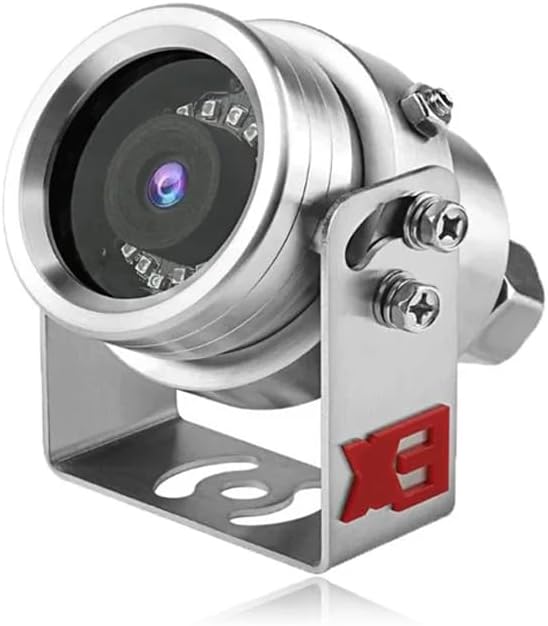
HJT 5MP POE Explosion Proof Camera
5.0Editor score
CT6 explosion-proof housing
IP66 weatherproof protection
Up to 98ft night vision
Explosion proof cameras are built for locations where ordinary electronics may become unsafe because of flammable gases, combustible dust, or other hazardous conditions. A suitable camera must combine appropriate certification, a robust enclosure, dependable imaging, and safe power or recording options suited to the installation environment.
This guide compares ten industrial and rugged cameras from the current marketplace, focusing on explosion-resistant housings, corrosion resistance, waterproofing, image resolution, night vision, zoom capabilities, connectivity, and installation flexibility. It also distinguishes purpose-built hazardous-location cameras from rugged industrial models that do not claim explosion-proof certification.
The selections show the range of available options, from fixed surveillance units with PoE and infrared illumination to intrinsically safe digital cameras for documentation and inspection. Product availability, certification requirements, and commercial terms can change, so buyers should confirm current specifications and regulatory suitability before ordering.
5.0Editor score


As an Amazon Associate we earn from qualifying purchases.
The table below compares the ten cameras by their primary role, protection claims, imaging system, and most useful installation or field feature. Buyers should pay particular attention to certification language, especially where the available listing does not confirm ATEX or equivalent approval.


The HJT 5MP POE Explosion Proof Camera combines a practical fixed-camera design with the features most often needed for industrial and outdoor surveillance. It carries a 5.0 rating, the highest confirmed customer rating in this collection, and its 304 stainless steel enclosure is designed for demanding service. The stated CT6 explosion-proof level and IP66 water protection make it a particularly relevant option for buyers comparing rugged surveillance products without moving to a portable field camera.
We may earn a commission when you buy through this link, at no additional cost to you.
Its 3.6mm lens offers an 85-degree field of view, which is useful for covering entrances, loading areas, machinery, and broad exterior spaces. Eighteen infrared LEDs provide night vision up to 98 feet, or 30 meters, while dual H.265 and H.264 compression helps control storage requirements. The camera also detects moving objects and triggers real-time alerts, adding a practical security function beyond basic recording.
PoE is another meaningful advantage. A single Ethernet connection can carry both data and power, reducing the number of cables that must be routed through a difficult industrial environment. The trade-off is that the product listing does not mention ATEX certification, so a buyer whose application legally requires a particular approval should verify compliance before installation. The fixed 3.6mm lens also means field of view cannot be optically adjusted after mounting.
This camera is best for integrators, facility managers, and security installers seeking a capable fixed unit with a relatively accessible specification set. It suits sites where corrosion resistance, weatherproofing, night monitoring, and efficient cabling matter more than optical zoom. For regulated installations, obtain documentation and have the enclosure evaluated against local requirements; where that process is satisfactory, it is the strongest all-around value in this guide.
The stainless steel shell, CT6 construction claim, tempered flat glass, and IP66 protection make this model better suited to exposed industrial locations than a standard outdoor camera. Its 85-degree lens can cover a useful amount of ground without requiring several adjacent units.
PoE lets one Ethernet run handle camera power and data, while H.265 compression can reduce storage demands. These are especially useful when installations are spread across warehouses, chemical plants, or other large properties.
We may earn a commission when you buy through this link, at no additional cost to you.
The DORLAND Industrial Intrinsically Safe 5K 48MP Digital Camera is designed for workers who need to record high-resolution evidence inside hazardous industrial environments. It combines a 48MP autofocus still camera with 5K video at 30 frames per second, a 3.5-inch IPS display, WiFi, and a 16x digital zoom. The product is described as intrinsically safe and explosion proof for Zone 1 use, with an IP54 protection rating.
We may earn a commission when you buy through this link, at no additional cost to you.
Autofocus is a major practical benefit when conditions change quickly or operators cannot spend time manually adjusting focus. The camera can capture crisp stills for equipment inspections, maintenance records, and incident documentation, while electronic stabilization and a built-in six-axis gyroscope help produce more stable video. A rechargeable lithium-ion battery and support for memory cards up to 256GB support extended field work.
The listing includes two explosion-proof batteries, a charging dock, charger head, cables, a 128GB memory card, lens cap, filter lens, and lanyard. That package is relatively complete for an inspection camera. External microphone and fill-light accessories are mentioned for illustration only and must be purchased separately. The manufacturer explicitly prohibits using or replacing the hot-shoe device in a hazardous or explosive environment, which is an important operational restriction.
This model makes the most sense for safety personnel, inspectors, engineers, and contractors who need portable evidence capture rather than continuous networked surveillance. Buyers should still confirm the precise Zone 1 certification, approved accessories, and site procedures before taking the camera into classified areas. Within those constraints, it offers a rare combination of resolution, stabilization, autofocus, and intrinsically safe portability.
Autofocus, 48MP stills, and 5K video make the camera well suited to inspections, equipment checks, and incident records. Its dual-camera-style documentation workflow is more flexible than a fixed surveillance unit.
The stated restriction on modifying the hot-shoe device is important because unapproved accessories can invalidate the safety basis of an intrinsically safe product. Use only accessories and replacements explicitly permitted for the hazardous location.
We may earn a commission when you buy through this link, at no additional cost to you.
The LINOVISION 4K Explosion Proof PoE Camera is aimed at distributed surveillance installations where network distance, remote access, and environmental durability are priorities. It records at 3840×2160, uses advanced H.265 compression, and includes a waterproof PoE extender advertised to add up to 330 feet of transmission while maintaining 1000Mbps bandwidth. Its 304 stainless steel housing is designed for chemical plants, refineries, oil fields, gas stations, and other harsh sites.
We may earn a commission when you buy through this link, at no additional cost to you.
Remote management is one of its strongest features. The camera offers an intuitive web interface compatible with major browsers, a mobile application with cloud access, and PC-based VMS software for central management of multiple cameras across different locations. An API also supports integration with third-party systems. This makes the camera more attractive for professional networked deployments than a basic standalone security unit.
Power can be delivered through IEEE 802.3af PoE or a 12V DC supply, offering flexibility during installation. Two LEDs provide night vision up to 100 feet, although the output is black and white. Importantly, the listing explicitly says that no certificate yet has been obtained. That statement should prevent buyers from assuming that the housing is automatically approved for a regulated hazardous location.
Choose this model when a project needs a high-resolution fixed camera, long cable runs, and centralized management more than a hazardous-location certification already documented by the manufacturer. Site engineers should obtain current technical and compliance documents before approving deployment. If the required certification is confirmed, its long PoE reach and flexible software support make it a strong option for sprawling industrial properties.
The included waterproof extender can add 330 feet of transmission at 1000Mbps bandwidth. This can simplify connections between buildings, perimeter zones, aquaculture facilities, dams, or other locations where a direct Ethernet run would be inconvenient.
Web access, cloud-enabled mobile viewing, VMS management, and API support cover several common deployment styles. These features are useful for operators maintaining multiple cameras across separate industrial sites.
We may earn a commission when you buy through this link, at no additional cost to you.
The DORLAND Camera EX05 is the most unusually specified field camera in this roundup. It is listed as an ATEX explosion-proof, intrinsically safe IP68 camera with 8K video, 70MP still photography, 18x zoom, autofocus, a dual-screen selfie design, a 2500mAh battery, and an SOS light. That combination positions it for demanding inspections where conventional cameras would be vulnerable to dust, moisture, impact, or restricted movement.
We may earn a commission when you buy through this link, at no additional cost to you.
Its strongest features are imaging versatility and environmental resistance. An 18x zoom allows operators to inspect distant equipment without approaching a hazardous area, while 70MP stills can preserve fine detail for reports and maintenance records. The autofocus function reduces the time needed to compose a clear image, and the dual-screen arrangement supports both conventional shooting and self-recording workflows. IP68 protection also makes the camera relevant to wet or underwater field environments.
The available listing is concise, however, and does not provide a confirmed customer rating, detailed operating-temperature limits, or a complete breakdown of its certification. ATEX language is a strong indicator that the product is intended for European hazardous-location use, but buyers still need to verify the exact certificate, equipment category, approved battery, and applicable zones. A stated explosion-proof designation should never be treated as permission to ignore site-specific rules.
This is the pick for industrial inspectors, marine or utility teams, and technical professionals who value both zoom and close-up detail in harsh environments. The combination of ATEX intent, IP68 protection, autofocus, and high-resolution capture exceeds the capability of ordinary rugged point-and-shoot cameras. Final approval should depend on matching the exact certification and accessories to the intended environment.
The 18x optical zoom helps users document components, valves, and distant structures from a safer distance. Combined with 70MP stills and 8K video, it supports both forensic-style detail and broader scene recording.
IP68 protection and the listed ATEX explosion-proof designation make the EX05 relevant to especially harsh field conditions. Verify the certificate details and environmental limits before every classified deployment.
We may earn a commission when you buy through this link, at no additional cost to you.
The HJT 5MP POE Outdoor UltraHD Security Camera is a fixed surveillance model centered on wide-area coverage and dependable night operation. Its 304 stainless steel body, CT6 explosion-proof level, and IP66 waterproof rating are intended for harsh outdoor installations. A 3.6mm lens supplies an 85-degree view angle, while 18 infrared LEDs support night imaging as far as 98 feet.
We may earn a commission when you buy through this link, at no additional cost to you.
The camera is designed for continuous security rather than portable documentation. Motion detection can trigger alarms when suspicious activity appears, while H.265 and H.264 compression give operators a choice between storage efficiency and broad compatibility. PoE is also implied by the model designation and provides a straightforward method for carrying power and data over one Ethernet connection.
Its main limitations are the absence of a confirmed customer rating and any listed formal ATEX certification. The fixed wide-angle lens is excellent for entrances and broad activity areas but less suitable when operators need to isolate distant subjects. The camera also appears oriented toward monochrome infrared surveillance, so buyers wanting continuous color night viewing should confirm the available configuration and illumination requirements.
This model is a sensible alternative to the first HJT camera in the roundup for buyers who prioritize the same core housing, night range, and wide field of view. It is best suited to outdoor yards, industrial access points, warehouses, and perimeter monitoring. As with any listed explosion-proof unit, confirm the documentation and applicable approval requirements before treating it as suitable for a regulated hazardous area.
The 85-degree field of view reduces the need for multiple cameras when the goal is to observe a wide exterior work area. Mounting height and angle remain important because a fixed lens cannot recover an incorrect composition after installation.
Eighteen infrared LEDs and a stated 98-foot range make the camera practical for low-light monitoring. Motion-triggered alerts add an immediate response layer when the unit is connected to the appropriate recording or notification system.
We may earn a commission when you buy through this link, at no additional cost to you.
The DORLAND EX Card Camera 02 Max is a high-resolution intrinsically safe field camera with a 3.6-inch IPS touchscreen, autofocus, anti-shake, and 8x optical zoom. It is described as explosion proof for Zone 1 applications and carries an IP54 rating. Compared with the more conventional EX Card Camera 02, this Max version offers a larger class of still-image resolution, optical rather than digital zoom, and touch-based operation.
We may earn a commission when you buy through this link, at no additional cost to you.
The 64MP sensor and 5K video output are useful for recording detailed equipment, process stages, and field conditions. Optical zoom preserves native detail more effectively than a digital crop, making the camera a better fit for inspections where the subject is initially too far away to capture clearly. Autofocus supports quick operation, anti-shake helps stabilize handheld footage, and a dual-camera selfie function broadens its documentation options.
WiFi can make image transfer and review more convenient, while the touch display gives operators a more modern interface than a small button-driven camcorder. On the other hand, IP54 offers less protection than an IP68-rated model, and the listing provides no confirmed customer rating. Buyers should also verify what additional equipment is approved for the intended Zone 1 environment rather than assuming standard accessories are interchangeable.
The camera is a strong fit for safety inspectors, maintenance teams, and field engineers who want detailed images without relying exclusively on digital zoom. It is also a logical choice for users who prefer touchscreens and dual-camera documentation. Once the exact certification, battery, and accessory conditions have been checked against the site risk assessment, it stands out as one of the most capable portable models in the guide.
The 8x optical zoom lets operators frame distant subjects without relying on a heavily cropped digital image. This can produce clearer evidence when inspecting tanks, piping, electrical equipment, or elevated structures.
The 3.6-inch IPS touchscreen, autofocus, and anti-shake features reduce the learning curve for field workers. WiFi adds another layer of convenience for transferring and reviewing approved material.
We may earn a commission when you buy through this link, at no additional cost to you.
The DORLAND Ex HDV 100i is an intrinsically safe explosion-proof camcorder designed for field video in industrial settings. It records 5K footage at 30 frames per second through a 48MP sensor based on an 8M CMOS, while offering 16x zoom, anti-shake stabilization, WiFi, and a three-inch flip touchscreen. The flip display is particularly useful for self-recording, operator framing, and reviewing footage without removing the camera from a fixed position.
We may earn a commission when you buy through this link, at no additional cost to you.
Compared with still-focused industrial cameras, this model emphasizes video production and documentation. The 5K/30FPS combination provides a high level of visible detail, while stabilization helps handheld recordings remain readable. WiFi can support convenient transfer or review, and the stated IR LED fill-light function offers illumination for dark workspaces, subject to the appropriate safety restrictions and the availability of an approved accessory.
The main drawback is the brevity of the supplied product information. It does not state a specific IP rating, battery capacity, storage standard, operating-temperature range, or complete certification category. It also has no confirmed customer rating. Those omissions make pre-purchase verification essential, particularly if the camcorder will be used where equipment approval forms part of the safety plan.
This camcorder is best for technicians, trainers, safety personnel, and remote-work teams that need longer, higher-resolution video rather than only still photographs. Its touchscreen, flip screen, and anti-shake features make it convenient for repeatable process walkthroughs and vlog-style reporting. If its current certification and accessories fit the intended environment, it provides a compelling portable video alternative within the DORLAND range.
The 48MP sensor and 5K recording provide more room to capture process details in motion. This makes the camcorder useful for demonstrations, training, remote inspection, and incident reconstruction.
A flip touchscreen lets the operator compose the shot from more positions than a fixed display, and anti-shake reduces distracting movement. These conveniences are valuable when filming inside confined or uneven work areas.
We may earn a commission when you buy through this link, at no additional cost to you.
The P1468-XLE Explosion-Protected Bullet Camera is positioned as a dedicated industrial surveillance unit rather than a general-purpose compact camera. Its bullet form, explosion-protected design, and stated suitability for hazardous locations make it a logical choice for permanent monitoring in demanding industrial environments where visual evidence, perimeter oversight, and equipment protection are priorities.
We may earn a commission when you buy through this link, at no additional cost to you.
The product information emphasizes durable construction, advanced protection, and reliable video capture under extreme conditions. Those qualities are the essential buying criteria for a camera installed near processing equipment, chemical handling areas, energy facilities, or other classified spaces. The product is designed to perform as a fixed unit, which makes it conceptually different from portable inspection devices that rely on an operator to capture an image at the right moment.
Unlike several other products in this guide, the listing focuses on the explosion-protected enclosure and industrial use rather than advertising a specific sensor resolution, night range, lens type, or power method. That makes it impossible to compare image quality and technical performance in the same level of detail. There is also no confirmed customer rating, so buyers should request the complete data sheet, certification documents, and installation instructions.
The P1468-XLE is best for organizations that need a purpose-built fixed surveillance camera for a hazardous site and already have a specialist integrator or an established product-support process. It is less appropriate for buyers who need portable imaging, visible zoom specifications, or immediate compatibility with a particular video-management platform. Its strongest argument is the dedicated explosion-protected design for industrial hazardous-location surveillance.
A fixed bullet camera is suited to continuous monitoring of entrances, process zones, and restricted areas. Because the unit is intended for hazardous locations, its protected design is the defining consideration rather than portability.
The concise listing omits critical details such as resolution, illumination range, ingress rating, power input, lens options, and protocol support. Professional buyers should obtain these specifications and the applicable safety documentation before finalizing a system design.
We may earn a commission when you buy through this link, at no additional cost to you.
The NightKing Stainless Steel Corrosion Explosion Proof Camera is a fixed surveillance option with a 304 stainless steel housing, CT6 explosion-proof level, corrosion resistance, and bullet-resistant glass. It supports 5MP at 20 frames per second, 4MP at 25 frames per second, and 2MP at 30 frames per second, giving integrators a choice between resolution and frame rate.
We may earn a commission when you buy through this link, at no additional cost to you.
Its 2.8–12mm motorized autofocus lens provides 4x optical zoom, making it more adaptable than the fixed 3.6mm lenses used by some competing models. The camera also supports PoE, ONVIF, and the Hikvision protocol, which can simplify integration with suitable network video recorders and management systems. The stated applications include airports, streets, banks, police stations, warehouses, gas stations, vessels, and vehicles.
Most importantly for regulated sites, the listing contains a clear warning that this product is not supplied with ATEX certification and should not be ordered when certification is required. That limitation does not erase the camera's corrosion-proof construction or fixed-surveillance strengths, but it sharply narrows the locations where the product can be selected responsibly.
This model is most appropriate for a security integrator serving corrosive environments where durable housing, motorized zoom, and mainstream protocol support are needed without a stated ATEX requirement. It is less suitable for classified European installations that legally mandate ATEX documentation. For general industrial use, its 304 steel enclosure, bullet-resistant glass, and corrosion resistance are its most valuable attributes.
The 2.8–12mm autofocus lens can cover both wide scenes and tighter details, reducing the need to choose the perfect field of view before mounting. Motorized adjustment is also useful where physical access is difficult.
The seller explicitly states that ATEX certification is not supplied. Buyers must distinguish between a robust, explosion-resistant housing and a model with the required formal hazardous-location approval before including it in a regulated project.
We may earn a commission when you buy through this link, at no additional cost to you.
The Ricoh G900 is a rugged industrial documentation camera rather than a true explosion-proof surveillance camera, but it offers an important alternative for inspectors working around chemicals, utilities, or harsh outdoor environments. It has a confirmed 4.0 customer rating, a 20MP sensor, impact-resistant construction, IPX8 water resistance to 20 meters for up to two hours, and chemical resistance to sodium hypochlorite, ethanol, and liquid chlorine dioxide.
We may earn a commission when you buy through this link, at no additional cost to you.
Its data-management features distinguish it from ordinary compact cameras. Built-in GPS supports location-aware records, while password protection can cover the entire camera, internal memory, USB access, settings, and compatible SDHC or SDXC memory cards. The camera can also add barcodes, memos, timestamps, image clips, temporary voice memos, and other organization features. A webcam function is included for practical remote communication.
Dust and sand resistance, freeze protection down to –10°C, and a reported 2.1-meter drop-test pass add further value in demanding work environments. The package includes a rechargeable battery, power components, USB cable, charger, neck strap, macro stand, manual, and card. However, the supplied information does not state an explosion-proof or ATEX certification, so it should not be represented as a substitute for a certified hazardous-location camera.
The G900 is best for field engineers, environmental teams, auditors, and industrial workers who need dependable still images, location records, and security for sensitive media. It is a strong rugged companion for tasks that occur near chemical or wet environments, but it belongs outside a camera shortlist when legally certified explosion protection is the central requirement.
Chemical-resistant materials, IPX8 protection, freeze resistance, and a tough body make the G900 practical for demanding field work. The 20-meter waterproof capability is particularly useful for infrastructure, drainage, and utility inspections.
Password controls, protected memory cards, GPS, and embedded memo tools help teams organize evidence while reducing the risk of unauthorized access. These features make the camera useful in regulated workflows where location and chain-of-custody information matter.
We may earn a commission when you buy through this link, at no additional cost to you.
Choosing an explosion proof camera requires matching the equipment to the actual hazard, installation environment, documentation needs, and recording system. The most important distinction is whether you need a certified hazardous-location surveillance unit, an intrinsically safe portable camera, or simply a rugged industrial camera for work near hazardous materials.
Start with the site's documented hazard class rather than the appearance of the housing. Gas, vapor, dust, and mixed-hazard environments can require different equipment categories, zones, temperature classes, and approval markings. A CT6 claim, an intrinsically safe description, or an ATEX label is not a substitute for the complete certificate and its stated limits. The LINOVISION listing explicitly says no certificate has yet been obtained, while the NightKing listing states that ATEX certification is not supplied.
Explosion-proof enclosures are designed to contain an internal ignition and prevent it from propagating, while intrinsically safe equipment limits energy to safe levels. The distinction affects housing, maintenance, approved accessories, and site procedures. Among the listed products, the HJT units, LINOVISION unit, P1468-XLE, and NightKing camera are positioned as fixed explosion-proof surveillance devices, whereas several DORLAND products are described as industrial intrinsically safe cameras for portable use.
A safety marking is useful, but the documentation behind it is what allows an engineer to approve the product. Look for the full certificate, applicable standards, approval authority, model coverage, serial-number requirements, and restrictions on batteries, cables, mounting, and accessories. The DORLAND EX Card Camera 02 specifically warns against using or replacing the hot-shoe device in a hazardous and explosive environment, illustrating why accessory restrictions must be treated as part of the safety control.
A 304 stainless steel housing offers corrosion resistance and mechanical strength, while tempered or bullet-resistant glass helps protect the optical window. IP ratings cover water and solids, but they do not automatically indicate explosion protection or chemical compatibility. Check whether the location includes salt spray, acidic gases, cleaning chemicals, dust, extreme temperature, impact risk, or submersion. The DORLAND EX05 leads the portable group with IP68 protection, while most fixed HJT models use IP66.
Resolution is only one part of usable image quality. Consider the lens, sensor, focus behavior, zoom type, low-light performance, and the distance to the subject. The 3.6mm lenses on the HJT cameras create a broad 85-degree view, which is useful for entrances and open areas. The NightKing offers a motorized 2.8–12mm lens for more precise framing, while portable DORLAND models emphasize autofocus, digital zoom, or optical zoom for inspections.
Infrared illumination is valuable around fixed surveillance areas, especially when color is not essential. The HJT cameras state a 98-foot range using 18 infrared LEDs, and the LINOVISION camera lists black-and-white night vision up to 100 feet. Portable cameras may instead use an external or built-in fill light. Check light pollution, reflective surfaces, the safety status of any lamp, and whether the illumination is approved for the hazardous area. The HJT EX Card Camera 02 notes that its illustrated fill light and external microphone are separate purchases.
Fixed installations often benefit from PoE because one Ethernet cable can carry data and power. The HJT and LINOVISION cameras are oriented toward this approach, and the LINOVISION model also supports 12V DC. Remote software support matters too: LINOVISION provides a web interface, mobile cloud access, VMS software, and an API, while the NightKing supports ONVIF and a Hikvision protocol. Portable cameras generally rely on rechargeable batteries and removable storage, with support up to 256GB on the EX Card Camera 02.
A fixed camera provides continuous observation but must be aimed, mounted, and connected. A portable intrinsically safe camera gives inspectors the freedom to capture close-ups, unusual angles, and evidence at the point of work. The DORLAND EX05, EX Card Camera 02, EX Card Camera 02 Max, and Ex HDV 100i fall into the portable group, while the HJT, LINOVISION, P1468-XLE, and NightKing products are fixed surveillance choices. The Ricoh G900 is also portable, but its main strength is rugged documentation rather than certified explosion protection.
Begin with a documented site assessment that identifies the hazardous zone, temperature class, corrosive exposure, ingress risks, and required surveillance coverage. Compare the camera's current certificate and technical data sheet with those conditions. For portable equipment, identify every battery, charger, cable, memory card, microphone, light, and other accessory that will be used, and confirm that each item is permitted in the hazardous location.
Install fixed cameras using the mounting and sealing instructions supplied by the manufacturer. Preserve the enclosure, glass, cable entries, and certified components exactly as supplied. Do not drill unapproved openings, replace screws with incompatible hardware, or modify a certified hot shoe or accessory interface. For PoE installations, use appropriate network equipment and confirm electrical compatibility, grounding, surge protection, and cable routing with a qualified system integrator.
For portable units, inspect the enclosure and battery before every shift, keep approved charging equipment outside the hazardous area when required, and use the supplied cards and battery protections correctly. Download or securely manage footage according to the organization's data policy. Clean exterior surfaces with an approved method, avoid abrasive tools and incompatible solvents, and schedule inspections of seals, connectors, mounting points, glass, and corrosion.
No. A product may use explosion-resistant or explosion-proof construction without including the certification required for a particular jurisdiction. The LINOVISION listing states that no certificate has yet been obtained, and the NightKing listing says ATEX certification is not supplied. Buyers should request the complete certificate and confirm that the exact model and configuration are covered.
No. A rugged camera can withstand impact, water, or chemicals without being approved for a location where flammable gases or combustible dust may be present. A suitable hazardous-location camera needs the correct protection concept, certification, enclosure, and approved accessories. Safety and compliance personnel should approve the equipment before it enters the classified area.
Five megapixels can provide useful detail when the lens, distance, lighting, and recording configuration suit the scene. Broad areas may be better served by a wide fixed lens, while distant subjects may require optical zoom or a higher-resolution camera. Frame rate, infrared range, storage method, and the level of detail required for identification are equally important.
IP66 indicates protection against dust and powerful water jets, while IP68 indicates a higher level of dust protection and protection against prolonged immersion under specified conditions. Neither rating proves explosion-proof certification. The DORLAND EX05 lists IP68, while the HJT fixed cameras and DORLAND EX Card Camera 02 are rated IP54 or IP66 depending on the model.
PoE can reduce cabling by transmitting data and power over one Ethernet connection, which is helpful at large industrial sites. The camera and network equipment must still be electrically compatible, and any network switch or extender used near the camera must satisfy the site’s hazardous-area requirements. Certification should cover the complete installed configuration, not merely the camera.
Only if the light and its connection are explicitly approved for the hazardous location and the manufacturer’s instructions allow them. The DORLAND EX Card Camera 02 states that its illustrated fill light and external microphone must be purchased separately and prohibits using or replacing the hot-shoe device in a hazardous and explosive environment. Treat the listed accessories as examples, not automatic approvals.
Inspect the housing, battery contacts, charging contacts, memory-card door, display, controls, and physical connectors for damage, corrosion, contamination, or wear. Confirm that the battery and other accessories are approved and that protective covers are fully seated. Any impact, battery damage, or unexplained fault should prompt removal from service and qualified review.
The supplied information describes the Ricoh G900 as waterproof, chemical resistant, impact resistant, dust resistant, and freeze resistant, but it does not state explosion-proof or ATEX certification. It is therefore best treated as a rugged industrial documentation camera, not a certified substitute for equipment required in a hazardous location.
The strongest overall value in this guide is the HJT 5MP POE Explosion Proof Camera, which combines a 5.0 rating, CT6 construction, 304 stainless steel, IP66 protection, wide viewing, 98-foot night vision, and single-cable PoE operation. The DORLAND EX05 stands out for portable ATEX-oriented imaging, 70MP detail, 18x optical zoom, and IP68 protection, while the P1468-XLE is the most purpose-focused fixed hazardous-surveillance choice.
For a fixed installation, prioritize verified certification, housing suitability, lens coverage, night illumination, network compatibility, and the complete approved configuration. For mobile inspection work, focus on intrinsically safe construction, approved batteries and accessories, autofocus, stabilization, zoom, and reliable storage. The Ricoh G900 is worth considering when rugged chemical-resistant documentation is required but formal explosion protection is not.
Before purchasing, verify current specifications, certification documents, approved accessories, and compatibility with the recording platform. Product listings and commercial terms can change, and regulatory requirements vary by site and jurisdiction. A qualified safety engineer or industrial system integrator should approve the final camera and installation.
