
First Alert BRK 7020BSL
4.4Editor score
Integrated smoke alarm
Powerful visual strobe
Ten-year battery backup
Our guide compares the best fire alarms for deaf people, including visual strobes, bed shakers, text alerts, and notification systems for safer homes.
Fire alarms for deaf people must communicate danger without relying solely on sound. The strongest systems combine bright visual warnings, tactile vibration, text messages, or synchronized strobes, giving users multiple ways to notice smoke and carbon monoxide emergencies while sleeping or away from an audible alarm.
We compared ten products by examining their alert methods, installation requirements, power sources, visual output, notification clarity, and compatibility with other safety equipment. The list covers complete starter kits, integrated smoke alarms, notification accessories, and commercial-style notification appliances for home and supported-living environments.
Each review explains what the product does best, where it has limitations, and who should consider it. Ratings reflect the available listing information, while installation requirements can vary significantly by model. Product availability and pricing change frequently, so confirm the current listing details before buying.
4.4Editor score

3.8Editor score
4.2Editor score
This side-by-side comparison distinguishes complete residential alert systems from integrated detectors, visual-only notification units, and compatible bed-shaker accessories. The key differences are alert type, detection function, installation method, power source, and whether a separate receiver or alarm is required.



The Sonic Alert HomeAware II Basic Starter Kit is a multi-notification system designed for deaf and hard-of-hearing users, heavy sleepers, and people who sleep without hearing aids. Its 3.8 rating is modest, but the breadth of features is unusually broad: a bright strobe, bed shaker, loud tones, scrolling text, and phone or caller information can all help communicate an emergency.
We may earn a commission when you buy through this link, at no additional cost to you.
Its most useful feature is the combination of notification styles. The unit listens to an existing smoke or carbon monoxide alarm in the same room, then activates several alerts simultaneously. Written messages support quick comprehension, while the bed shaker reaches users who cannot rely on an audible alarm. Bluetooth connection to the HomeAware app also lets incoming cellphone calls and texts appear on the scrolling display.
There are important trade-offs. This product is explicitly not a smoke or CO detector, so it cannot replace a working alarm in the same room. Its effectiveness depends on the existing detector producing a recognizable sound pattern and on the HomeAware unit being placed appropriately. The rechargeable battery backup is helpful during outages, but regular charging and testing remain necessary.
This is the strongest fit for someone who wants one coordinated system for emergencies, calls, and other notifications rather than a visual appliance alone. It is particularly useful in a bedroom where an audible alarm might not wake the user. Confirm compatibility with the existing smoke or CO alarm, test the complete chain regularly, and keep the display and bed shaker within easy reach.
Combining vibration, flashing light, sound, and text gives users several ways to recognize danger. This layered approach is particularly valuable overnight, when visual warnings may be difficult to perceive and conventional alarms may fail to provide enough sound.
The scrolling display can present incoming cellphone calls and texts, while the listing also notes support for connected landline phones. That extends the system beyond emergency alarms without requiring a separate visual caller display.
We may earn a commission when you buy through this link, at no additional cost to you.
The First Alert BRK 7020BSL combines a conventional smoke detector with a 177-candela LED strobe for deaf and hard-of-hearing residents. Its 4.4 rating makes it one of the better-rated options in the group. The integrated design reduces the number of separate wall devices and simplifies visual warning coverage in a bedroom, hallway, or other sleeping area.
We may earn a commission when you buy through this link, at no additional cost to you.
The alarm provides a strong visual signal, and its synchronized strobe feature allows compatible units to flash in unison. That matters when alarms are placed in several rooms, since a uniform flash pattern is easier to interpret than unrelated signals. AC power supplies normal operation, while a sealed ten-year battery offers backup during outages.
The main drawback is installation complexity. This is a hardwired unit rather than a simple battery-only or plug-in alarm, and electrical work must comply with local requirements. It detects smoke but not carbon monoxide, so a separate CO alarm may still be appropriate. The listing also warns that front-cover design can vary without changing the unit's function.
This model is an attractive option for homeowners or installers who want an established smoke-detection format with visual notification built in. It is particularly suitable where a bedroom strobe must reliably awaken a sleeping resident. Have a qualified electrician handle the wiring, position the strobe where it can be seen, and test the detector and visual alert regularly.
Integrating the smoke detector and strobe can make placement more coherent. The user receives a visual warning from the same unit responsible for detecting smoke, reducing the chance of overlooking a separate notification appliance.
Compatible units can flash together, providing a consistent household-wide warning pattern. This is advantageous in larger homes where someone might otherwise miss a strobe visible only in one room.
We may earn a commission when you buy through this link, at no additional cost to you.
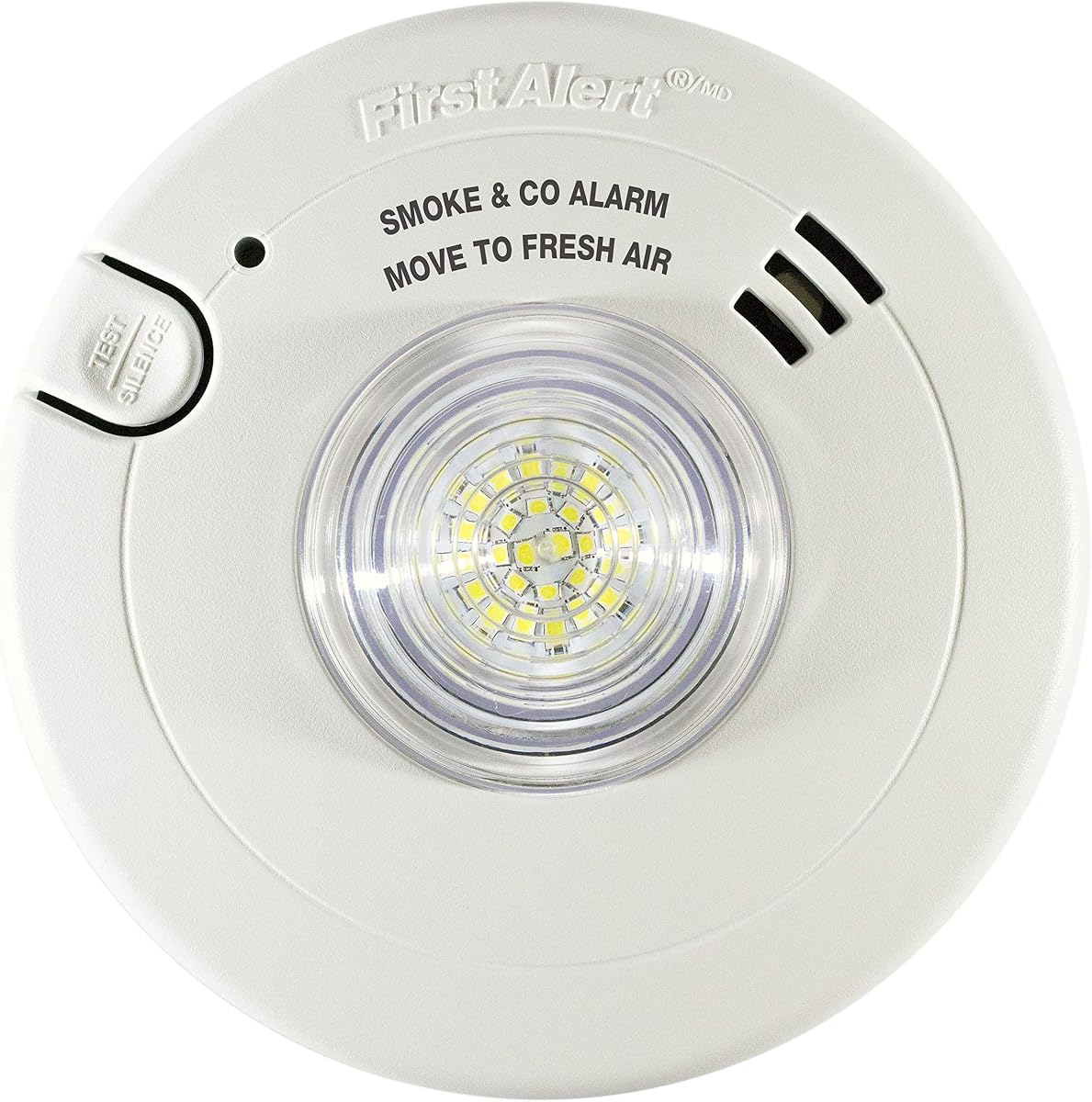
The First Alert BRK 7030BSL is a hardwired combination alarm that detects both smoke and carbon monoxide while adding an LED strobe for visual notification. It carries a 4.2 rating and stands out for separate flash patterns, allowing users to distinguish smoke events from CO events without relying entirely on audible tones.
We may earn a commission when you buy through this link, at no additional cost to you.
Its 77-candela synchronized LED strobe is designed to warn hearing-impaired residents, and compatible units flash in unison. Optipath 360 technology provides direct access to the smoke-sensing chamber, while the combined smoke-and-CO format addresses two common household hazards in one hardwired enclosure. A ten-year limited warranty adds reassurance for long-term use.
Compared with the BRK 7020BSL, this model offers carbon monoxide detection and a more compact combined-alarm solution, but its listed strobe output is lower. Like the 7020BSL, it requires electrical installation. Buyers should also verify that its separate flash patterns are meaningful to household members and document what each pattern means.
The BRK 7030BSL is a strong choice for people seeking a single hardwired unit that covers smoke, CO, and visual warning. It is especially appropriate for home renovation projects where coordinated notification equipment is being installed. Use an electrician, place the alarm where the strobe remains visible from the bed, and explain the two visual patterns to everyone in the household.
Combining smoke and carbon monoxide detection reduces the number of separate alarm bodies on a wall or ceiling. It is particularly useful where space, wiring, or installation access is limited.
Different flash patterns give residents a way to identify the type of emergency. Practicing those patterns can make the distinction easier to recognize during a stressful event.
We may earn a commission when you buy through this link, at no additional cost to you.
The Simplex 4906-9251 TrueAlert is a multi-tapped speaker with a multi-candela strobe for integrated audible and visual fire-alarm notification. The available listing does not provide a customer rating, so there is no numerical rating to weigh. Its value lies in the appliance format and its flexibility for professionally installed fire-alarm systems.
We may earn a commission when you buy through this link, at no additional cost to you.
A speaker strobe serves households and facilities that want a shared warning method rather than separate visual and audible units. The multi-tapped feature can provide different audible signaling patterns, while selectable candela output helps match visual performance to the installation environment. This makes the appliance relevant to properties with established Simplex-compatible equipment.
This is not a standalone smoke or CO detector and should not be treated as a substitute for one. It is also not presented as a simple plug-in consumer product. The listing lacks detailed mounting, voltage, and compatibility specifications, so buyers must confirm those points with the fire-alarm provider or manufacturer before ordering.
Consider this unit when working with an installer or an existing commercial-style notification system, especially where synchronized building alerts are more important than consumer convenience. It is less suitable for a typical bedroom installation performed without professional guidance. Confirm system compatibility, required wiring, available candela settings, and the meaning of each audible pattern.
Combining a speaker and strobe in one enclosure helps consistent alerts reach both hearing and deaf residents. It is especially useful in shared environments where a single notification appliance can serve a room.
The product is best treated as part of a broader fire-alarm design. Its value depends on compatibility with the selected control equipment, wiring method, and facility requirements.
We may earn a commission when you buy through this link, at no additional cost to you.
The First Alert SLED177 is a hardwired LED strobe designed to provide a visible warning for hearing-impaired residents. With a 4.0 rating, it offers a recognized middle ground in the list. Its 177-candela output is among the more powerful visual figures listed for the products reviewed.
We may earn a commission when you buy through this link, at no additional cost to you.
The slim enclosure can be mounted on a wall or ceiling, making it flexible for bedrooms, hallways, and common living areas. Compatible units can synchronize their strobes, which helps create a consistent visual warning throughout a home. The product also meets stated UL standards and Americans with Disabilities Act requirements and uses quick-connect wiring.
Its limitation is clear: this is a notification appliance, not a smoke or carbon monoxide detector. It must be connected to a compatible alarm system, and the electrical installation may be more involved than placing a battery-operated notification device. Buyers should also confirm compatibility with existing fire-alarm equipment rather than assuming that all hardwired strobes can be mixed.
This model makes sense for households that already have suitable smoke and CO alarms but need stronger visual coverage. It can be particularly effective when a bed, hallway, or large living room requires a dedicated strobe. Have the wiring assessed by a qualified installer, place the light within the resident's visual field, and test it along with the connected alarm.
The 177-candela specification indicates a high-output visual appliance that may be easier to notice in a large room than a smaller indicator. Actual visibility still depends on placement, room layout, and whether the person is asleep.
When compatible units operate in unison, residents can recognize a familiar household pattern. This consistency can improve awareness without relying on different warning sequences from each room.
We may earn a commission when you buy through this link, at no additional cost to you.
The Bellman & Symfon Bed Shaker is a tactile notification accessory designed for deaf and hard-of-hearing users, including seniors and assisted-living residents. Its 3.4 rating is the lowest numerical rating in the group, but its role is specific: it delivers strong, customizable vibrations without creating an audible disturbance.
We may earn a commission when you buy through this link, at no additional cost to you.
The compact unit fits under a mattress or pillow and pairs wirelessly with compatible Visit transmitters and receivers. Once integrated, it can communicate emergency notifications and everyday alerts such as doorbell and phone-call events. This makes it a valuable endpoint in a broader accessible home-alerting network rather than a complete system by itself.
The most significant limitation appears directly in the product title: Visit receivers are sold separately, and this is not a standalone product. A buyer must already own or separately purchase compatible equipment. Its effectiveness also depends on wireless range, receiver placement, and the strength of the vibration reaching the person.
Choose the bed shaker when the priority is silent, tactile notification and a compatible Bellman & Symfon system already exists or is planned. It can support privacy because alerts wake one person without broadcasting sound through the room. Confirm receiver compatibility, pair the devices, test from the expected transmitter, and ensure the mattress placement lets the vibration transmit clearly.
A bed shaker communicates an alert through vibration rather than sound. That is useful in shared rooms, assisted-living settings, and homes where an audible alarm could be disruptive or ineffective.
When paired with the Visit ecosystem, the shaker can handle emergency notifications as well as routine doorbell and telephone events. This broadens its usefulness beyond smoke or fire emergencies.
We may earn a commission when you buy through this link, at no additional cost to you.
The Simplex 4906-9107 is described as a non-addressable wall-mounted alert appliance with visual and output capabilities. The listing does not show a customer rating, and its technical information is limited. It is therefore more appropriate for buyers who already know the required Simplex system and can verify model compatibility.
We may earn a commission when you buy through this link, at no additional cost to you.
The wall format offers a practical way to add notification coverage in a room where a ceiling strobe may be less visible. Its non-addressable designation indicates that it operates within a compatible fire-alarm infrastructure rather than functioning as an independently programmable consumer alarm. The white finish is suitable for ordinary residential and commercial interiors.
The limited listing information is the main concern. It does not explain the exact alert functions, wiring, voltage, or interaction with a control panel. Buying based only on the model number could lead to an incompatible installation. The product also does not represent a self-contained smoke-detection solution.
This appliance is most appropriate for a planned professional installation or an existing compatible Simplex network. Ask the supplier for current technical documents, confirm the required panel and field wiring, and establish how the unit signals different emergency conditions. Homeowners without a clear equipment specification should choose a more fully documented consumer product.
A compact wall appliance can provide notification coverage in rooms with less ceiling access. Its position should be selected according to the resident's normal line of sight and the installed system's requirements.
Because the appliance is non-addressable and tied to professional fire equipment, model compatibility is essential. Verify the control panel, wiring, and operating voltage before procurement.
We may earn a commission when you buy through this link, at no additional cost to you.
The Simplex 4906-9153 TrueAlert is a wall-mounted speaker strobe with a clear 24-volt DC power specification. Its 4.4 rating ties for the highest numerical rating in the group. It combines audible and visual notification in a single white wall appliance for use with a compatible fire-alarm system.
We may earn a commission when you buy through this link, at no additional cost to you.
The dual-output format allows one device to serve residents who hear alarms and those who depend on visual warnings. Wall mounting offers flexibility for corridors, common rooms, and sleeping areas where placement can be chosen for maximum visibility. The stated power requirement makes electrical planning clearer than for listings that provide only a model number.
This appliance requires a 24-volt DC system and does not directly detect smoke or carbon monoxide. It is intended for installation within a properly designed notification network, not as an independently powered bedroom alarm. Users should not assume compatibility with another brand or model simply because the enclosure performs a similar function.
Consider the 4906-9153 when working with a compatible low-voltage fire-alarm installation and needing a combined speaker and strobe. It is a good match for facilities where wall-mounted appliances are preferred over ceiling units. Confirm voltage, mounting requirements, circuit availability, and system compatibility with an installer, then test the audible and visual functions after installation.
The speaker-strobe design provides audible and visual warnings from a single wall unit. That can simplify coverage plans while ensuring deaf and hearing residents receive information through the same system.
The listed 24-volt DC requirement makes this model easier to plan for technically. A qualified installer can confirm whether the existing fire-alarm circuits can support the appliance.
We may earn a commission when you buy through this link, at no additional cost to you.
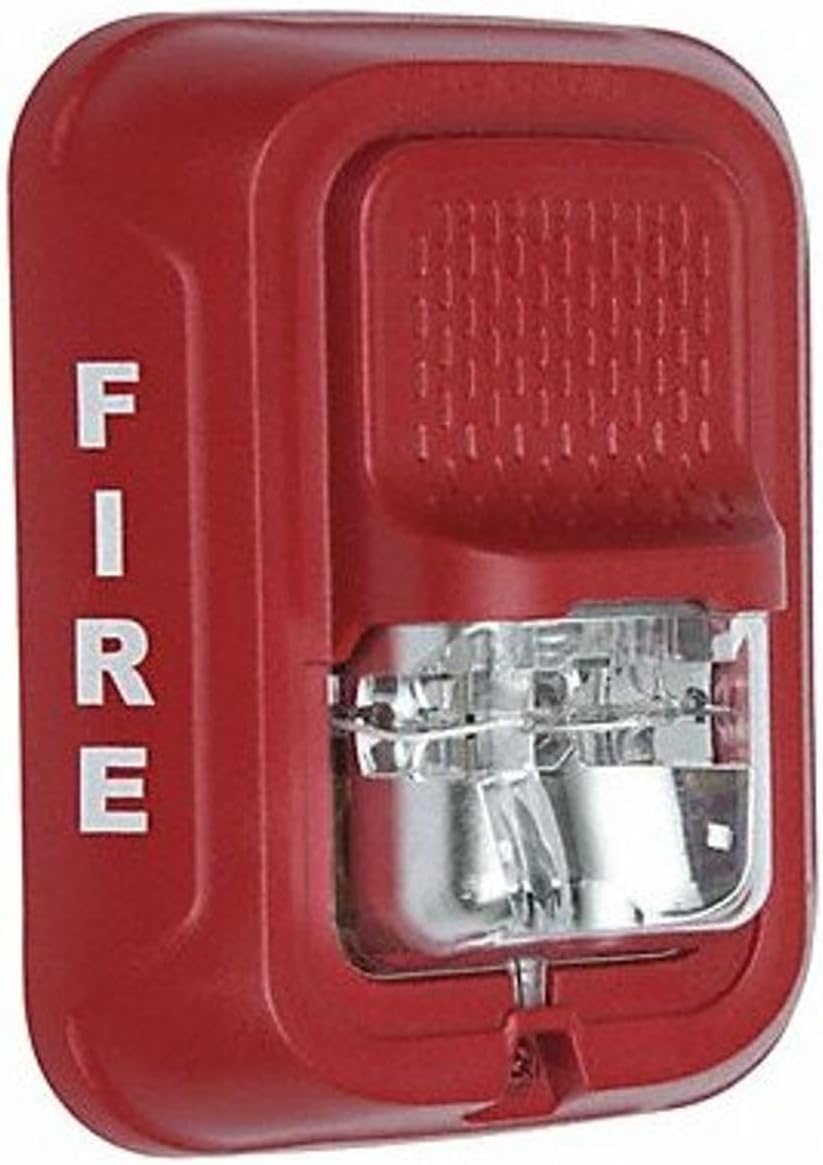
The System Sensor SRL is a red fire strobe with a 4.1 rating. It serves a focused visual-notification role, providing a bright warning to deaf and hard-of-hearing residents without attempting to detect smoke or produce an audible tone. Its simplicity makes it useful as part of a larger alarm network.
We may earn a commission when you buy through this link, at no additional cost to you.
A red strobe can be easy to identify as an emergency indicator, especially when users are trained to recognize that color and flashing pattern. Because it is a supplemental appliance, it should be paired with suitable smoke and CO detection and any required audible alarm equipment. The visual unit can then cover a room where hearing-capable residents also need to be notified.
The listing provides almost no technical detail, so voltage, mounting, synchronization, and compatibility must be established separately. As a visual-only product, it will not offer the broad notification range of a combined speaker strobe or a multi-sensory starter kit. Its appeal depends on already having the correct system infrastructure.
The SRL is best for a specific role: adding a prominent red visual signal to a compatible fire-alarm installation. It may suit a bedroom, hallway, or communal space where color recognition is effective. Do not treat it as a replacement for a smoke alarm. Obtain the installation instructions, verify electrical requirements, and test the flash from the resident's bed or usual position.
A dedicated red strobe gives residents a clear visual cue without competing sound. Training household members to associate the pattern with an emergency can improve recognition and response time.
The unit is most effective when supported by appropriate detection and audible notification elsewhere. Its value lies in filling a visual gap within a broader alarm system.
We may earn a commission when you buy through this link, at no additional cost to you.
The Wheelock ELFHNW is an Eluxa LED strobe and sounder with a low-frequency sound output. The listing does not provide a numerical customer rating. It is intended for fire-notification systems and combines visual and audible alerts, making it relevant to deaf residents as well as people who may have difficulty hearing conventional alarm tones.
We may earn a commission when you buy through this link, at no additional cost to you.
The low-frequency sound component is the product's distinguishing feature. While the strobe provides the essential visual warning for deaf and hard-of-hearing users, the sounder can provide additional notification for others in the same space. Its white enclosure and LED construction suit professionally designed indoor installations.
The short listing omits detailed electrical, mounting, candela, and synchronization specifications. Buyers therefore need current manufacturer documentation and confirmation of system compatibility. The product should not be viewed as a standalone smoke alarm, and installation should follow the requirements of the connected fire-alarm system.
The ELFHNW is most appropriate for a professional or technically knowledgeable installation where low-frequency audible signaling is desired alongside visual notification. It can be considered for shared living environments where one appliance needs to serve residents with different hearing needs. Confirm power, circuit compatibility, flash output, and wiring before purchase, and include the unit in regular system testing.
The combined strobe and sounder design supports mixed-hearing households and shared facilities. Deaf residents receive a visual warning, while the low-frequency sound provides another modality for nearby people.
This unit is most suitable for a planned installation with verified electrical and signaling requirements. Complete documentation is essential because the supplied listing does not explain those details.
We may earn a commission when you buy through this link, at no additional cost to you.
The right accessible fire alarm depends on where it will be used, how the user responds to alerts, and what equipment is already installed. Compare detection, notification, power, compatibility, and installation needs rather than judging products only by strobe brightness or feature count.
Start with the way the intended user will realistically notice an emergency. Deaf users and many hard-of-hearing users benefit from bright strobes, strong vibration, written messages, or some combination of these methods. Bed shakers can wake a sleeping resident without broadcasting sound, while scrolling displays provide specific information that a flash alone cannot convey. Audio may still be useful for other household members even when it is not the primary alert for the person buying the system.
Prioritize multiple alert methods when different residents have different needs. A complete system that includes light, vibration, text, and sound can cover more situations than a visual-only appliance.
A notification device is not necessarily a smoke or carbon monoxide detector. The Sonic Alert HomeAware II listens to existing alarms, the Bellman & Symfon Bed Shaker requires a compatible receiver and transmitters, and several Simplex, System Sensor, and Wheelock units are notification appliances for broader systems. Only the First Alert models listed here explicitly combine smoke detection with visual notification, while the BRK 7030BSL also includes carbon monoxide detection.
Choose a product that meets the role you need. Choose an integrated detector when replacing a smoke alarm, or add a notification appliance only when reliable detection equipment already exists.
A high-output strobe can still be ineffective if it is hidden, blocked, or placed outside the resident's field of vision. Consider the bed, pillow, bathroom, hallway, and doors that are commonly used. Strobe output figures such as 177 and 77 candela describe the appliance, but room size, lighting, and placement remain central to practical performance.
Install visual alarms where the user can see them and verify that the flash remains noticeable through a closed door when appropriate. Test from the normal sleeping position rather than only while standing in the room.
Power options range from AC hardwired alarms with sealed battery backup to rechargeable notification systems and low-voltage professional appliances. A backup source is particularly important in a bedroom because the most critical alert may occur during an outage. Hardwired models need compatible wiring and may require professional electrical work, while battery-backed or rechargeable products still need regular testing and maintenance.
Choose a power arrangement that can be maintained reliably. Confirm outage behavior, battery availability, charging requirements, and the consequences of a power interruption before installation.
Professional notification appliances are not universally interchangeable. Verify the control panel, protocol, voltage, wiring method, candela selection, and synchronization requirements with the manufacturer or supplier. Even products carrying familiar names may require specific accessories or compatible models. The bed shaker is a particularly important example because compatible Visit receivers are sold separately.
Avoid ordering a model solely from its appearance or category. A compatibility mismatch can prevent the visual or vibrating notification from activating when an emergency occurs.
Integrated hardwired smoke alarms, synchronized strobes, and low-voltage notification appliances are generally better suited to professional or technically experienced installations. Their wiring methods and junction-box requirements may not match a simple battery replacement. Multi-sensory consumer kits can be more approachable, although placement near the existing alarm and setup of app-connected features still require attention.
If electrical work is unclear, consult a qualified electrician or alarm technician. The cost of correct installation is preferable to a notification appliance that remains disconnected or incorrectly positioned.
Connectivity can make an accessible alerting system more useful by bringing calls, texts, and other events into the same display and notification network. The Sonic Alert HomeAware II supports Bluetooth connection to its app and can show incoming cellphone information, with the listing also noting landline connectivity. Such features are convenient, but they should supplement rather than replace local smoke and CO alarms.
Evaluate connectivity based on reliability, privacy preferences, setup effort, and the availability of the required app. Test call notifications as well as emergency alerts so a feature does not create false confidence.
An accessible alarm is only useful when it is working. Establish a routine for testing the detector, light, sound, vibration, display, phone connections, and backup power. For products that listen to an existing alarm, test the complete chain: sound from the source alarm, activation of the notification device, and receipt of the alert in the intended location. Record replacement dates for sealed batteries and other consumable components.
Review the routine after moving furniture, changing beds, replacing phones, or altering room layouts. If any part of the alert chain fails, the system should be treated as unavailable until repaired or restored.
Begin by identifying the role of the device. Install a listed smoke or CO alarm in every required location, then position visual notification equipment where the resident can see it while awake or asleep. For a listener-based system, place the receiver in the same room as the existing alarm and follow its setup instructions carefully. Never position a strobe where furniture, curtains, or closed doors will consistently obstruct the signal.
Connect and configure each notification path, including phone links, app permissions, receiver pairing, audible tones, and bed-shaker placement. Learn the meaning of different flash patterns with every household member. Conduct a complete test using the detector's test button where appropriate, and simulate a phone call or other supported event to confirm that related notifications also arrive.
Maintain the system on a regular schedule. Clean visible surfaces, keep vents unobstructed, replace batteries according to their stated service life, and recharge notification units as directed. Test after battery replacement, firmware or app updates, furniture movement, and any repair. Replace smoke and CO alarms at the end of their rated life and consult the manufacturer or a qualified technician whenever wiring, compatibility, or placement is uncertain.
Visual notification can be an important part of an accessible home fire-safety plan, particularly for people who cannot reliably hear conventional alarms. Requirements may vary by location, building type, and local fire code. A qualified local alarm professional can assess the alarms, strobes, placement, and wiring required for the property. A visual appliance should complement rather than replace required smoke and carbon monoxide detection.
A bright strobe can wake some users, particularly when it is installed in the bedroom and visible from the bed. Light sensitivity, room layout, curtains, and sleeping position can affect performance. For more reliable waking, consider a system combining a strobe with a bed shaker or text display. Test the alert from the normal sleeping position and ask an installer to improve placement if the flash is obstructed.
Yes. The Bellman & Symfon Bed Shaker is an alert accessory, not a smoke or CO detector, and compatible Visit receivers are sold separately. The underlying system still needs reliable detection equipment and an appropriate way to activate the receiver. The same principle applies to most notification-only strobes and speaker units in this guide.
No. The HomeAware II listens for the sound and pattern from an existing smoke or CO alarm in the same room and then triggers visual, vibrating, audible, and text alerts. It must be paired with working compatible detection equipment and placed according to the manufacturer's instructions. Its rechargeable battery backup helps during outages, but regular charging and testing are still required.
A smoke alarm senses smoke and sounds or signals an alarm, while a visual notification appliance provides light or another warning when activated by a compatible system. Some products combine both functions. The First Alert BRK 7020BSL combines smoke detection with a strobe, whereas several Simplex, System Sensor, and Wheelock products in the list are intended to notify within an existing fire-alarm system.
Installation can involve AC wiring, low-voltage fire-alarm circuits, junction boxes, grounding, and code-sensitive notification placement. A qualified electrician or fire-alarm technician is the safest choice unless local rules and your experience clearly permit do-it-yourself work. Even when the wiring is straightforward, incorrect placement may prevent a deaf resident from seeing the alert.
Synchronized strobes can make a household warning easier to recognize because every unit follows the same pattern. Some products in the list explicitly support synchronization, but compatibility depends on the model and connected system. Do not mix brands or models solely because they look similar. Confirm synchronization requirements with the manufacturer or installer.
Test them at least monthly and whenever a battery is replaced, an app or component is updated, or furniture or room use changes. Follow the manufacturer's schedule if it requires more frequent testing. A complete test should confirm detection, visual warning, sound where applicable, vibration, text display, and any remote notification path. Record the results and promptly repair or replace failed equipment.
The Sonic Alert HomeAware II stands out as the most complete multi-sensory package, combining a bed shaker, strobe, scrolling display, phone notifications, and backup power. The First Alert BRK 7020BSL is a more focused visual smoke alarm for homes seeking one hardwired appliance, while the BRK 7030BSL adds carbon monoxide detection and separate emergency flash patterns.
For buyers with an established notification system, the Simplex, System Sensor, and Wheelock appliances may provide better integration, but compatibility must be confirmed before purchase. Prioritize reliable detection first, then choose visual and tactile alerts based on the user's actual sleeping position, daily routine, hearing needs, and the architecture of the home. Installation quality and regular testing are as important as the product's headline features.
Product specifications, ratings, availability, and pricing can change, so review the current listing before making a final decision. Compare the required accessories, power source, installation process, and compatible equipment with your household's needs. For a fire alarm for deaf people, the best choice is not simply the most feature-rich model; it is the dependable system that can deliver a clear warning under realistic conditions.