
10 FT x 30 FT Frost Cloth Kit with 6 Garden Hoops
5.0Editor score
Complete six-hoop support system
Thickened 1.5 oz fabric
Raised tunnel-style garden coverage
Garden row covers create a protected microclimate around vegetables, seedlings, shrubs, and perennials. The right fabric can limit frost, wind, intense sun, and pest exposure while retaining light, air, and moisture. Good covers also suit the way you garden, whether floating directly over a bed or resting on hoops.
We compared all ten products by fabric weight, dimensions, supported or floating design, breathability, seasonal uses, installation method, and stated protective features. The list includes broad rolls of breathable frost cloth, hoop-supported kits, and compact covers sized for raised beds, with options suited to different garden scales.
Each review explains the product's strongest benefits, practical limitations, and ideal setup, helping you compare real coverage differences rather than just fabric weight. Ratings and product details reflect the supplied listings, while availability and prices can change, so confirm the current listing before purchasing.
5.0Editor score

4.6Editor score

4.4Editor score
As an Amazon Associate we earn from qualifying purchases.
This side-by-side comparison highlights the major differences in coverage area, fabric weight, supported design, and seasonal protection, making it easier to match each row cover to a specific garden need.




This seven-by-100-foot floating row cover combines an unusually large cutting area with a lightweight 0.9 oz non-woven fabric. Its 4.6 rating reflects a broadly useful product for gardeners who need to protect extensive rows, raised beds, individual shrubs, or containers without buying several smaller covers.
We may earn a commission when you buy through this link, at no additional cost to you.
The defining advantage is scale. A 100-foot length can be divided into multiple sections, reused across different areas, or left as a broad floating sheet over a substantial bed. The breathable material allows air, moisture, and sunlight to reach plants while creating a layer of insulation intended to buffer frost, wind, snow, and ice.
Its flexibility is equally important. The listing describes direct covering, hoop support, and securing with stones, stakes, or garden frames, so it can accommodate low crops, tender vegetables, potted plants, and larger shrubs. It also functions as a snow, animal, insect, and shade barrier, extending its usefulness beyond the coldest months.
The main limitation is that it does not include a support frame, and its 0.9 oz fabric is lighter than several heavier competitors. Gardeners seeking maximum structural support may prefer a covered hoop kit. Even so, this cover is an excellent all-around choice for broad coverage, easy customization, and multi-season use.
The long roll can cover an entire row, form several smaller blankets, or be tailored around different beds. That flexibility makes it useful for both broad seasonal protection and targeted coverings around individual plants.
Because the breathable fabric also serves as a wind, sun, insect, bird, and animal barrier, it can help extend the growing season without forcing you to maintain separate covers for every season.
We may earn a commission when you buy through this link, at no additional cost to you.
This ten-by-30-foot frost cloth kit earns a 5.0 rating and stands apart by including everything needed to build a raised row-cover tunnel. Instead of simply draping fabric over plants, it provides six support hoop sets, allowing the cover to sit above foliage and reduce direct contact.
We may earn a commission when you buy through this link, at no additional cost to you.
The 1.5 oz non-woven cloth is thicker than common 0.9 oz garden fabric. Its breathable construction is designed to admit air and moisture while protecting outdoor plants from cold, frost, wind, and light snow. The included straight tubes, curved tubes, connectors, and clips create a practical frame across long garden rows.
Installation follows a straightforward process: connect the tubes, insert the hoops into soil or raised beds, drape the cover over the frame, and secure it with clips. This method provides more space for seedlings and mature plants to grow while making the cover easier to place, inspect, and remove than loose fabric.
The trade-off is that a structured tunnel takes more setup and may not be necessary for a few containers or one small bed. Nevertheless, this is the most complete ready-to-install option in the group, making it especially attractive for gardeners who want dependable support without assembling their own hoop frame.
Hoop-supported fabric leaves breathing room between the cover and plants. This is especially useful for seedlings, fast-growing vegetables, and beds where fabric pressed directly against foliage could damage tender growth.
The same tunnel can provide frost and freeze protection in winter, shelter young plants in spring, and reduce sun, wind, bird, or pest exposure during warmer weather.
We may earn a commission when you buy through this link, at no additional cost to you.
The AlpineReach cover combines a ten-by-50-foot sheet with 1.2 oz fabric and a stated low-28-degree protection target. Its 4.4 rating makes it a balanced option for gardeners seeking substantial coverage without moving to the heaviest fabrics in the roundup.
We may earn a commission when you buy through this link, at no additional cost to you.
This product addresses several forms of plant stress at once. The permeable material allows light, air, and water to pass through while creating a warmer microclimate around plants. It is also positioned for UV sun-scorch prevention, offering useful protection when winter sun is intense but still providing a sheltered growing environment.
Installation appears straightforward because the cover can be placed over garden rows and secured using the gardener's normal method. Reusable construction makes it suitable for repeated seasonal transitions rather than single-use protection. It can also function as a windbreak, helping limit the drying and physical stress caused by strong gusts.
As with any temperature claim, actual performance depends on the crop, placement, local conditions, and whether the cover is adequately secured. There are no included hoops. Gardeners seeking a complete raised-tunnel arrangement should choose the hoop kit, but this AlpineReach roll is a strong option for broad, flexible protection.
Frost is not the only winter hazard. This cover's UV and sun-scorch focus also helps shield foliage from intense daylight while the breathable design maintains a more balanced growing environment.
By reducing wind and holding a layer of warmth near the soil, the fabric can support germination and early growth. Its stated low-28-degree target is best treated as a listed product feature rather than an unconditional guarantee.
We may earn a commission when you buy through this link, at no additional cost to you.
This ten-by-30-foot floating cover is a straightforward choice for standard beds, individual shrubs, tomatoes, peppers, pumpkins, and other garden plants. It has a 4.4 rating and uses lightweight 0.9 oz non-woven polypropylene that lets sunlight reach covered vegetation.
We may earn a commission when you buy through this link, at no additional cost to you.
The cover can be laid loosely over plants and held with soil, stones, or staples. Gardeners who need more vertical clearance can support it with hoops, allowing the material to form a floating tunnel. The fabric can also be cut into smaller sections, making it adaptable to individual pots, short rows, or several separate beds.
Beyond frost protection, the listing identifies the cover as useful for supporting germination and rapid seedling growth. Starting earlier in spring and extending production into autumn can give vegetable and flower growers a longer working window, although local weather and plant requirements still determine success.
It lacks a stated temperature threshold, included accessories, and the extra length offered by larger rolls. Its fabric is also among the lighter options here. These are reasonable trade-offs for a simple, adaptable sheet that can perform several seasonal jobs and is easy to tailor to a modest garden.
Cutting the cover into separate pieces makes it practical for mixed gardens where beds, pots, and plants require different dimensions. It can be reinstalled in a new shape when seasonal protection needs change.
The 0.9 oz non-woven material is light enough for simple direct placement while remaining breathable. That makes it useful for frost buffering and early-season seedling protection without a rigid frame.
We may earn a commission when you buy through this link, at no additional cost to you.
KLEWEE offers a ten-by-50-foot cover made from 1.5 oz spun polypropylene with UV stabilization. Its 4.5 rating reflects a strong balance of size, material weight, and versatility, particularly for gardeners who want enough fabric to cover large areas or create more than one layer.
We may earn a commission when you buy through this link, at no additional cost to you.
The 10-by-50-foot sheet is substantially larger than many standard covers and can be cut to the dimensions each planting area requires. Its listed fabric weight is designed to be more tear resistant than lighter 0.6 to 0.9 oz material, while remaining light, breathable, and capable of allowing air, sunlight, and moisture through.
The cover is presented as useful against frost, freeze, snow, hail, and wind during winter. It also supports seedling germination, helps extend growing seasons, and can reduce pest, bird, and summer overheating problems. The included UV stabilizer is intended to preserve the material during periods of strong sunlight.
Gardeners can drape it directly over plants, secure it with soil, stones, or staples, or float it on hoops. It may also be used in single, double, or triple layers, allowing protection to be adjusted to the crop and forecast. The product requires no frame, and multiple layers demand more labor, but the large, durable sheet offers considerable flexibility.
One layer handles routine frost and pest buffering, while additional layers can add insulation for colder conditions. This makes the same roll useful across mild autumn nights and more demanding winter weather.
The added UV protection is intended to help the fabric withstand sunlight without rapid breakdown. That supports repeated use through spring, summer, autumn, and winter rather than treating the cover as short-term protection.
We may earn a commission when you buy through this link, at no additional cost to you.
This ten-by-33-foot cover is the heaviest fabric option in the group at 1.77 oz per square yard. It carries a 4.6 rating and is designed for gardeners who prioritize material strength, frost buffering, and year-round outdoor use over the lightest possible fabric.
We may earn a commission when you buy through this link, at no additional cost to you.
The non-woven polypropylene construction includes an eco-friendly UV protector and is listed at UPF 30-plus. Its stated design resists frost, blocks harmful ultraviolet rays, and is intended to avoid degradation under sunlight. The heavier material is also presented as more tear resistant than common 0.74 oz alternatives.
Unlike plastic sheeting, the porous fabric allows sunshine, air, and rain to pass through while reducing the condensation associated with plastic covers. The listing also describes the cloth as absorbing daytime warmth and minimizing evaporation, helping plants retain moisture as temperatures fall overnight.
A claimed frost-protection benefit of up to four degrees is a listed feature, but outcomes will vary with humidity, wind, plant type, anchoring, and overnight conditions. The cover is reusable, easy to handle, and can be cut or tailored into different shapes. It is an excellent choice when durability and cold-weather protection matter more than maximum roll length.
At 1.77 oz per square yard, the material offers greater substance and tear resistance than the lighter sheets in the guide. That can be helpful where covers face repeated handling, wind, or extended seasonal use.
The porous construction lets light, air, and rain pass through while reducing the clammy conditions associated with plastic. It therefore serves as a practical year-round garden fabric rather than only a winter membrane.
We may earn a commission when you buy through this link, at no additional cost to you.
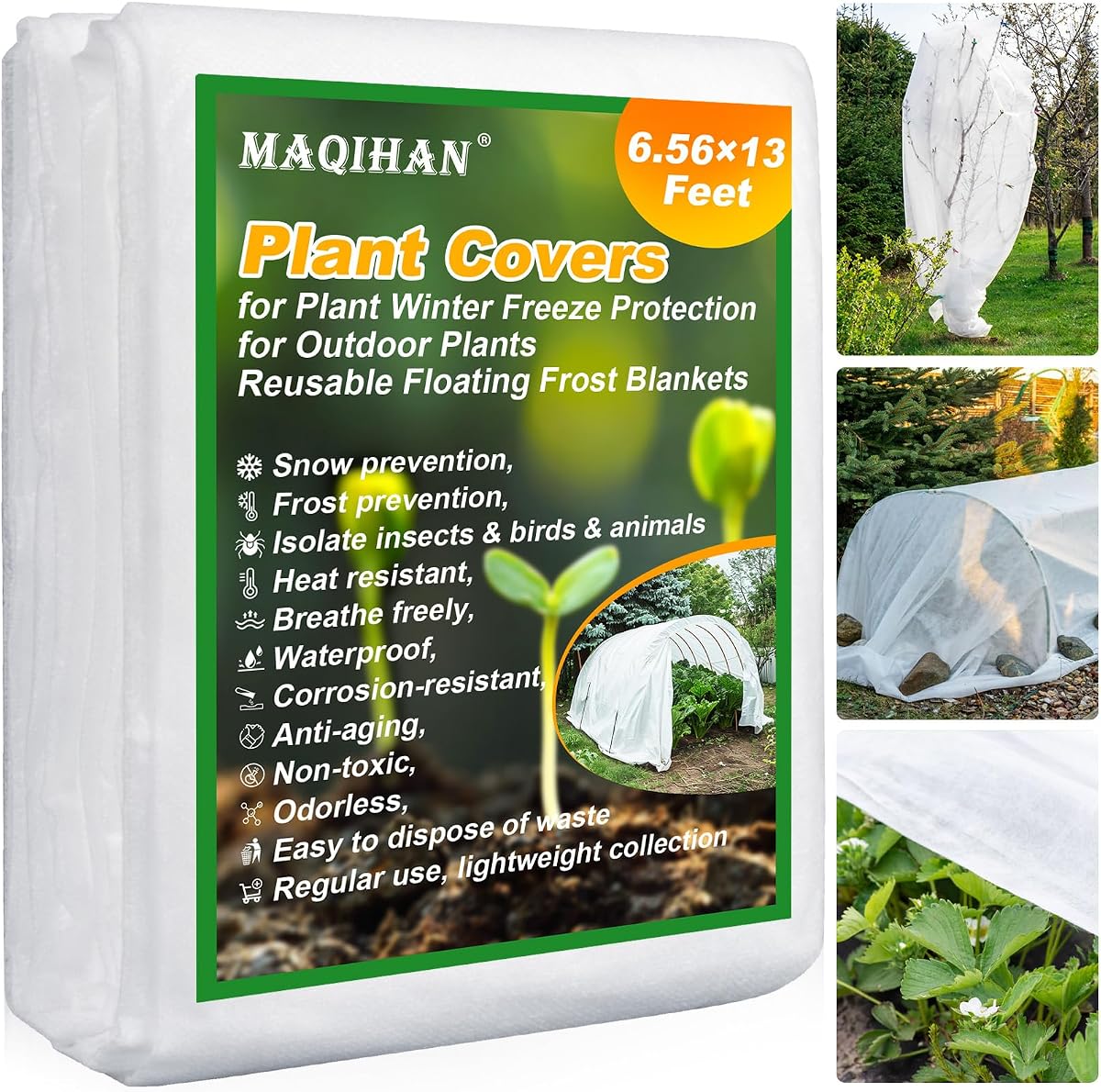
The MAQIHAN frost cloth is a flexible one-ounce non-woven cover designed for direct placement, floating over hoops, or cutting to the size of a particular plant. Its 4.5 rating reflects a useful, uncomplicated approach for gardeners who need a flexible barrier rather than a rigid mini-greenhouse.
We may earn a commission when you buy through this link, at no additional cost to you.
The listing describes the fabric as durable and breathable, with sunlight able to penetrate the cover. That permeability supports frost and wind protection while limiting the smothering effect that can occur with impermeable plastic. It also provides a means of moderating sunlight to reduce overheating during warmer periods.
Its stated functions extend beyond frost. The same fabric can serve as a snow, animal, insect, or sun shield, giving gardeners a multi-purpose material for different beds and seasons. The cover may be placed directly over plants or fixed with hoops or frames, allowing the same product to serve low crops and taller growth.
The main drawback is that the supplied listing does not state the sheet dimensions, making it harder to compare total area without checking the current product page. It also includes no hoops or stakes. Gardeners comfortable tailoring their own setup will appreciate its flexibility, but large-garden buyers should confirm size first.
Cutting the fabric lets gardeners create small cloches for individual containers, separate blankets for raised beds, or custom shapes around awkward planting areas. This flexibility is a major advantage over fixed-size structures.
The breathable design can remain in place to buffer strong sunlight, while deployment before sunset helps retain residual soil warmth. Removing or opening it after temperatures rise allows quick warming and ventilation.
We may earn a commission when you buy through this link, at no additional cost to you.
This ten-by-50-foot frost cloth combines a large sheet with 1.2 oz non-woven fabric and a 4.6 rating. It is a versatile garden cover for strawberries, herbs, perennials, small fruits, citrus, shrubs, raised beds, and other plantings that need protection from cold and exposure.
We may earn a commission when you buy through this link, at no additional cost to you.
The material is described as soft, moderate in thickness, strong, breathable, and reusable. It allows sunlight and water to reach plants, creating a more favorable environment than a solid sheet. The listing also gives it windproof characteristics and notes a warming effect, making it relevant for cool nights and early-season growth.
Installation is flexible. Gardeners can drape the cloth loosely over plants and secure it with soil, stones, or nails, or use a hoop or ring to hold it above foliage. Since the cover can be cut, a single roll can produce covers for several beds, containers, or individual garden sections.
The listing does not provide a specific low-temperature threshold, so it should be selected on material and versatility rather than a numerical rating. It also has no included frame. Even so, this is a well-rounded large sheet for gardeners seeking dependable frost protection, pest and bird barriers, and repeated seasonal use.
The fifty-foot length is useful for long rows and multiple planting areas. Cutting the cover creates manageable pieces without wasting material on a garden with several differently sized beds.
Breathable fabric supports continued plant growth while offering a protective layer against frost, wind, birds, insects, and weeds. It can remain useful during watering and normal daylight exposure.
We may earn a commission when you buy through this link, at no additional cost to you.
These two raised-bed covers measure 45 by 22 by 16 inches and are intended for compact garden beds rather than long rows. Their 4.3 rating reflects a specialized design with integrated structure, ventilation, access points, and mounting stakes.
We may earn a commission when you buy through this link, at no additional cost to you.
Each cover combines side PVC with reinforced breathable mesh. The mesh roof allows ventilation while the sturdy side panels help block cold air and resist tearing. A transparent section also lets gardeners observe plant growth without opening the cover, which is useful for checking seedlings, vegetables, flowers, or potted plants.
Installation is tool-free according to the listing. Users unzip the side straps, pull up the side zippers, and secure the structure with the eight included garden staple stakes. Zippered openings provide controlled ventilation and access, while the wind-resistant fixing keeps the cover stable around a raised bed.
The foldable design collapses to 13 by 13 by 1.2 inches for off-season storage, making the two-pack reusable without taking up much room. Its main limitation is scale: it cannot cover an entire conventional row or adapt to irregular beds like a cut-to-fit fabric roll.
Transparent side panels and zippers make it easy to inspect plants, adjust ventilation, and reach seedlings without dismantling the whole cover. These features distinguish it from a basic fabric sheet.
The structured cover folds into a small package for storage. Reuse is especially practical for gardeners with limited greenhouse space who need temporary protection only during cold or transitional periods.
We may earn a commission when you buy through this link, at no additional cost to you.
This green ten-by-50-foot frost blanket uses 1.23 oz polypropylene fabric and carries a 4.6 rating. It combines broad coverage with cold, snow, insect, sun, and wind protection while retaining enough light transmission for plant growth.
We may earn a commission when you buy through this link, at no additional cost to you.
The listing states protection for outdoor plants in temperatures as low as 23 degrees Fahrenheit. Dark green fabric also blocks harsh sunlight and helps prevent winter sunburn, while the cover allows approximately 40 to 50 percent of sunlight through. That balance makes it more suitable than an opaque material for plants that still need daylight.
The large sheet can be cut to fit long rows, raised beds, or individual plants. Installation is simple: drape the fabric over vegetation and secure it with stakes or soil. Because it is breathable, air can circulate beneath the cover, reducing the condensation risk associated with solid plastic.
The dark green appearance may blend into some landscapes, while gardeners who prefer a neutral or white garden fabric may find it less suitable. Temperature performance also depends on the crop, forecast, wind, moisture, and anchoring. Within those limits, it is a strong year-round option for extensive coverage and winter sun control.
The dark color blocks more intense sunlight than a translucent white cover, helping protect exposed foliage from winter scorch while still allowing a stated portion of light through for growth.
A fifty-foot roll can protect several rows or be divided into smaller coverings. Draping and anchoring require no specialized frame, although hoops are advisable where plants need vertical clearance.
We may earn a commission when you buy through this link, at no additional cost to you.
The best garden row cover depends on garden size, crop height, local weather, and how much support you want to install. These factors help narrow the choice before comparing fabric weight, coverage area, and design details.
Choose enough material to reach the ground on each side without leaving large gaps. Extra length can be anchored with soil, stones, or stakes, but overly loose fabric may shift in wind. For custom layouts, a cut-to-fit roll offers more control than a preformed tunnel.
Prioritize tear resistance, durability, and ease of handling together. A heavy cover that is difficult to install may be less practical than a lighter sheet that you can position accurately and secure around the bed.
Choose a floating design for convenience and a supported design when plants are tall, tender, or need generous breathing room. Confirm whether accessories are included before budgeting time for a separate frame.
Avoid treating a row cover as a permanent replacement for sunlight or ventilation. Monitor conditions under the cover, particularly during bright days and humid weather, and open or remove it when plants need direct warmth.
Use a darker or heavier cover when sun exposure is the primary concern, and lighter breathable cloth when plants need more daylight. For severe cold, combine the cover with a proper hoop frame and secure every edge.
Consider how often you will use each barrier and whether you need protection during warm weather. A versatile roll is generally more useful across the year than a single-purpose seasonal accessory.
Favor a setup you can install before dusk and remove after the morning warms. Secure anchoring is essential, but the system should still allow routine ventilation without requiring a major rebuild.
Prepare the bed before covering it. Water the soil when appropriate, remove damaged foliage, and clear loose tools or sharp objects that could puncture the fabric. Position the cover before sunset so it can trap residual warmth from the soil, and use hoops or a frame when the plants need room to grow.
Drape the fabric evenly over the plants and secure every edge with soil, stones, staples, or stakes. Keep the cover taut enough to resist wind without pressing it against leaves. For hoop systems, assemble the frame first, position the hoops at even intervals, place the fabric over the structure, and attach it with the supplied clips or other fasteners.
Check the planting area each morning and evening during protected periods. Remove or open the cover when daytime temperatures rise and direct sunlight is beneficial, particularly for warm-season crops. Let rain and irrigation pass through breathable fabric, but do not leave wet material folded. After use, brush off debris, dry it thoroughly, and store it away from light and moisture to support reuse.
A loose floating cover may rest on low foliage, but hoop support is better for tender or tall plants because it reduces abrasion and leaves room for growth. Secure the fabric at the edges so wind cannot pull it against the plants. Leave enough space for air to circulate beneath the cover.
Yes, but they should be monitored carefully because temperatures can rise quickly beneath fabric. Many covers also provide shade, wind, bird, or insect protection during warm months. Open or remove them when plants need full ventilation or when heat becomes excessive.
Hoops are optional for low-growing plants and are highly useful for crops that need vertical clearance. They also help prevent the cover from abrading leaves and make ventilation easier. The complete support system is especially convenient if you do not already own garden hoops.
Most of the non-woven fabric options in this guide are designed to be cut without losing their basic protective function. Use sharp scissors and cut between planting sections to create blankets for pots, short rows, or individual plants. Avoid cutting through structural hoops or the fixed raised-bed covers.
Use breathable non-woven fabric, avoid plastic where possible, and secure the cover so air can move through it. Ventilate or remove the cover once temperatures rise, especially under bright sun. Dry wet covers before folding them for storage to help prevent mildew and fabric deterioration.
The fabric forms a physical barrier that can reduce access by many insects, birds, and other animals. The effectiveness depends on secure anchoring, overlap at openings, and the size of gaps. Inspect edges after strong wind because a lifted cover can create an entry point.
Remove loose soil and plant debris, then let the fabric dry completely before folding it. Store it in a dry location away from prolonged light and moisture, and inspect it for tears or UV damage. Keep included hoops, clips, and stakes together so the complete setup is ready for the next season.
Not necessarily. Heavier fabric may offer greater tear resistance and insulation, but it can also be harder to handle. Lighter cloth is often sufficient for frost buffering and early-season use, while thicker material is preferable for repeated handling, strong wind exposure, or colder conditions.
The Plant Freeze Protection Cover 7×100 stands out for exceptional coverage and flexible multi-season use, while the Frost Cloth Kit with 6 Garden Hoops offers the most complete raised-tunnel system. The Plant Covers 10 x 30 Floating Row Cover is a simple, lightweight option for gardeners who want an adaptable sheet without accessories.
Prioritize the factors that match your actual setup: total coverage area, fabric weight, vertical clearance, anchoring method, and the need for sun or wind control. Large gardens benefit from long, cut-to-fit rolls, while small raised beds may be easier to protect with a structured mini-greenhouse or hoop-supported cover.
Ratings and product features can change as manufacturers update listings, and prices also fluctuate. Before ordering, verify the current dimensions, included accessories, fabric details, and current cost to ensure the chosen garden row cover fits the plants and space you intend to protect.