
HP ZBook 8 G1i
4.1Editor score
NVIDIA RTX 500 Ada
64GB DDR5 memory
2TB NVMe storage
Professional application certifications
A laptop for an interior designer should balance visual quality, computing power, and dependable multitasking. Designers often move between CAD drawings, 3D models, floor plans, presentation boards, specification sheets, client calls, and image-editing software. The strongest computer therefore needs a capable display, sufficient memory and storage, and graphics performance suited to the complexity of each project.
The products in this guide were compared using the supplied specifications, including processor class, memory, storage, display characteristics, graphics, ports, operating system, and stated design or business applications. The list includes workstation-class laptops for demanding rendering and modeling, creator-oriented systems with touchscreens, a more compact general-purpose model, and supporting accessories. It covers different needs rather than assuming every designer requires the same hardware.
The picks reveal how interior-design priorities can differ. Some designers need independent graphics and abundant memory for large models, while others prioritize color-rich displays, touch interaction, portability, or a balanced approach to everyday work. Product configurations, seller modifications, warranty coverage, availability, and prices can change, so readers should verify the current listing and specifications before purchasing.
4.1Editor score

4.4Editor score
4.7Editor score
As an Amazon Associate we earn from qualifying purchases.
The comparison below places every listed laptop, including the rolling laptop bag, according to the supplied display, performance, memory, storage, and connectivity details. It helps distinguish dedicated workstations from creator laptops, everyday business systems, compact alternatives, and workflow accessories.


The Dell Precision 7680 i9 is a compelling all-around choice for interior designers who need substantial computing power without moving directly to a configuration with a discrete graphics card. It carries a 4.4 rating and pairs an Intel Core i9-13950HX vPro processor with 32GB of DDR5 CAMM memory and a 1TB PCIe NVMe M.2 SSD. Those specifications suit CAD, 3D rendering, simulation, video editing, content creation, and general office work.
We may earn a commission when you buy through this link, at no additional cost to you.
Its strongest qualities are processing capability, memory, fast storage, and connectivity. The processor can reach 5.5GHz, while the CAMM memory design is intended to support faster RAM and thinner laptop profiles. Two Thunderbolt 4 ports, USB-C, two USB-A ports, HDMI, Ethernet, Wi-Fi 6E, and Bluetooth make it easier to connect a drawing tablet, external monitors, storage, network hardware, and other studio peripherals.
The main compromise is graphics. This configuration specifies Intel UHD integrated graphics rather than a dedicated RTX card, making it less suitable than the other Precision 7680 variants for GPU-intensive rendering or visualization. Its 16-inch FHD+ anti-glare screen is crisp and practical, but it does not provide the high resolution, touch capability, HDR specification, or color coverage offered by the HP OmniBook 7 OLED.
It is a strong recommendation for architects, interior designers, engineers, and technical users who regularly work with large files but do not need continuous GPU acceleration. The 32GB memory and 1TB storage provide a comfortable baseline, while Windows 11 Pro adds business security and management features. Users who routinely create photorealistic 3D scenes should consider the RTX-equipped Precision models instead.
The combination of an i9 processor, 32GB memory, and fast NVMe storage creates a responsive environment for layered CAD files, specifications, schedules, client presentations, and communication tools. This is especially valuable when a designer keeps several large project files open while joining a video call.
Thunderbolt 4, HDMI, USB-A, USB-C, and Ethernet make this laptop adaptable to a multi-monitor office. The stated support for up to three external displays at 4K resolution also helps separate plan views, schedules, reference boards, and communication windows.
We may earn a commission when you buy through this link, at no additional cost to you.
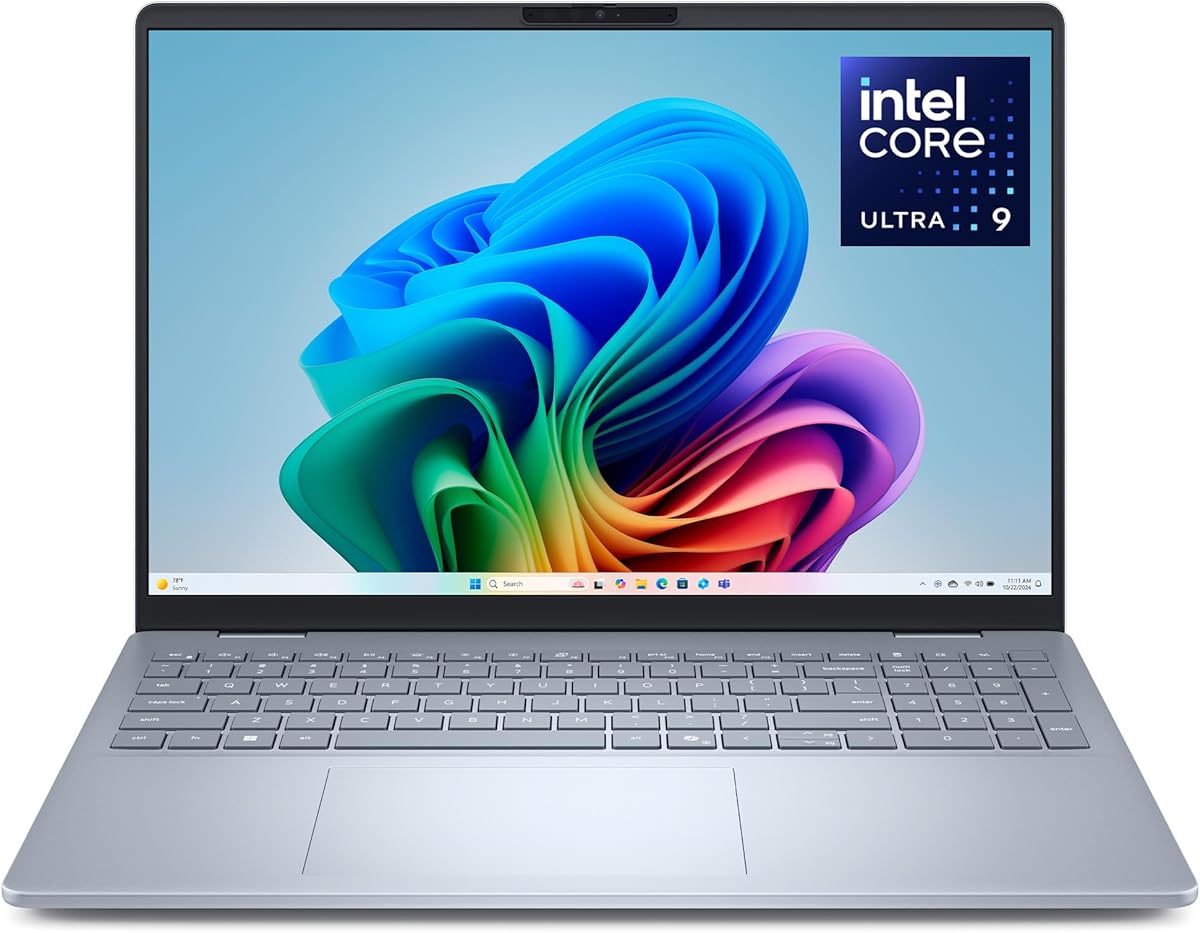
The Dell 16 Plus offers an elegant blend of performance and everyday usability for interior designers who spend most of the day in design, presentation, and communication software. Its 4.3 rating reflects a well-rounded configuration built around an Intel Core Ultra 9 288V processor and 32GB of RAM. The 16:10 screen provides a useful shape for placing multiple documents or application panels side by side.
We may earn a commission when you buy through this link, at no additional cost to you.
The laptop is designed with AI-oriented client computing, power efficiency, and quieter, cooler operation in mind. Those characteristics can be valuable during travel, client presentations, or long collaborative work sessions. A built-in FHD+ webcam supports clear calls and Windows Hello, while the aluminum enclosure gives it a more polished appearance than many utilitarian workstation shells.
One limitation is that the supplied information does not identify a discrete graphics processor, so this is not the obvious choice for intensive 3D rendering, ray tracing, or GPU-heavy visualization. The listing also does not provide a specific SSD capacity, making it important to confirm the final storage configuration. A detailed product page should be consulted before ordering, particularly for large project libraries and texture files.
This is a strong fit for interior designers who need a capable general-purpose system for CAD, 2D drafting, presentations, client communication, and multitasking. The stated military-grade testing and Dell Plus positioning add reassurance for regular professional use. It may be especially attractive to users who value screen area, efficiency, and understated styling over a visibly specialized workstation design.
The 16:10 format offers more vertical working area than a conventional 16:9 display. Interior designers can compare elevations, schedules, finish schedules, and client notes without relying as heavily on application zooming or frequent screen switching.
Intel's latest client computing platform emphasizes power efficiency alongside performance. For a designer moving between a studio, home office, and client location, that balance can make a high-resolution laptop easier to use throughout the day.
We may earn a commission when you buy through this link, at no additional cost to you.
The HP OmniBook 7 OLED is an appealing choice for interior designers whose work depends heavily on evaluating color, materials, imagery, and presentation quality. It has a 4.3 rating and combines a 2K OLED touchscreen with Intel Core 9 270H processing, 32GB of DDR5 memory, and a 1TB SSD. The display supports 100% DCI-P3 color and HDR brightness up to 500 nits.
We may earn a commission when you buy through this link, at no additional cost to you.
Its 120Hz refresh rate and 0.2ms response time make the panel particularly engaging for touch navigation, presentations, and detailed visual work. The 400-nit SDR mode remains useful for ordinary productivity. One Thunderbolt 4 port, one additional USB Type-C port, two USB-A ports, HDMI 2.1, and an audio combo jack provide a practical mix of connections for peripherals and external displays.
The limitation is that the system lists integrated Intel Graphics rather than a dedicated GPU. That makes it well suited to 2D drafting, mood boards, detailed image review, client presentations, and typical CAD work, but less convincing for demanding photorealistic rendering or heavily GPU-accelerated workflows. The 16-inch form also requires more bag space than a compact 14-inch model.
This laptop is recommended for designers who put visual quality and touch interaction ahead of maximum 3D-rendering capability. Its high resolution provides more room for elevations, finish boards, and application interfaces, while the OLED color coverage is a major advantage when judging textiles, paint, stone, wood, and other finishes on screen.
A 2K OLED panel with 100% DCI-P3 coverage gives interior designers more room and stronger color capability for reviewing finishes and imagery. Touch controls also provide a direct way to zoom, rotate, mark up, and reposition details.
With 32GB of DDR5 memory and a 1TB SSD, the system can comfortably support mixed workloads involving design applications, large image libraries, browser tabs, and client communication tools. Fast storage also improves project loading and file-transfer responsiveness.
We may earn a commission when you buy through this link, at no additional cost to you.
The HP ZBook 8 G1i is the most comprehensively equipped mobile workstation in this group, making it a strong premium choice for interior designers with demanding CAD, BIM, 3D modeling, rendering, and simulation requirements. It holds a 4.1 rating and combines an Intel Core Ultra 7 255H processor with an NVIDIA RTX 500 Ada GPU, 64GB of DDR5 memory, and a 2TB PCIe NVMe M.2 SSD.
We may earn a commission when you buy through this link, at no additional cost to you.
Dedicated graphics make this machine materially different from the integrated-graphics alternatives. The stated 4GB of GDDR6 memory supports more demanding visualization and rendering work, while 64GB of system RAM is particularly valuable for large assemblies, texture libraries, and simultaneous applications. ISV certifications listed for applications including SolidWorks, AutoCAD, ANSYS, Revit, and MATLAB increase confidence for professional use.
Its 16-inch WUXGA touchscreen has 300-nit brightness and anti-glare treatment, which is practical for sustained design work but not as visually rich as the HP OmniBook 7 OLED. The 4.1 rating is lower than those of several alternatives, but ratings alone do not capture the value of the dedicated graphics and unusually generous memory. This is a specialist configuration rather than a generic office laptop.
Choose the ZBook 8 G1i when rendering performance, application compatibility, memory headroom, and storage capacity are the leading priorities. It is particularly suitable for designers who move between studio and client locations but still need workstation-class tools. For occasional 2D drafting and presentations, a lighter creator laptop may offer better economy; for serious 3D work, this is the stronger choice.
The RTX 500 Ada GPU is the key reason to consider this laptop for 3D visualization, rendering, simulation, and graphics-intensive design. Dedicated GDDR6 memory also provides a more suitable foundation for GPU-dependent applications than integrated graphics.
With 64GB of DDR5 RAM and 2TB of NVMe storage, the ZBook 8 G1i can accommodate substantial project libraries and many open applications. This headroom is especially useful for architectural visualization, detailed BIM models, and complex material-heavy scenes.
We may earn a commission when you buy through this link, at no additional cost to you.
The RTX 1000 configuration of the Dell Precision 7680 is a compelling middle ground for interior designers who need dedicated graphics but may not require the most powerful processor in the series. Its 4.3 rating, Intel Core i5-13600HX processor, 32GB of DDR5 memory, 1TB NVMe SSD, and NVIDIA RTX 1000 Ada GPU with 6GB of dedicated memory cover a broad range of professional workloads.
We may earn a commission when you buy through this link, at no additional cost to you.
The dedicated GPU is the standout feature. It makes this system more appropriate for 3D modeling, rendering, visualization, and design applications that benefit from hardware acceleration. The rest of the platform remains balanced: 32GB of memory supports multi-application work, and NVMe storage provides fast access to drawings, textures, and project files.
The 16-inch FHD+ anti-glare display is useful for general professional work, although it lacks the high resolution, touch input, and wide color-gamut specification of the OLED OmniBook. The processor reaches 4.8GHz and should handle demanding design tasks, but the i7 and i9 Precision alternatives offer more processing headroom. The stated ability to connect up to four external monitors is excellent for a detailed desk arrangement.
This is a sensible recommendation for interior designers whose work includes occasional 3D rendering but does not justify the premium ZBook specification. It provides a more focused workstation configuration than the integrated-graphics Precision model. Designers working with exceptionally large models should also evaluate the 64GB and RTX 2000 options in the same family.
The RTX 1000 Ada GPU with 6GB of memory adds hardware acceleration for rendering and graphics-intensive applications. It is a meaningful step up from the integrated option without moving to the top-tier ZBook configuration.
Support for up to four external monitors allows a designer to keep plans, elevations, 3D views, schedules, and communication channels visible at the same time. Multiple HDMI, USB-C, and Thunderbolt connections make that arrangement practical.
We may earn a commission when you buy through this link, at no additional cost to you.
The Dell Precision 7680 with RTX 2000 Ada is aimed at designers who need a substantial dedicated graphics card and ample storage without moving to a 64GB memory configuration. It has a 3.9 rating, an Intel Core i7-13850HX vPro processor, 32GB of DDR5 CAMM memory, a 2TB PCIe NVMe SSD, and an NVIDIA RTX 2000 Ada GPU with 8GB of dedicated memory.
We may earn a commission when you buy through this link, at no additional cost to you.
Compared with the RTX 1000 model, the main upgrades are 2GB more graphics memory, a higher-tier processor, and double the stated SSD capacity. Those changes can benefit detailed 3D scenes, rendering jobs, large texture collections, and video-editing workflows. Four external 4K displays are supported, and the selection of Thunderbolt 4, USB-C, USB-A, HDMI, and Ethernet ports is well suited to professional workspaces.
The trade-offs are substantial. This configuration costs more than several alternatives without increasing system RAM, and its 3.9 rating is the lowest among the laptops in the guide. The 16-inch anti-glare display is specified at 45% NTSC, which is a significant limitation for color-critical finish selection. A separate calibrated external display may be advisable for detailed visual review.
It remains a good choice for rendering-heavy interior designers who specifically need 8GB of dedicated graphics memory and 2TB of fast storage. It is less attractive for color-sensitive presentation work, and the 64GB RTX 2000 alternative may better serve users with extremely large BIM assemblies. Buyers should compare the extra cost against their actual need for GPU memory and storage.
The RTX 2000 Ada GPU includes 8GB of dedicated memory, giving it more room for detailed 3D assets, textures, and render operations. This makes the configuration more suitable for sustained visualization than basic integrated-graphics alternatives.
A 2TB NVMe SSD provides room for drawings, high-resolution textures, reference photographs, and project archives. Fast PCIe storage also reduces delays when opening and transferring the large files common in design workflows.
We may earn a commission when you buy through this link, at no additional cost to you.
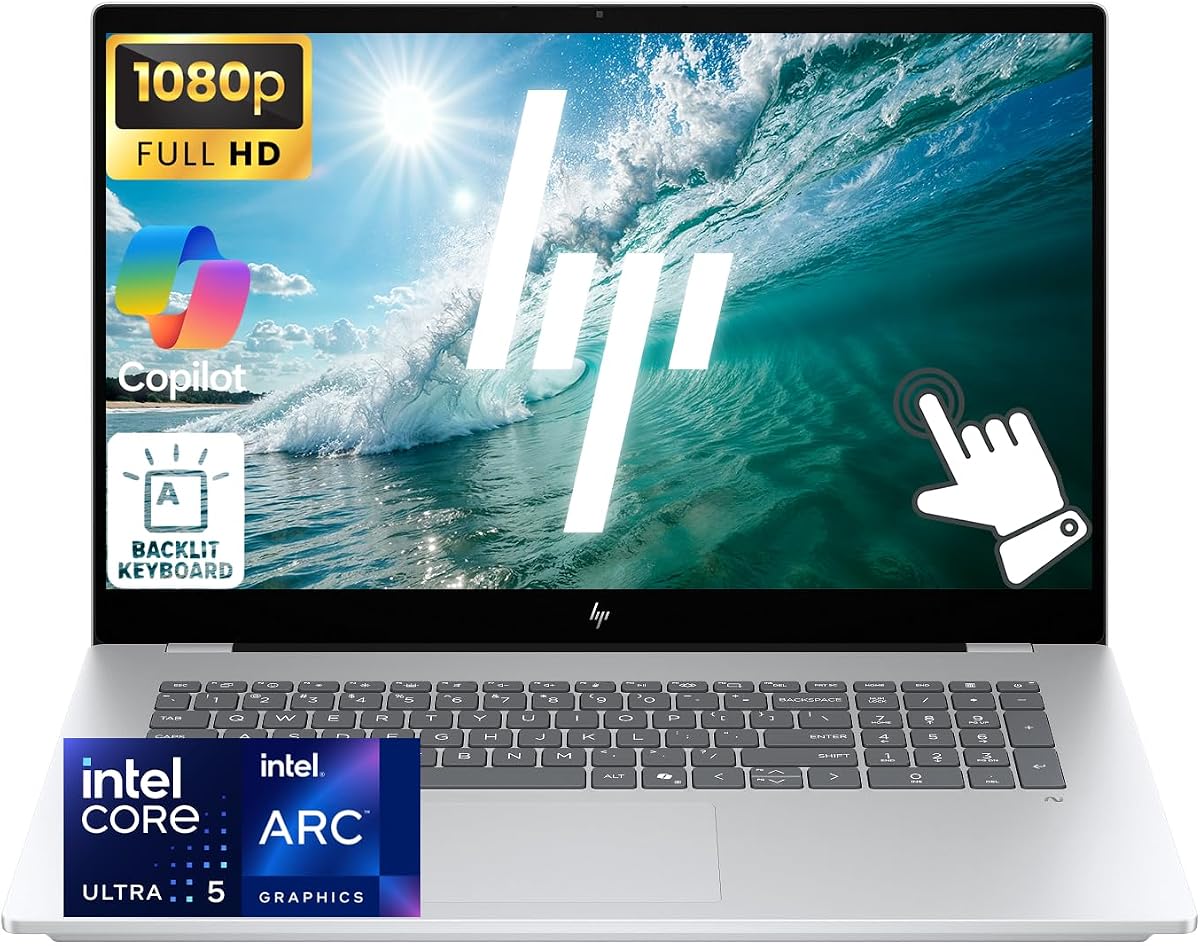
The HP OmniBook 7 Touch stands out as the value-oriented option in this guide, offering a large, color-capable touchscreen, Windows 11 Pro, and a 4.7 rating—the highest among the laptop listings. Its Intel Core Ultra 5 226V processor, 16GB of LPDDR5x memory, and up to 2.5TB storage make it well suited to everyday design-office work and moderate professional applications.
We may earn a commission when you buy through this link, at no additional cost to you.
The 17.3-inch FHD IPS touchscreen is the defining feature. It provides 400 nits of brightness, 100% sRGB coverage, edge-to-edge glass, and multitouch support. Those traits are useful for reviewing material palettes, presenting to clients, marking up images, and navigating large floor plans. The backlit keyboard, numeric keypad, webcam privacy shutter, and IR camera add practical everyday conveniences.
Limitations include 16GB of memory and integrated Intel Arc 130V graphics. The former may become restrictive with very large CAD assemblies or many simultaneous heavy applications, while the latter is not intended to replace workstation graphics for intensive 3D rendering. The stated processor also has eight cores and eight threads, so it should be considered more balanced than maximum-performance.
This laptop is recommended for interior designers who primarily handle 2D drawings, space planning, presentations, product research, client communication, and moderate CAD. It offers the most approachable route into a large, bright, touch-enabled workspace. Those needing continuous 3D rendering or large-memory projects should save up for the Dell Precision and HP ZBook configurations.
The 17.3-inch panel offers more physical workspace than a conventional compact notebook. Its touch capability makes it convenient for zooming into plans, repositioning imagery, reviewing client edits, and presenting concepts directly from the screen.
The Core Ultra 5 platform, 16GB of LPDDR5x memory, and generous storage target everyday professional productivity. Windows 11 Pro adds security and management features useful to freelancers, small studios, and design practices.
We may earn a commission when you buy through this link, at no additional cost to you.
This Dell Precision 7680 configuration is the strongest choice for designers whose priority is abundant memory alongside dedicated graphics. It has a perfect 5.0 rating and combines an Intel Core i7-13850HX vPro processor, 64GB of DDR5 CAMM memory, 1TB PCIe NVMe storage, and an NVIDIA RTX 2000 Ada GPU with 8GB of dedicated memory.
We may earn a commission when you buy through this link, at no additional cost to you.
The 64GB RAM is the defining specification. It gives design programs, rendering software, large file browsers, collaboration tools, and many browser tabs ample breathing room. The RTX 2000 Ada GPU supports 3D visualization and other graphics-intensive work, while the fast SSD helps manage large project directories and application loads.
Its built-in 16-inch FHD+ anti-glare screen is specified at 45% NTSC, making it less attractive for precise color assessment. The same applies to the 32GB and 2TB Precision variant: selecting this model means prioritizing memory over storage. It also remains a large workstation with a full-size keyboard and numeric keypad, so buyers should consider the space required for a mobile office.
This configuration is ideal for architects, interior designers, BIM users, and visualization specialists handling very large models or numerous simultaneous applications. It is also appealing to users who want to avoid future memory constraints. Designers centered on color approval should budget for a better external monitor, while those with extensive archives should examine the 2TB alternative.
Sixty-four gigabytes of RAM is unusually generous for a mobile design workstation. It allows large project files, reference materials, and communication applications to remain open without forcing the user to choose between workflows.
The RTX 2000 Ada GPU brings dedicated graphics to intensive design and visualization workloads. Thunderbolt 4, HDMI, USB-A, Ethernet, and four-display support make the laptop suitable for a connected, multi-screen studio.
We may earn a commission when you buy through this link, at no additional cost to you.
The JKM & Company rolling laptop bag is not a computer, but it is a useful companion for interior designers who regularly travel between studios, client sites, suppliers, and project locations. It has a 4.5 rating and provides a padded compartment for laptops from 13 to 17 inches, encompassing many of the laptops in this guide as well as common business models from Dell, HP, Lenovo, and Surface.
We may earn a commission when you buy through this link, at no additional cost to you.
Its inline wheels roll quietly over carpet, tile, and pavement, while the retractable handle allows the bag to remain compact when stored. This can be easier to manage than carrying a dense workstation with a shoulder strap. The dimensions of 16 by 10 by 15.5 inches are described as carry-on friendly for most major airlines, although travelers should still verify individual airline rules.
The tradeoff is bulk and weight compared with a sleeve or backpack. It may also be less appropriate in crowded locations where rolling luggage is inconvenient. The alligator-textured faux leather and gold-tone hardware provide a polished appearance, although the stated pattern and piping can vary between bags. Buyers should also consider whether their actual device dimensions fit the padded interior.
This is best suited to designers who want a professional-looking travel companion for a larger laptop. It is particularly useful when the selected computer is a 16- or 17-inch workstation and the user also needs to carry drawings, documents, chargers, and personal items. It does not replace a protective case for every transit environment, but it offers a practical way to organize and transport a complete mobile studio.
Multiple interior and exterior pockets separate the computer from documents, pens, chargers, and quick-access items. This organization is useful when moving between meetings and keeping project materials together in one bag.
The broad laptop compatibility and quiet inline wheels make the bag practical for transporting larger creator or workstation notebooks. The padded interior adds a basic protective layer, while the retractable handle keeps the case easier to store.
We may earn a commission when you buy through this link, at no additional cost to you.
The HP 14-inch Thin and Light is a basic, portable option for interior designers who need to review drawings, write specifications, prepare presentations, browse reference sites, and attend client meetings. It has a 3.8 rating, an Intel Celeron N4500 processor, 16GB of DDR4 memory, a 128GB NVMe SSD, and an included 500GB external drive.
We may earn a commission when you buy through this link, at no additional cost to you.
Its 14-inch format makes it one of the easiest choices to move between locations, while 16GB of memory is adequate for numerous browser tabs, office applications, cloud-based design tools, and lightweight 2D workflows. Windows 11 Pro provides business-oriented security and management features. The bundled six-in-one USB-C dock, cables, mouse, mouse pad, and external drive add useful flexibility for temporary desk setups.
The principal limitation is the Celeron N4500 processor, which has only two cores and two threads. While the listing describes applications such as photo and video editing, that processor is not appropriate for demanding CAD, intensive 3D rendering, or heavy multitasking under sustained computational load. The supplied display information also does not promise the color coverage or brightness found on creator-focused models.
This laptop makes the most sense for students, junior designers, office administrators, or professionals who mainly need a secondary, inexpensive travel device. It can be a companion to a more capable desktop or workstation rather than the sole computer for a design practice. Users with serious modeling or rendering needs should choose a Core Ultra, Core 9, i7, or i9 system with stronger graphics.
The compact chassis and included accessories make the system practical for travel and temporary workspaces. It is well suited to presentations, document review, email, spreadsheets, and online collaboration rather than heavy design computation.
Sixteen gigabytes of DDR4 memory helps with everyday multitasking, while the NVMe SSD supports faster local operation. The external drive adds portable capacity for project files, photographs, and presentations.
We may earn a commission when you buy through this link, at no additional cost to you.
Interior-design laptops must handle visual review, specialist design applications, large project files, and frequent communication. The right configuration depends on whether the main work involves 2D drafting, detailed CAD and BIM, 3D rendering, client presentations, or a balance of these activities.
Integrated graphics can be sufficient for floor plans, space planning, presentations, 2D drafting, specification work, and cloud-based applications. Dedicated graphics become important for realistic 3D interiors, GPU-accelerated rendering, detailed visualization, video editing, and other graphics-intensive tasks. The Dell Precision options with RTX 1000 or RTX 2000 Ada and the HP ZBook 8 G1i with RTX 500 Ada provide dedicated memory and stronger graphics hardware.
Memory determines how comfortably a system can keep models, images, applications, and communication tools open at once. The 16GB configuration is workable for lighter workflows, while 32GB offers a better balance for active professional use. A 64GB system is most appropriate for large assemblies, extensive BIM environments, local rendering, and users who want additional headroom. Integrated graphics can also use system memory, making ample capacity more valuable.
Interior designers often need to inspect finish colors, renderings, and material details, so display quality matters. The HP OmniBook 7 OLED stands out with 2K resolution, touch, HDR brightness, and 100% DCI-P3 coverage. The 17.3-inch HP OmniBook 7 provides 400 nits and 100% sRGB, while the Precision displays use anti-glare treatment for comfortable office work. Built-in displays specified at 45% NTSC are less suitable for color-critical decisions and may benefit from a separate calibrated monitor.
A modern Core Ultra 5, Core Ultra 7, Core Ultra 9, or Core 9 processor provides a stronger foundation for professional multitasking than an entry-level Celeron. The i5, i7, and i9 HX chips in the Dell Precision line offer additional processing capacity for demanding applications. Processor selection should reflect the software in use: light drafting, complex CAD, large BIM models, local rendering, and video workflows all place different demands on the processor.
Drawings, CAD files, high-resolution photographs, textures, and video assets can consume considerable space. A 1TB SSD is a practical starting point for a professional system, while 2TB gives more room for extensive libraries and local project archives. The HP 14-inch alternative combines a smaller internal drive with external storage. Designers working primarily in cloud applications may need less local capacity, but offline access and project portability still matter.
Interior designers often benefit from separating plans, elevations, material schedules, client communications, and 3D views. The listed workstations support multiple external displays through HDMI, USB-C, and Thunderbolt connections. The Precision models claim support for three or four 4K displays, while the ZBook adds high-resolution output through Thunderbolt 4. A designer should also check whether a docking station is included and confirm the laptop can be positioned comfortably beside the displays.
A 14-inch laptop is easier to carry between meetings, while 16- and 17.3-inch models provide more screen area and often house larger cooling systems. Dedicated workstations with 64GB memory, 2TB storage, and discrete graphics can be heavier than general-purpose systems. The JKM rolling bag can make a larger laptop more manageable when traveling, but it adds bulk. Choose the smallest machine that comfortably runs your most demanding applications.
Professional application certifications can provide confidence for CAD, BIM, simulation, and visualization workflows. Windows 11 Pro adds enterprise-oriented security, remote access, and management capabilities, which may matter to studios handling client data. Also review the seller's disclosure because resealed systems and upgraded memory or storage may carry different warranty coverage from the original manufacturer. Confirm the current component warranty and support period before purchase.
Start by creating a clear project structure with separate folders for drawings, textures, reference images, client documents, exports, and final presentations. Use a fast external drive or network storage for particularly large archives, but retain an active working copy locally for responsive performance. Consistent naming conventions prevent confusion when renders, revised elevations, and alternate finish schedules begin to accumulate.
Treat the display and pointer as precision tools. Calibrate color-critical screens with a suitable device, avoid prolonged direct sunlight, and use the anti-glare or touch features appropriately. Connect peripherals through the appropriate USB, Thunderbolt, HDMI, or Ethernet connections, and update each drawing tablet, color target, and external monitor when firmware or software improvements are available.
Protect performance by keeping system storage from becoming full and by restarting after major software or driver changes. Clean the vents carefully, avoid blocking airflow on soft surfaces, and keep liquids away from the keyboard. When traveling, use a padded sleeve or compatible rolling bag, protect the screen from pressure, and verify airline carry-on rules before departure.
Only for some workflows. Integrated graphics can handle 2D drafting, space planning, presentations, specification work, and many moderate CAD tasks. Dedicated graphics become more valuable for photorealistic 3D interiors, local rendering, simulation, advanced visualization, and video editing. The RTX-equipped Dell Precision models and HP ZBook are appropriate when those tasks are routine rather than occasional.
For many professional workflows, 32GB is a strong practical amount. It supports design applications, large drawings, reference images, and communication tools while reducing the chance of memory-related slowdown. A 64GB configuration is preferable for very large BIM models, dense 3D scenes, multiple heavy applications, and users who want more room for future growth.
A touchscreen can make reviewing plans, zooming into details, presenting concepts, and making temporary markups more convenient. The HP OmniBook 7 OLED and the larger HP OmniBook 7 both offer touch displays. However, touch should complement rather than dictate the decision; processor, memory, graphics, keyboard comfort, display quality, and connectivity remain more important for sustained professional work.
A high-resolution display with wide color coverage is the most useful. The 2K OLED HP OmniBook 7 lists 100% DCI-P3 coverage and HDR brightness up to 500 nits, while the 17.3-inch OmniBook 7 lists 400 nits and 100% sRGB. For important final decisions, designers should also consider a calibrated external display because no built-in panel completely replaces controlled color assessment.
It can be sufficient for presentations, drawings, schedules, research, communication, and light design applications. The HP 14-inch Thin and Light is best viewed as a basic or secondary machine because of its Celeron processor and modest graphics. Designers who regularly handle complex CAD or 3D should choose a more powerful 16-inch system, even if they travel with a smaller companion device.
One terabyte is a practical minimum for an active professional because project files, photographs, textures, and software can add up quickly. Two terabytes is preferable for extensive local libraries, video assets, detailed visualizations, or users who keep several active projects on the machine. Cloud storage helps with archives, but designers should still preserve a local working copy for speed and reliability.
Two displays can separate design work from communication, while three or four allow plans, elevations, schedules, material references, and 3D views to remain visible together. Several listed workstations support multiple external displays through Thunderbolt 4, USB-C, and HDMI. Before purchasing a multi-screen arrangement, confirm resolution support, available ports, docking requirements, and physical desk space.
A workstation is the stronger choice when dedicated graphics, large memory, extensive storage, and professional application compatibility are central to the work. A creator laptop may provide a more visually refined display, touch interaction, and a more portable design at lower or similar cost. The HP OmniBook 7 OLED is attractive for visual review and 2D-heavy workflows, while the HP ZBook and Dell Precision models better address sustained CAD, BIM, and rendering.
The Dell Precision 7680 i9 is the strongest overall choice for professionals who want workstation-class processing, 32GB of memory, fast storage, and extensive connectivity. The HP ZBook 8 G1i is the premium option for users who need dedicated RTX graphics, 64GB of memory, and 2TB of storage. The HP OmniBook 7 Touch is the best budget-oriented recommendation, pairing a large color-capable touchscreen with practical business features.
Prioritize the workload before the finish. Basic drafting and presentations need far less graphics power than photorealistic rendering or large BIM environments, while color-critical material review calls for a better display than many workstation configurations provide. Memory, storage, connectivity, and reliable warranty coverage should be evaluated alongside the processor and screen.
Configurations, seller modifications, warranty terms, and prices can change over time. Before buying, confirm the exact processor, graphics, memory, storage, display, operating system, and support coverage in the current Amazon listing, especially for resealed systems or upgraded components. That final verification helps ensure the selected laptop is genuinely suited to your interior-design workload.