
tridaptor Universal Phone Scope Digiscoping Adapter
4.4Editor score
Precision three-axis metal alignment
Fits 0.86 to 2.4-inch eyepieces
Includes Bluetooth shutter remote
A phone mount for spotting scope turns an optical eyepiece into a practical smartphone camera, making it easier to photograph birds, wildlife, distant scenery, and celestial objects. The best adapter combines a secure eyepiece grip, accurate camera alignment, dependable phone support, and enough adjustment to eliminate dark edges and unwanted movement.
We compared ten products using their published specifications, compatibility ranges, construction, adjustment systems, customer ratings, and intended uses. The list covers universal metal adapters, lightweight clamp designs, magnetic models, and a Bluetooth-equipped option, with special attention to eyepiece size, phone width, stability, and ease of setup.
Each review explains what distinguishes the mount, where its compatibility limits matter, and which users may find it most useful. The three leading selections highlight premium metal construction, broad adjustability, and lightweight portability, while the remaining reviews cover alternatives for different eyepieces, phones, and field priorities. Product listings can change over time.
4.4Editor score

4.2Editor score

5.0Editor score
As an Amazon Associate we earn from qualifying purchases.
The following comparison highlights each adapter's eyepiece range, phone compatibility, construction, and adjustment approach, helping you identify the most suitable model for your optical equipment before buying.



The tridaptor Universal Phone Scope Digiscoping Adapter is our most complete premium-style option, combining a rigid aluminum body with adjustment along three axes. Its 4.4 customer rating reflects a well-regarded balance of precise positioning, durable construction, and broad compatibility. It is designed for users who want repeatable camera alignment rather than a simple temporary clip.
We may earn a commission when you buy through this link, at no additional cost to you.
The most notable feature is the XYZ adjustment system. Horizontal and vertical movement help position the phone camera over the eyepiece, while forward-and-back movement brings the lens to the correct eye relief. That third axis is especially valuable because a camera placed too close or too far from the eyepiece may produce dark borders, a soft image, or uneven framing. Rubber pads protect both the phone and optical surface during repeated use.
Compatibility is unusually broad for a rigid adapter. The listed eyepiece range spans 0.86 to 2.4 inches, or 22 to 61 millimeters, while the phone clamp accepts devices from 2.36 to 3.44 inches wide, or 60 to 87.5 millimeters. The product is also listed as compatible with many standard eyepieces from Vortex, Swarovski, Celestron, Nikon, Zeiss, Kowa, and Leupold. Nevertheless, measuring the eyepiece remains essential.
The included Bluetooth remote is a meaningful field accessory. It lets the user trigger a photo or video without touching the phone, avoiding the small movements that can blur an otherwise sharp digiscoped image. This model is best for birders, wildlife observers, and amateur astronomers who use a compatible larger eyepiece and want a stable, precisely aligned rig. Its weight and price-averse bulk make it less compelling for someone prioritizing minimal pack size.
Independent movement in three directions makes it easier to find the camera's sweet spot. The Z-axis movement in particular helps control vignetting by setting the correct distance between the phone lens and eyepiece, while the other axes keep the camera centered over the optical opening.
The rigid aluminum frame is less likely to flex or lose alignment than a lightweight plastic holder. That stability is valuable during long birding sessions, stargazing, and handheld nature videos, while the rubber pads reduce the chance of scratching the phone or eyepiece.
We may earn a commission when you buy through this link, at no additional cost to you.
The tridaptor Universal Digiscoping Adapter is an Editor's Choice because it combines a metal three-axis mechanism with a straightforward universal fit. Its 4.2 rating places it among the stronger-reviewed products in this guide. It is suited to users who regularly switch among a spotting scope, telescope, monocular, or microscope and want one adaptable phone platform.
We may earn a commission when you buy through this link, at no additional cost to you.
Its defining advantage is controlled camera positioning. The adapter can shift left, right, up, down, forward, and backward, allowing the phone camera to be centered over an eyepiece without improvised stacking. The forward-and-back adjustment helps set the appropriate distance for cleaner framing. A rigid aluminum body holds those settings more consistently than a flexible plastic bracket, while rubber pads protect the surfaces that meet the phone and eyepiece.
The stated compatibility range covers eyepieces from 0.86 to 2.4 inches, or 22 to 61 millimeters, and most iPhone and Android phones between 2.36 and 3.44 inches wide. The listed optical-brand compatibility includes Vortex, Swarovski, Celestron, Nikon, Zeiss, Kowa, and Leupold, although those names should be treated as guidance rather than a guarantee for every model. Buyers should measure the outside diameter of the eyepiece before ordering.
This tridaptor model is an excellent choice for people who need repeatable alignment and value a durable metal platform over minimal weight. It can be less convenient for backpackers than a small plastic model, and very short eyepieces may not provide enough room for the clamp. For a compatible setup, however, the three-axis control gives it a practical advantage for wildlife, astronomy, and general optical photography.
The same three-axis frame can be used with a spotting scope, telescope, monocular, or microscope. That versatility is useful for families or outdoor educators who do not want to maintain a separate phone holder for every optical instrument.
A rigid body resists sagging and unintended tilting, which helps preserve camera placement over longer sessions. The adjustment controls still allow careful correction when working with different eyepieces, phone cameras, and cases.
We may earn a commission when you buy through this link, at no additional cost to you.
The CELTICBIRD Upgrade Smartphone Scope Adapter is a practical middle-ground choice with a 3.8 rating. Its most interesting feature is the scale-oriented design, which is intended to make it easier to place the phone camera directly over the center of an eyepiece. The adjustable distance between lens and eyepiece also gives users a way to improve framing and reduce unwanted dark edges.
We may earn a commission when you buy through this link, at no additional cost to you.
The adapter combines an aluminum main body with a high-strength plastic phone clamp. This construction keeps the optical-side bracket firm while avoiding unnecessary weight throughout the holder. The stated eyepiece range is 34 to 62 millimeters, or 1.34 to 2.44 inches, which covers many standard spotting scope and telescope eyepieces but excludes smaller units.
Phone compatibility is one of its strongest attributes. The listed 54 to 90 millimeter width range, equal to 2.12 to 3.54 inches, accommodates most modern iPhone, Samsung, Huawei, LG, Sony, and other smartphone models, including devices with moderate cases. The product is advertised for binoculars, monoculars, telescopes, spotting scopes, and microscopes, making it one of the more broadly useful adapters in the roundup.
This adapter makes sense for users who appreciate a simple visual aid for alignment but do not need a fully articulated three-axis mechanism. Its main limitation is the 34 millimeter lower eyepiece limit, which could be decisive if your optic uses a smaller eye piece. There is also no listed remote shutter, so reducing shake may require a timer or another camera-control method.
The scale-based approach gives users a visual reference while aligning the camera and eyepiece. It can make initial setup less confusing, particularly for someone using a phone adapter for the first time or working with an unfamiliar spotting scope.
Changing the camera-to-eyepiece distance allows the user to find a clearer viewing window. This adjustment is useful when dark borders appear or when the phone camera sits too far above the eyepiece for an even image.
We may earn a commission when you buy through this link, at no additional cost to you.
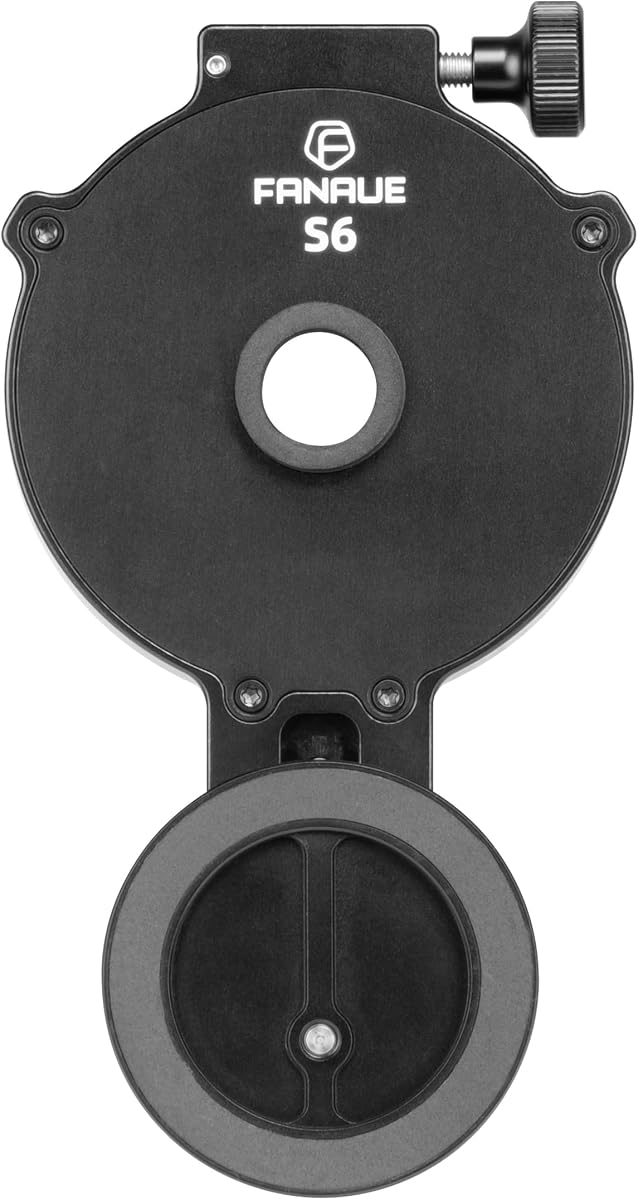
The FANAUE Telescope Phone Adapter stands out for its magnetic phone connection and rotating alignment system. Its 4.0 rating reflects a practical design that is easy to attach and suitable for wildlife, stargazing, bird watching, and microscopy. It offers a useful alternative for users who prefer magnetic convenience over a conventional sliding clamp.
We may earn a commission when you buy through this link, at no additional cost to you.
The adapter is precision machined from aluminum, creating a rigid eyepiece-side frame intended to resist movement. Its powerful magnetic connection holds the phone against the adapter, while a rotating mechanism allows the user to refine the viewing angle. The attachment process is straightforward: place the phone, center the camera above the eyepiece, and tighten the securing knobs.
Its listed eyepiece compatibility spans 30 to 60 millimeters, or 1.18 to 2.36 inches. That range covers many spotting scopes, binoculars, monoculars, and astronomical telescopes, although microscope users are specifically advised to measure the eyepiece first. The magnetic phone interface works with most smartphones, but a compatible magnetic interface or accessory may be required depending on the device and case.
FANAUE is a good fit for users who switch quickly between an eyepiece and their phone, or who want a compact magnetic setup for travel. The rotating joint adds useful control, although it does not offer the same three-axis freedom as the premium tridaptor models. Check your phone's magnetic arrangement and case thickness before purchase to avoid an unexpectedly loose connection.
A magnetic interface lets the phone be placed or removed quickly without repeatedly operating a conventional clamp. This is convenient for checking the live camera view, taking a call, or moving between several optical devices.
The aluminum frame provides a stable base at the eyepiece. Combined with the rotating adjustment, it helps the user hold the camera over the optical center while reducing unwanted movement during photos and videos.
We may earn a commission when you buy through this link, at no additional cost to you.
The Magsafe Digiscoping Adapter is designed primarily for iPhone users who already use magnetic cases or enjoy the convenience of magnetic accessories. Its 3.7 rating reflects a solid construction and broad eyepiece range, although it is less universally applicable than conventional clamp-style models. It is particularly relevant to users of the listed iPhone 12 through 17 Pro Max series.
We may earn a commission when you buy through this link, at no additional cost to you.
The mounting system uses built-in 20 N52 neodymium magnet rings to hold the phone securely to the adapter. A separate metal ring is included for iPhone 11 and earlier devices, Android phones, and cases that can create a magnetic effect. The instructions recommend waiting 24 hours after applying the ring before using the holder, allowing the adhesive attachment to set.
Camera alignment is handled with up-and-down and forward-and-back movement. The forward-and-back control helps achieve the correct eye relief and reduce black edges, while the vertical adjustment allows the user to center the lens over the eyepiece. The eyepiece range is 1.1 to 2.5 inches, or 28 to 64 millimeters, covering many large and standard optical eyepieces.
The body is precision machined from 6061-T6 aluminum and given an anodized finish for durability. Beveled edges are intended to reduce snagging, and the listed dimensions are 133 by 90 by 34 millimeters, with a weight of 123 grams. It is a strong choice for magnetic-case owners, although the lack of MagSafe charging support and the need to add a ring for some phones may deter others.
Neodymium magnets provide a strong connection without a large conventional locking mechanism. This is useful for maintaining a consistent camera position, provided the phone, case, and included ring are properly aligned.
The 6061-T6 body and anodized treatment are intended to withstand repeated outdoor use. Its rigid structure helps the eyepiece interface retain shape while the adjustment controls establish the phone's position.
We may earn a commission when you buy through this link, at no additional cost to you.
The APEXEL 360° Universal Digiscoping Phone Adapter is our Best Budget selection for travelers, casual birders, and anyone who prioritizes low weight. Its 5.0 rating is the highest listed among the ten products, and the design removes screw components to reach a stated weight of 0.22 pound, making it considerably easier to carry than many all-metal adapters.
We may earn a commission when you buy through this link, at no additional cost to you.
The mounting process is built around speed. The product description states that the adapter can attach in approximately ten seconds, while the 360-degree rotation collar allows the phone to move between landscape and portrait framing without removal. A Bluetooth remote is included so the user can trigger photos or videos without touching the phone, which is particularly helpful when trying to preserve fine detail.
The adapter fits eyepieces from 0.9 to 2 inches, or 23 to 50 millimeters, in outer diameter. It supports most iPhone and Android devices and is intended for spotting scopes, binoculars, telescopes, and monoculars. The manufacturer notes that it is a mounting adapter rather than a magnifying lens, and the optical device is sold separately. Measuring the eyepiece remains important before ordering.
For the clearest result, APEXEL recommends zooming the phone to 2x to reduce black edges, selecting the main camera instead of an ultra-wide lens, and disabling automatic macro switching where supported. Some dark corners may remain because phone optics vary, but centering the lens reduces the effect. This model is best for quick, lightweight field use; users needing a broad eyepiece range or highly rigid metal construction should consider another option.
At a stated 0.22 pound, the adapter avoids the noticeable weight of many metal digiscoping rigs. It is easier to carry on hikes, birding walks, and trips to darker observing locations without adding substantial bulk to the user's gear.
The included Bluetooth remote removes the need to tap the screen while the phone is aligned. This reduces hand movement at the moment of capture and makes it easier to work with astronomy, wildlife, and long-distance subjects.
We may earn a commission when you buy through this link, at no additional cost to you.
The GOSKY Spotting Scope Phone Adapter is a proven, uncomplicated choice for users who want to connect a phone without learning a complex articulated system. Its 4.0 rating and long-standing design make it a practical option for casual wildlife observation, binocular use, and basic digiscoping. The three-step setup is centered on placing the phone, aligning the camera, and tightening the knob.
We may earn a commission when you buy through this link, at no additional cost to you.
Its main body is made from zinc alloy with a grooved metal casing, while the phone clip uses high-strength plastic. This combination gives the eyepiece connection more rigidity than an all-plastic bracket without making the entire adapter particularly elaborate. The materials are described as suitable for field use and harsh weather conditions, although sensible protection during rain and storage is still important.
The eyepiece range is 28 to 47 millimeters, which is narrower than many of the larger adapters in this guide. That makes accurate measurement essential. Phone compatibility is generous, covering devices from 2.13 to 3.54 inches wide, or 54 to 90 millimeters. The product description lists many recent and older iPhone and Samsung models, indicating a phone clamp designed around broad device widths rather than a specific model.
GOSKY is a sensible choice for someone who wants a direct approach and a durable eyepiece grip. The lack of multi-axis adjustment means the user may need to move the phone or optic slightly to find the clearest camera position, but the tightened clamp should hold that position. It is most attractive for binoculars, monoculars, and eyepieces that fall comfortably within the 28 to 47 millimeter range.
The grooved zinc alloy body provides a firm grip and resists deformation better than a lightweight plastic eyepiece cup. That stability is useful when the adapter is used outdoors or adjusted repeatedly between different viewing angles.
The phone goes into the clip, the camera is aligned with the eyepiece, and the knob secures the assembly. This uncomplicated process makes the adapter approachable for casual users and quick field sessions.
We may earn a commission when you buy through this link, at no additional cost to you.
The New Universal Binocular Phone Adapter is a flexible, tool-free option with a 3.5 rating. It supports a notably broad 16 to 50 millimeter eyepiece range, making it one of the more accommodating choices for smaller monocular eyepieces, binocular barrels, telescopes, microscopes, and spotting scopes. Its 360-degree rotation also makes landscape and portrait framing straightforward.
We may earn a commission when you buy through this link, at no additional cost to you.
The phone interface uses a wide adjustable clamp that accommodates most iPhone, Samsung, and other Android models, including many devices with slim-to-medium cases. A single alignment window is used by design to improve stability and create a more consistent light seal. The phone can slide along the rail until the main wide camera is centered over the eyepiece. Secondary ultra-wide and telephoto cameras will not align with that window.
Installation requires no tools. A quick-release design lets the adapter connect to the optical device, and a dual-lock system secures both the eyepiece interface and the phone. The frame is made from ABS with non-slip rubber pads, which keeps the assembly lighter than a substantial metal rig while still protecting contact points from slipping.
This adapter is best for users who value quick setup, broad eyepiece coverage, and simple rotation over premium metal construction. The main trade-off is the single-camera alignment window, which means multi-camera phones need careful positioning of their main lens. Some dark corners may also appear depending on phone optics and the exact spacing between the lens and eyepiece.
The 16 to 50 millimeter range is useful for devices with smaller eyepieces that are excluded by many larger adapters. It gives birders and microscopists more flexibility when working with compact or unusually sized optical components.
The quick-release mechanism avoids fiddly screws and allows the adapter to be removed or repositioned quickly. A dual-lock arrangement holds the eyepiece and phone firmly once the user has completed the initial alignment.
We may earn a commission when you buy through this link, at no additional cost to you.
The Snakelook Spotter Scope Phone Adapter is designed with a specific priority: fitting larger spotting scope eyepieces. Its 3.1 rating is the lowest among the products reviewed, so it is best considered a targeted option rather than a universally recommended choice. It is specifically promoted for larger eyepieces commonly found on scopes from brands such as Swarovski and Vortex.
We may earn a commission when you buy through this link, at no additional cost to you.
Its listed eyepiece range is 1.25 to 2.65 inches, or 31.75 to 67 millimeters. That upper limit exceeds the ranges of many competing products and may make it useful for a large-body spotting scope that other adapters cannot accommodate. The phone fit is also exceptionally broad, accepting widths from 2.2 to 4 inches, which gives users considerable freedom in device choice.
The adapter uses soft material around three sides to shield the phone from impacts. Screw locks then secure the phone firmly, addressing a common concern with lightweight digiscoping systems. Its compact and lightweight design is intended to remain comfortable during outdoor use and travel, particularly when attached to larger optics.
Snakelook is most relevant to a buyer who has already measured an eyepiece above the limits of more common adapters. The tradeoff is that the product description does not mention an articulated adjustment system, remote shutter, or detailed camera-positioning controls. Users should also account for the lower customer rating by carefully checking dimensions and the fit of their specific scope before ordering.
The upper fit limit of 67 millimeters is the main reason to consider this adapter over more compact models. It can be valuable for larger spotting scopes whose barrels do not fit within the narrower range of many universal phone mounts.
Soft padding helps shield the phone while screw locks hold it in position. The combination provides a more enclosed grip than a simple open rail, which can be reassuring when carrying a larger device outdoors.
We may earn a commission when you buy through this link, at no additional cost to you.
The SVBONY Universal Cell Phone Adapter is an established entry-level option with a 4.0 rating. It is especially useful for users who want a simple phone holder compatible with a wide range of device widths but do not need a complex three-axis mechanism. It can be used with a telescope, binocular, monocular, spotting scope, microscope, or night-vision monocular.
We may earn a commission when you buy through this link, at no additional cost to you.
The stated eyepiece compatibility is 25 to 48 millimeters, including 1.25-inch telescope eyepieces. The product explicitly does not fit 2-inch eyepieces, an important limitation for anyone with larger optics. Phone widths from 52 to 100 millimeters are listed as compatible, covering a very broad range of devices and making the clamp unusually accommodating by current smartphone standards.
Construction combines a lightweight aluminum alloy shell with a high-strength plastic clamp. Rather than relying on a spring, the phone holder uses an adjustable locking mechanism with a steel bolt, which helps maintain a consistent position once tightened. High-density EVA pads protect the phone from direct contact with the clamp and improve grip during outdoor use.
SVBONY works best for users with smaller standard eyepieces who prioritize broad phone acceptance, straightforward hardware, and durable everyday construction. It does not provide the same fine positioning controls as the premium tridaptor models, and the upper phone-width limit means some unusually large devices may not fit. Measuring both the eyepiece and phone remains essential.
The steel-bolt locking mechanism avoids the gradual loosening associated with some spring-style clamps. This helps keep the phone steady once it has been positioned over the eyepiece and tightened.
A 52 to 100 millimeter width range covers most phones and many larger models. The product description also lists compatibility with several iPhone, Sony, Samsung, and Motorola families from earlier generations.
We may earn a commission when you buy through this link, at no additional cost to you.
The right phone mount for spotting scope depends primarily on eyepiece diameter, phone size, camera layout, and the stability you need. These factors determine whether an adapter fits correctly and whether it can produce a centered, shake-free image in the field.
The most important measurement is the outside diameter of the eyepiece or barrel where the adapter will attach. Published ranges vary dramatically, from 16 millimeters on the compact universal clamp to 67 millimeters on the large-eyepiece-focused Snakelook design. Measure across the widest part of the part that enters the adapter, because a measurement taken at a tapered section may produce a misleadingly tight fit. Also consider any rubber collar, threads, or uneven housing around the barrel.
Phone clamps are normally defined by the maximum width they can span, but a case can change the effective measurement. Most products in this guide accommodate common smartphone widths, while the SVBONY offers the broadest listed range and the Snakelook is especially accommodating. A narrow adapter may exclude a large phone in a thick case, while a wide clamp may not fully support a small device. Check both the bare phone width and the total width including the case.
A phone has multiple cameras, but most single-window digiscoping adapters are designed around the main wide camera. The New Universal Binocular Phone Adapter explicitly notes that ultra-wide and telephoto lenses will not align with its single window. Phones with large camera arrays may also be difficult to center if the mount's window is too small. A mount that allows left, right, up, and down adjustment makes this alignment easier, while forward-and-back movement helps establish the right distance from the eyepiece.
A rigid metal adapter usually holds alignment more reliably than a small plastic one, which matters during long wildlife sessions or magnified astronomy. The tridaptor models, FANAUE, and Magsafe option use metal construction, while APEXEL and the New Universal Binocular Phone Adapter prioritize low weight. If your sessions are short and portability dominates, a lighter ABS frame may be more convenient. If you record long videos or work at high magnification, added rigidity can be the more valuable trait.
Dark borders occur when the phone camera does not capture the entire illuminated circle produced by the eyepiece. Moving the camera closer, farther away, or slightly off-center can often improve the result, and the tridaptor models use three-axis adjustment specifically to address this issue. APEXEL recommends zooming to 2x to reduce black edges and advises using the main lens with automatic macro switching disabled. Because phone optics vary, a mount cannot guarantee a completely border-free frame for every device.
Touching the phone to take a picture can introduce enough movement to blur a magnified view. Bluetooth remotes allow the user to start and stop capture without touching the device, making them particularly useful for astronomy, wildlife, and distant targets. The tridaptor Universal Phone Scope Digiscoping Adapter and APEXEL adapter both list a Bluetooth remote. Other products may still work with your phone's native remote or timer controls, but that feature is not confirmed in their supplied specifications.
Birding and wildlife viewing usually reward a stable mount with fast phone alignment, while astronomy may place more emphasis on dark-edge control and remote operation. Microscopes can have unusual eyepiece shapes, so measuring is especially important. The FANAUE and APEXEL products are explicitly positioned for portable outdoor use, whereas the rigid tridaptor models are better suited to users who want precise positioning across multiple optical devices.
Begin by measuring the outside diameter of the eyepiece and checking the width of your phone with its case attached. Compare both dimensions with the adapter's published ranges, then inspect the eyepiece for dirt, moisture, or sharp edges. Clean both the optical lens and the phone camera before connecting them, since even a small particle can create a dark spot or soften the image.
Attach the adapter to the eyepiece according to its instructions, then place the phone in the holder. Select the main wide camera, center it over the middle of the eyepiece, and adjust the camera-to-eyepiece distance. On a live camera view, check all four edges of the circular image and make small corrections until dark borders are minimized. When the framing is satisfactory, tighten every locking control without forcing the mechanism.
For the sharpest results, stabilize the spotting scope on a tripod or other stable support and use a Bluetooth remote, phone timer, or the camera's remote-control function to avoid touching the screen while capturing. After the session, loosen the clamp, remove the phone, and wipe the adapter with a dry or slightly damp cloth. Let the optics and mounting surfaces dry completely before storing them, and avoid leaving a magnetic phone attached unnecessarily.
Choose an adapter whose listed eyepiece range includes the outside diameter of the part that enters the holder. Measure across the widest attachment area rather than a tapered section, and also check the phone clamp against the width of your device with its case installed. Exact compatibility cannot be determined from brand alone, so both measurements are important.
A phone mount does not increase the optical magnification or inherent resolution of the spotting scope. It can improve results by holding the phone camera steadily and precisely over the eyepiece, reducing blur and framing errors. Image quality still depends on the scope, eyepiece, phone camera, lighting, and how accurately the two optical centers are aligned.
Dark edges usually mean the phone camera is not capturing the entire illuminated image from the eyepiece. Move the phone slightly forward or backward, recenter the main camera, and zoom to 2x if the adapter manufacturer recommends it. If your phone switches between cameras automatically, disable that behavior and select the main wide lens manually.
Many of the listed adapters are designed for telescopes, spotting scopes, monoculars, and binoculars, but the barrel must fall within the specified diameter range. Binocular barrels can vary between models, and a monocular eyepiece may be a different size from a binocular housing. Measure the intended attachment surface and confirm the fit before use.
Metal models generally resist flexing and hold camera alignment more consistently, which can help with long videos and high magnification. Plastic models are lighter and easier to carry, making them attractive for casual walks and travel. The best choice depends on your gear, session length, and how much weight you are comfortable carrying.
A Bluetooth remote is helpful but not essential for every user. It lets you trigger capture without touching the phone, reducing movement that can blur a magnified image. If the adapter does not include one, your phone's built-in timer, camera remote function, or voice control may provide a similar benefit, depending on the device.
A multi-camera phone can work, but the adapter usually centers the main wide camera rather than every lens. Large camera arrays may require careful positioning because the eyepiece window must overlap the intended camera. The New Universal Binocular Phone Adapter explicitly notes that its secondary ultra-wide and telephoto lenses will not align with its single window.
Remove the phone and loosen the eyepiece clamp before long-term storage. Wipe away dirt and moisture, allow all parts to dry completely, and keep the adapter in a protective pouch or case. Magnetic adapters should not remain attached to a phone for extended periods, and exposed optics should be protected from dust and temperature extremes.
The tridaptor Universal Phone Scope Digiscoping Adapter is the strongest all-around choice for users who value rigid construction, three-axis positioning, a broad eyepiece range, and an included remote. The second tridaptor model provides a similarly capable system for people who want a three-axis adapter across several optical devices, while APEXEL is the leading lightweight option for travel and quick field setup.
Prioritize eyepiece diameter and phone dimensions before considering any other feature. Within a compatible size range, metal construction and multiple adjustment axes favor precise, stable images; magnetic attachment favors quick phone changes; and a Bluetooth remote is valuable when touch-induced shake is a concern. Smaller eyepieces, larger scopes, and multi-camera layouts can make a seemingly universal adapter unsuitable.
Once you have narrowed the list using the measurements and features that matter to your use, compare the current product listing carefully before ordering. Availability, package contents, and manufacturer details can change, and the most reliable purchase is one whose stated eyepiece range, phone fit, and included accessories match your exact equipment.