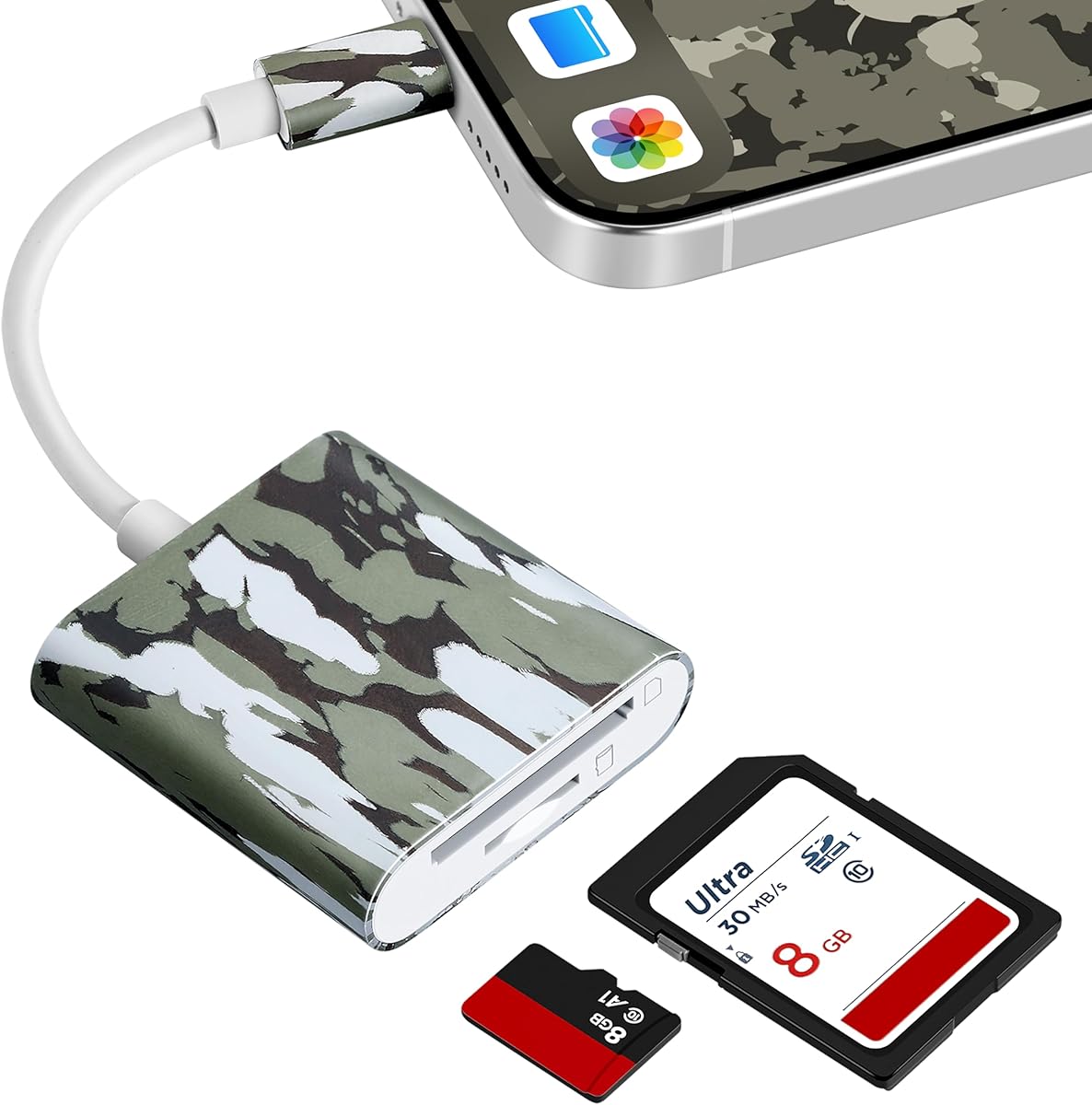
Trail Camera Viewer
4.4Editor score
Works without Wi-Fi
Requires no third-party app
Supports USB-C mobile devices
Trail camera card readers make it easier to review the wildlife captured far from your truck, campsite, or hunting blind. A good reader should transfer files quickly, display them clearly, and work with the devices and memory cards you already use while remaining practical in wet, dusty, or cold outdoor conditions.
This guide compares ten trail camera card readers across device compatibility, card support, display size, portability, power requirements, media controls, and outdoor durability. It includes phone adapters, compact standalone viewers, and larger tablet-style products so hunters and wildlife observers can compare several approaches.
Each review explains the product's most useful features, limitations, and ideal buyer, while the comparison table provides a quick overview. Product details and customer ratings can change, and current pricing and availability should be checked before buying.
4.4Editor score

4.9Editor score

4.3Editor score
As an Amazon Associate we earn from qualifying purchases.
This side-by-side comparison highlights the differences between phone adapters, compact standalone viewers, and tablet-style trail camera readers. Pay close attention to connector type, card capacity, screen size, power needs, and weather resistance before selecting the format that best fits your field workflow.


This compact USB-C adapter is designed for quickly reviewing trail camera images and videos on compatible phones and computers. Its 4.4 rating reflects a generally positive user experience, and its strongest qualities are direct plug-and-play operation, broad device support, and freedom from batteries, Wi-Fi, cellular service, or third-party apps.
We may earn a commission when you buy through this link, at no additional cost to you.
The supplied information says it works with iPhone 15 and later, MacBook series, and Android devices with USB-C ports and OTG support. Once connected, it lets users view, save, share, and delete captured files. That makes it particularly useful for hunters who already carry a modern phone and prefer not to wait until returning home to inspect camera activity.
The main limitation is that it depends entirely on the connected device. It does not offer its own display, so screen size, playback capability, and file management ultimately depend on the phone, tablet, or computer. It also lacks the apparent weather resistance of purpose-built standalone viewers, although its small size makes it easy to keep in a pocket or protective pouch.
This is an excellent choice for buyers who want an inexpensive, uncomplicated way to move trail camera files onto a compatible USB-C device. It is less suitable for people using older iPhones, devices without USB-C, or those who want a larger screen and physical playback controls in the field.
The adapter removes the need for internet access or an additional viewing application. That is useful in remote areas where cellular service and Wi-Fi may be unavailable, allowing immediate wildlife review directly from the connected device.
Because the reader requires no internal battery, users only need to carry the adapter and a charging cable. Its compact construction also reduces the amount of equipment hunters must protect between the vehicle and camera location.
We may earn a commission when you buy through this link, at no additional cost to you.
The Muddy CRV3 HD is a dedicated 4.3-inch card viewer for hunters who want to inspect trail camera footage without relying on a phone. It carries a 4.2 rating and combines a color LCD, 1080p video playback, adjustable brightness and volume, physical media controls, and a water-resistant housing in one portable unit.
We may earn a commission when you buy through this link, at no additional cost to you.
Its dedicated screen is easier to use outdoors than managing transfers through a phone, particularly when gloves, darkness, or limited signal complicate a mobile workflow. The viewer supports SD cards up to 32GB, and the View, Transfer, and Delete options cover the core tasks expected from a field media device. A headphone jack also allows video audio to be monitored more privately.
The viewer runs on four AA batteries, which are not included, so buyers should plan for spare power in longer trips. Its 32GB limit may also require frequent card rotation, and the Micro USB connection does not include a cable according to the listed information. The water-resistant housing helps in changing weather, but it should not be treated as fully waterproof without further clarification from the manufacturer.
Choose the Muddy CRV3 HD when a standalone screen, simple controls, and audio playback matter more than broad connector support. It is a practical option for regular trail camera users who prefer a dedicated device over a phone-based adapter.
The 4.3-inch color LCD gives images and video a dedicated place to be reviewed without navigating a phone interface. Adjustable brightness adds flexibility when checking footage under tree cover, inside a hunting blind, or during changing daylight.
View, Transfer, and Delete options cover the most common media tasks, while the headphone jack supports more personal audio playback. The wrist lanyard and Micro USB connection further improve handling and transfer flexibility.
We may earn a commission when you buy through this link, at no additional cost to you.
The Stealth Cam SD Card Reader/Photo & HD Video 1080P Viewer offers a 4.3-inch color display and gesture-based navigation in a durable, water-resistant housing. Its 4.4 rating places it among the stronger-rated dedicated viewers in this group, particularly for users who prefer touch controls over navigating a small button-based interface.
We may earn a commission when you buy through this link, at no additional cost to you.
Five-point touch detection and smart gestures make browsing captured photos and videos more intuitive. The viewer supports 1080p playback, which suits the HD video commonly produced by trail cameras, and includes view and delete options for basic file management. A wrist lanyard helps keep the device secure while working outdoors.
The supplied specifications are concise, so buyers should verify power requirements, connection details, and maximum supported card capacity before ordering for extended trips. The stated feature set also focuses on viewing and deleting rather than the broader transfer functions advertised by some competing readers. Those limitations may matter to users who want to archive footage onto another storage device.
This viewer is well suited to hunters and wildlife observers who want a responsive, compact screen for sorting images in the field. It is less suitable for buyers who require extensive file-management features or a clearly documented high card-capacity limit.
Five-point touch detection and smart gestures offer a more familiar way to move through photos and videos. This makes the viewer approachable for users accustomed to phones and tablets.
The color LCD, 1080p playback, water-resistant housing, and included wrist lanyard form a field-oriented package. It keeps the essential viewing experience together in a device designed for outdoor use.
We may earn a commission when you buy through this link, at no additional cost to you.
This Stealth Cam viewer combines a 4.3-inch color LCD with 1080p playback, 32GB SD card support, audio playback, and a rugged water-resistant housing. Its 4.4 rating indicates a well-received product with a clear balance of screen quality, outdoor protection, and field media management.
We may earn a commission when you buy through this link, at no additional cost to you.
The rubberized buttons are designed to withstand dust, dirt, water drops, and snowflakes, making this a sensible option for hunters who expect rough conditions. Users can view and delete images, play HD video, and connect headphones for audio. The included wrist lanyard reduces the chance of dropping the unit into mud, deep grass, or brush.
The reader operates on four AAA batteries, which are not included, and the Micro USB cable is also not included. Its maximum supported card size is 32GB, which limits the amount of footage that can remain on one card. As with any water-resistant electronic device, the unit should be protected from prolonged submersion and harsh weather beyond the stated conditions.
This model is a strong fit for a hunter who values tactile controls, a full set of media options, and durable construction. It is less convenient for buyers who want a reader that works directly with a modern phone or one capable of using larger memory cards.
A water-resistant housing and rubberized buttons help protect the controls from dust, dirt, water drops, and snowflakes. Those features are meaningful for trail cameras positioned in exposed hunting environments.
Viewing, deleting, HD video playback, and headphone audio cover the core functions of a standalone reader. Micro USB connectivity also provides a route for transferring files, although a cable must be supplied separately.
We may earn a commission when you buy through this link, at no additional cost to you.
The WILDGAME INNOVATIONS Trail Pad Tablet VU70 is the most expansive dedicated viewer in this roundup, with a 7-inch HD backlit TFT touch screen and two full-size SD card ports. Its 4.3 rating reflects a capable design for hunters and wildlife observers who regularly sort large collections of photos and HD videos.
We may earn a commission when you buy through this link, at no additional cost to you.
The large display supports zooming, swiping, and tablet-style navigation, making it easier to identify animals, timestamps, and other visual details. One port serves as the library for browsing a camera card, while the second acts as an archive location for keeping selected images and videos together. Both ports accept cards up to 32GB, and the built-in speaker enables audio during video playback.
Heavy-duty, weather-resistant construction helps it handle demanding field conditions. Auxiliary and Micro USB ports support expanded display and file-transfer options. The tradeoff is its larger size compared with pocket adapters and 4.3-inch viewers, and the dual-card system may feel more complex than necessary for someone who only needs quick previews.
The VU70 is an excellent choice for serious trail camera users, wildlife educators, and anyone who values a large screen plus organized archive space. Buyers who travel long distances with minimal gear may prefer a smaller standalone viewer, while phone-only users should examine the adapter options instead.
The 7-inch HD backlit TFT screen provides a substantial area for inspecting wildlife photos and videos. Touch navigation, zooming, and swiping make the device feel similar to a tablet and reduce the difficulty of checking fine details.
The dual-card arrangement separates a working library from an archive collection. This reduces the need to scroll through large folders when the goal is to retain a specific animal, event, or group of images.
We may earn a commission when you buy through this link, at no additional cost to you.
The BoneView USB-C trail camera reader is a direct phone adapter for Android users who want to view, save, share, and delete game camera media without installing an application. Its 4.0 rating reflects a functional product with a clear target audience, though it may not offer the broad device compatibility of some competing adapters.
We may earn a commission when you buy through this link, at no additional cost to you.
It is designed to read SD and microSD memory cards used across major trail camera brands. Plug-and-play operation allows users to browse thousands of photos and play most video files, while transfer speeds are designed to keep the process efficient. It needs no batteries, internet access, Wi-Fi, or cellular service, making it a simple choice for remote locations.
The important limitation is its focus on USB-C Android phones and tablets. It does not provide a screen of its own, and users cannot review files without a compatible connected device. It is also worth checking the current device and operating system requirements before purchasing, particularly if the Android phone is older or uses a different connector.
This reader suits Android users who want a battery-free, app-free trail camera workflow. It is a less compelling fit for iPhone users, those who want a standalone display, or anyone who prefers a multi-interface adapter with broader cross-device support.
The reader draws power from the connected Android device and does not need its own battery. Its operation also remains independent of internet, Wi-Fi, and cellular service, which is valuable in remote hunting areas.
Viewing, saving, sharing, and deleting functions are available directly through the connected phone or tablet. The no-app approach keeps the workflow straightforward for users who do not want to manage additional software.
We may earn a commission when you buy through this link, at no additional cost to you.
This white 4-in-1 reader combines USB, USB-C, Micro USB, SD, microSD, and an iOS device charging connection in a compact adapter. Its 4.3 rating and wide device support make it a practical option for travelers, photographers, and trail camera users who move between several types of hardware.
We may earn a commission when you buy through this link, at no additional cost to you.
The reader is compatible with iPhones and iPads running iOS 8.0 or later, Android devices with OTG, and computers with USB ports. It can manage SD and TF cards, with a stated maximum capacity of 1TB. Its charging port allows an iPhone or iPad to receive power while files are being transferred, helping address battery concerns during longer sessions.
Its two-way high-speed data transfer, viewing, and management functions support a broad workflow beyond trail cameras. However, the large number of interfaces makes the device busier than a simple USB-C adapter. The package does not include an SD or microSD card, and buyers must confirm that their selected card and device combination is supported before use.
This is a strong choice for people who need one portable reader across Apple, Android, and computer devices. It is best suited to users who value broad compatibility and high stated card capacity, while a dedicated single-purpose adapter may be simpler for someone with only one modern device.
USB, USB-C, and Micro USB connections make the reader useful across phones, tablets, computers, and compatible cameras. This flexibility helps it serve both trail camera footage and other types of removable media.
The dedicated charging port is a useful feature for iPhone and iPad workflows. It allows the device to remain powered during data transfer, which can be helpful when reviewing lengthy camera collections.
We may earn a commission when you buy through this link, at no additional cost to you.
This 4-in-1 SD and TF card reader is a compact cross-platform adapter for iPhone, iPad, Android, Mac, computer, and camera workflows. It holds a 4.3 rating and stands out for multiple connection options, a charging port, and a stated maximum card capacity of 512GB.
We may earn a commission when you buy through this link, at no additional cost to you.
The adapter supports USB, USB-C, Micro USB, full-size SD, and microSD interfaces. It is compatible with iPhones and iPads running iOS 8.0 or later, OTG-enabled Android devices, and computers with USB ports. High-speed two-way transfers and file-management functions are intended to speed up moving and organizing photos, videos, and documents.
The 512GB maximum is substantial for many trail camera users, though it is lower than the 1TB maximum stated for the closely related white reader. The keychain-style design helps prevent the adapter from being misplaced and makes it easy to carry in a pocket. As with the other multi-interface models, the variety of ports can feel unnecessarily complex for a single-device workflow.
Choose this reader if you want flexible compatibility in a small format, particularly across recent iPhones, iPads, and USB-C equipment. It is a sound all-purpose option, though buyers who routinely work with very large cards should verify capacity requirements and device support carefully.
The slim adapter and keychain design are convenient for travel, fieldwork, and everyday photo management. Its several interfaces reduce the need to carry a different reader for each type of device.
The charging port lets an iPhone or iPad charge while the reader handles data transfer. That combination is useful for longer sessions and broad card-management workflows.
We may earn a commission when you buy through this link, at no additional cost to you.
The BoneView Android reader and zipper case bundle provides a protected field kit for checking trail camera files on a compatible USB-C phone or tablet. Its 4.0 rating indicates a straightforward product centered on plug-and-play viewing, saving, sharing, and deleting without apps or batteries.
We may earn a commission when you buy through this link, at no additional cost to you.
The reader supports SD and microSD cards from major trail camera brands and is designed for quick swiping through large photo collections and playing most video files. The included zipper case adds a practical storage layer, helping protect the adapter and potentially the card or cable during transport through brush and other rough terrain.
Its limitations mirror those of a conventional phone adapter: there is no built-in screen, and it is intended primarily for USB-C Android devices. The case also occupies more bag space than the adapter alone, and buyers may eventually need a separate solution for viewing files on a non-Android device.
This bundle is a good choice for Android hunters who value simple operation and want a case for the reader. It is less suitable for buyers who need broad device compatibility, a standalone display, or heavy-duty weather protection for the electronics themselves.
The zipper case provides a place to keep the reader and related small items together. It is particularly helpful when the reader is stored in a backpack or vehicle alongside muddy clothing and other hunting gear.
Plug-and-play operation, broad game camera card support, and no app requirement make the reader approachable. It suits users who primarily want to view and save images or play most videos on an Android device.
We may earn a commission when you buy through this link, at no additional cost to you.
The Trail Game Camera Card Viewer combines Lightning and USB-C connectors in one bright orange reader for trail cameras, cameras, and everyday photo workflows. Its 4.9 rating is the highest among the ten products, making it a particularly strong recommendation for buyers who want flexible phone connectivity and direct access to stored files.
We may earn a commission when you buy through this link, at no additional cost to you.
The reader supports simultaneous access to SD and TF cards, standard SDHC and SDXC media, and 4K video files. Two-way transfer allows users to move camera photos to an iPhone or iPad and also save documents such as Word, Excel, and PDF files onto memory cards. Compatibility includes iPhone 17, 16, 15, older iPhones, iPads, MacBook, Android phones, and computers.
No extra application is required; for supported Canon and Nikon workflows, the supplied information says users can open Photos and select Import. A built-in USB-A port also permits compatible keyboards, mice, and other peripherals under 500mA. The bright orange woven cable is easy to locate in a bag or grass, although the adapter remains dependent on the connected device and does not have a built-in screen.
This is the ideal choice for buyers who move between Lightning and USB-C systems or want one reader for trail cameras, action cameras, and photography files. It is less appropriate for users seeking a standalone weather-resistant viewer or a large display for detailed field review.
Built-in Lightning and USB-C connections cover current iPhone models, older iPhones, and many Android devices. That flexibility makes the adapter especially useful for households or field teams that carry more than one type of device.
The two-way transfer design supports moving trail camera files onto a phone while also writing compatible files to memory cards. Direct import through the Photos app removes the need for additional creator software during outdoor workflows.
The vivid orange color stands out in a packed bag, on a vehicle seat, or in grass where a conventional black cable could be difficult to locate. The compact woven cable also makes the reader easy to carry.
We may earn a commission when you buy through this link, at no additional cost to you.
The most useful trail camera card reader is the one that fits your devices, card format, and outdoor routine. Consider portability, screen visibility, power requirements, file-management options, and environmental protection before making a choice.
A phone-based adapter is the lightest and usually simplest option because the connected phone or tablet supplies the screen, playback controls, and power. It works well for quick inspections, but the viewing experience depends on the device, and exposed phones are less suitable in heavy rain or very cold conditions. A standalone viewer offers a dedicated display, physical controls, and better separation from the phone, making it more practical for extended reviews and rugged environments. Larger tablet-style devices are especially useful when you need to identify details across hundreds of images or compare a working card with an archive.
Choose an adapter for minimal equipment and direct phone workflow. Choose a standalone viewer for durability and consistent field control.
Start with the connectors on the devices you actually use. USB-C adapters serve modern Android phones, tablets, and many computers, while Lightning is required by many iPhone and iPad models. Some products combine Lightning and USB-C in one reader, which is convenient for users who switch between ecosystems or carry devices with different ports. Multi-interface readers may also include USB-A and Micro USB, although the extra connections can make the product busier and less compact.
Verify the exact device models and operating systems before ordering. A broad product title is not a substitute for checking the listed compatibility details.
Most trail cameras use full-size SD cards, but microSD and TF cards are also common. A useful reader should support the physical card used by your camera and ideally include both slots for broader flexibility. Maximum card capacity is equally important because high-resolution video can fill smaller cards quickly. Standalone readers in this group commonly support up to 32GB, while two multi-interface adapters state higher limits of 512GB and 1TB. Confirm that both the reader and the connected device can handle the card and file format you plan to use.
Prioritize native support for your existing cards and enough capacity for your typical recording period. A larger stated limit does not help if the interface or device cannot recognize the card.
A 4.3-inch color LCD is a practical middle ground between a phone and a full tablet, offering enough space to browse wildlife photos without adding excessive bulk. A 7-inch HD backlit TFT screen offers more detail and easier zooming, which can help when you need to inspect distant animals, antlers, tracks, or environmental details. Phone adapters rely on the display quality of the connected device, but they benefit from the sharper, larger screens found on many modern phones and tablets. Video playback support is also important, particularly for HD footage.
Choose based on how much visual detail you need. A compact screen favors portability, while a larger screen improves close inspection.
Adapters that draw power from a phone require no internal batteries and are convenient to carry. Standalone viewers need batteries, which means you should consider battery availability, expected runtime, and the availability of replacements. Four AA or AAA batteries are common in compact readers, while larger systems may have different power arrangements. Connectivity also matters: check whether a Micro USB or auxiliary cable is included, because some devices specify that the necessary cable must be supplied separately. A charging port can be valuable when transferring files on an iPhone or iPad for an extended period.
Favor a battery-free adapter for lightweight travel, or a standalone reader with a documented, practical power supply. Do not overlook missing cables in the package.
Trail camera readers are frequently handled near wet ground, muddy boots, snow, dust, and brush. Water-resistant housings and rubberized controls provide added confidence, though water resistance is not the same as permission to submerge a device. Compact adapters are easy to keep in a pocket and usually benefit from a protective pouch. Standalone readers are larger, but their dedicated body can be more forgiving during use. A wrist lanyard helps prevent drops, while a bright or distinctive color makes a small adapter easier to locate after setting it down.
Balance protection against bulk. The best field kit is the one you will reliably carry, power, and keep from being left behind.
Viewing media is the basic requirement, but a reader should also make it easy to save, share, delete, or transfer important files. Dedicated viewers may offer View, Transfer, and Delete options, while phone adapters generally use the connected device's file manager and photo application. Two-way transfer is valuable when you also need to move documents from a phone onto a card. Simultaneous access to SD and TF slots can accelerate comparisons or reduce card swapping. Larger tablet readers may provide separate library and archive ports, which help organize selected animals or events.
Choose the management tools that match your routine rather than paying for features you will never use. Quick viewing needs are simpler than active photo organization.
Trail camera footage may contain useful environmental audio, so playback sound can improve the review experience. The Muddy CRV3 HD offers a headphone jack, the Stealth Cam reader includes audio playback, and the WILDGAME VU70 uses a built-in speaker. Phone adapters can also provide audio through the connected device, subject to the device and app used. Confirm that video playback, image viewing, and supported file formats meet your expectations. A card reader that can browse photos but cannot play the videos already stored on your camera may not provide a complete workflow.
Check audio output, video resolution, and general playback support when your camera records sound. These details matter for monitoring and documenting wildlife.
Before inserting a memory card, confirm that its format and capacity are supported by the reader and connected device. Power on a standalone viewer, insert the card in the correct orientation, and allow the screen to recognize the files. For a phone adapter, connect the appropriate Lightning, USB-C, or other interface first, then insert the card and use the device's Files, Photos, or import function. Copy valuable footage to a second storage location before deleting anything.
Handle the reader with care even when it has a water-resistant housing. Keep the card slot, connectors, and battery compartment free of dirt, mud, and moisture. Do not use the device in rain unless the manufacturer permits it, and never submerge a reader merely because it is described as water-resistant. After outdoor use, disconnect the card, wipe the unit with a soft dry cloth, and let the ports dry fully before storing it.
Use fresh batteries as recommended and keep spare cells or a charging solution for standalone viewers. Avoid leaving the device in a hot vehicle or exposed to direct sunlight when it is not in use. Store cards in protective cases, format them according to the camera manufacturer's instructions, and use the card reader regularly to confirm that images and videos can be opened without damage.
A trail camera card reader is a device that connects to a trail camera's SD, microSD, or TF memory card so hunters and wildlife observers can review, save, share, or delete photos and videos. Some readers plug directly into a phone, while others include a dedicated LCD, playback controls, and internal batteries. The best option depends on the devices used in the field and the amount of screen space required.
Yes, provided the phone has a compatible connector and the reader supports the memory card used by the camera. Lightning readers serve compatible iPhone and iPad models, while USB-C readers serve many current Android devices and computers. The connected device must also be able to open the recorded image and video formats, and some operations may require permission to access local files.
A standalone viewer is not strictly necessary, but it can be more convenient than a phone in wet, cold, dark, or remote conditions. It also provides a larger dedicated screen, physical controls, and less exposure for the phone. If you only need occasional quick checks and already carry a compatible phone with a good battery, a compact adapter may be sufficient.
Some models support two-way transfers, allowing photos to move from a card to a phone and compatible files to move back onto a card. The Trail Game Camera Card Viewer explicitly supports this function, while several multi-interface readers also advertise two-way data transfer. Check each product's supported file types and operating-system requirements before assuming every workflow is available.
Choose a capacity that matches your camera's recording volume and how often you can clear or rotate cards. Many compact standalone viewers support cards up to 32GB, while some multi-interface adapters state support for 512GB or 1TB. The higher capacity does not automatically make a reader better because the connected phone, tablet, or computer must also support the chosen card.
Water resistance varies by model and generally does not mean the device can be submerged. A water-resistant housing can help protect against splashes, drops, dust, dirt, and light precipitation, but the reader should still be kept dry when possible. Always follow the manufacturer's care instructions and close any port covers fully before use.
Many readers in this guide are designed for plug-and-play use without an additional application. The device may open the connected phone's native file manager or Photos function, allowing you to browse and import files. Some broader creative workflows may involve software on the computer, but a separate viewing app is not always necessary for checking trail camera footage.
Always eject or disconnect the card properly before removing it, and do not remove the card while footage is being copied. Back up important files, avoid using a card after an error message, and format it in the trail camera before reuse when the camera manufacturer recommends doing so. Inspect connectors and slots for dirt, and keep cards in a protective case during transport.
The Trail Camera Viewer stands out as the best budget pick for its direct USB-C workflow, battery-free operation, and lack of Wi-Fi or app requirements. The Trail Game Camera Card Viewer earns the Editor's Choice designation for its 4.9 rating, dual Lightning and USB-C connectors, two-way transfers, and support for both SD and TF cards. For buyers seeking a premium field setup, the WILDGAME Trail Pad VU70 offers a large touchscreen, dual-card organization, and weather-resistant construction.
The most important decision is compatibility. USB-C-only buyers can focus on simple modern adapters, while iPhone users should verify Lightning support. Android users may prefer a dedicated USB-C trail camera reader, and users handling many images or requiring a protected screen should consider a standalone viewer. Match the reader to your actual card type, camera, device, and expected field conditions before deciding.
Ratings, product availability, and pricing can change over time, so review the latest listing details before making a purchase. Confirm the connector, card-capacity limit, power requirements, included accessories, and weather-resistance claims on the current product page. Those final checks will help ensure that the reader you choose remains practical for your particular trail camera routine.