
21FT Five-Layer Rip-Stop Awning Fabric
4.6Editor score
19.5oz five-layer vinyl
Cold-resistant construction to -40°F
Reflective heat-reducing pattern
Replacing torn or faded RV awning fabric can restore shelter without replacing the entire awning mechanism. A dependable replacement should resist wind, rain, ultraviolet exposure, cracking, and repeated folding while fitting the arm-to-arm dimensions of your RV. Material weight, construction, edge sealing, and installation design are the most important considerations.
We compared ten replacement fabrics using the specifications and features listed for each product, including vinyl weight, layered construction, waterproofing, UV shielding, cold-weather resistance, compatibility, and available sizes. The guide covers standard awnings as well as larger spans, with close attention to measurement guidance and the way each fabric enters the roller system.
Each review identifies the strongest reason to consider that model, along with practical limitations that may affect fit or installation. Ratings reflect the supplied product information, while product details and availability can change. Buyers should verify their RV awning measurements, hardware, and manufacturer requirements before ordering.
4.6Editor score

4.6Editor score

4.6Editor score
As an Amazon Associate we earn from qualifying purchases.
The comparison below places all ten options side by side, focusing on fabric weight, construction, weather protection, size, and the installation system described by the manufacturer. Specifications are based on the supplied product information and should be checked against the existing RV awning before purchase.

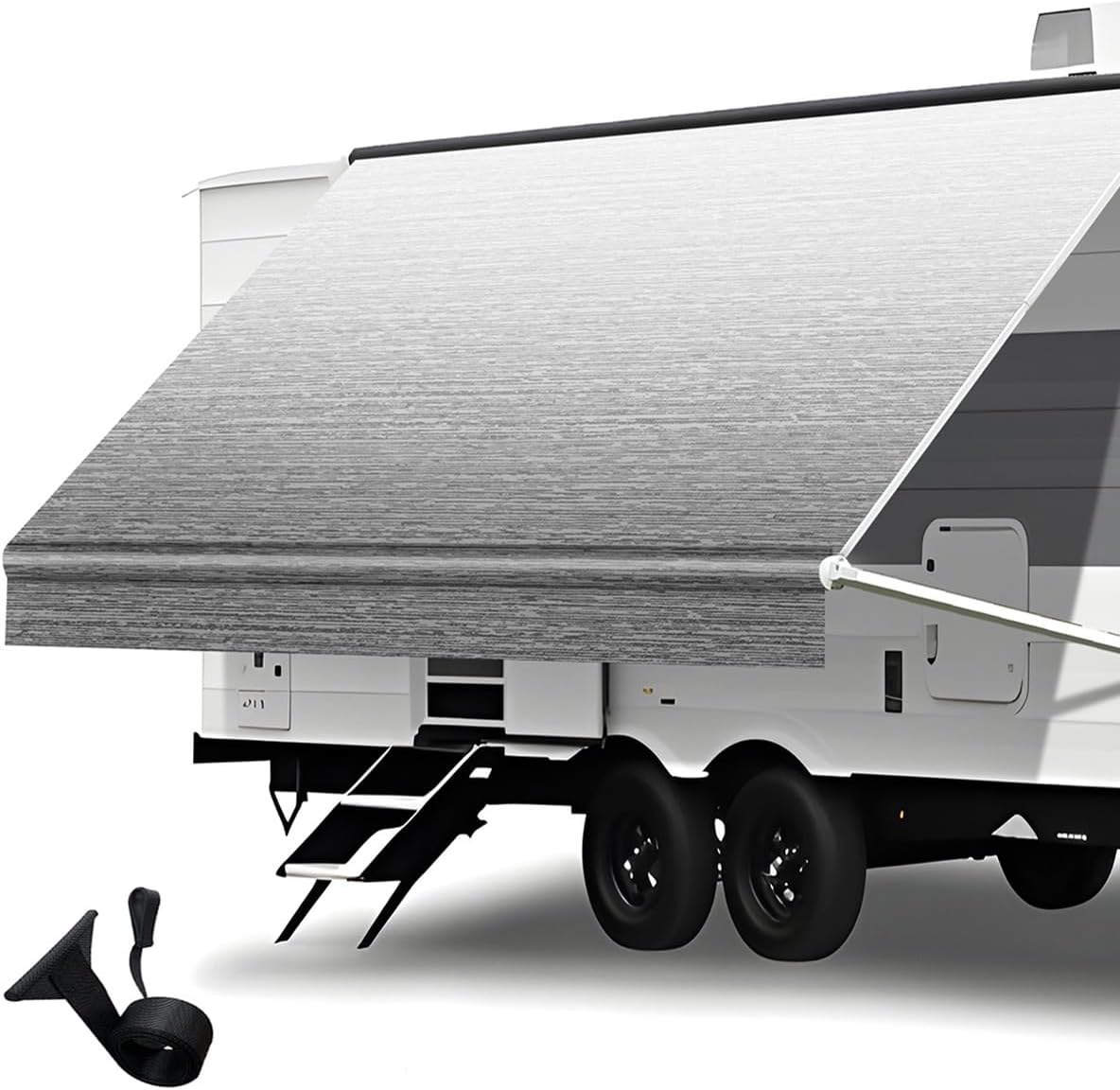

This 16-foot heat-sealed RV awning fabric replacement combines 19.5oz vinyl with a 1200D high-tenacity mesh, giving it a more substantial feel than a lightweight standard fabric. It carries a 4.6 rating, and its standout qualities are the sealed construction, waterproof coverage, UV protection, and attention to fold-line durability.
We may earn a commission when you buy through this link, at no additional cost to you.
The heat-sealed edges replace conventional stitched seams with thermal bonding, which the manufacturer says helps prevent fraying, needle holes, and seam leaks. Reinforced stress points support tear resistance, while the softening treatment is intended to limit cracks and pinholes where the material folds during use. The listed UPF 50+ rating and waterproof construction make it a practical choice for full-time outdoor shelter.
Fit and installation are straightforward once the measurements align. The actual fabric width is 15 feet 2 inches for a nominal 16-foot awning, and the product includes pre-installed polycords intended to slide into the existing track. It is described as compatible with major awning brands, including Dometic, Carefree, and Lippert, but buyers still need to compare their arm spacing and hardware with the stated dimensions.
This is the strongest all-around recommendation in the group for owners of a 16-foot awning who value seam reliability and straightforward installation. It is especially appealing if the original fabric has developed pinholes, frayed edges, or fold-related cracks. Confirm the center-to-center arm measurement and inspect the roller and track before purchasing.
The thermally bonded edges address a common weak point in fabric awnings: openings that begin at stitched seams. This construction is intended to create a light-tight, fraying-resistant surface and reduce water entry at the edges.
UPF 50+ protection, waterproofing, and cold flexibility to -40°F make the fabric suitable for varied seasonal conditions. The softened vinyl is also designed to remain usable after repeated folding and deployment.
We may earn a commission when you buy through this link, at no additional cost to you.
This five-layer 16-foot replacement is positioned as a premium fabric for RVs that see frequent travel and extended outdoor use. Its 19.5oz vinyl is supported by a 1200D rip-stop structure, while the 4.6 rating reflects generally favorable customer reception. The combination targets tear resistance, pinhole protection, shade performance, and reliable water shedding.
We may earn a commission when you buy through this link, at no additional cost to you.
Dual-sided heat-sealed construction eliminates needle holes along the sealed areas and is intended to make the canopy more leak-resistant. The UPF 50+ coating blocks 99% of harmful UV rays according to the product information, and a reflective pattern is engineered to reduce interior heat. Its stated cold tolerance reaches -40°F, supporting use in freezing conditions when properly handled.
The main tradeoff is that the listed reflective and designer pattern is a deliberate aesthetic choice that may not blend with every trailer or motorhome. Buyers must also distinguish the nominal arm span from the actual fabric width: this 16-foot version has a 15-foot-2-inch fabric width. The three 0.2-inch-diameter polycords are intended for roller slots without specialized tools.
This model is a strong option for owners who prioritize layered durability, effective UV blocking, and heat-conscious shade. It suits both manual and electric awnings and is listed for Carefree, Dometic, Lippert, Carter, and Faulkner systems. Measure from the center of the left arm to the center of the right arm before selecting the corresponding nominal size.
Five layers of high-density vinyl are combined with 1200D reinforcement to improve resistance against tearing, pinholes, and everyday abrasion. The material also retains flexibility when temperatures fall.
The reflective design is intended to limit heat buildup beneath the canopy. Along with the UPF 50+ coating, it offers a useful combination of sun protection and energy-saving shade for parked RVs.
We may earn a commission when you buy through this link, at no additional cost to you.
This 18-foot version provides a wider shade area than the corresponding 16-foot model while retaining the same 19.5oz five-layer construction. The 1200D rip-stop reinforcement and 4.6 rating make it a credible choice for larger RVs that need more coverage over doors, windows, outdoor furniture, or a campsite.
We may earn a commission when you buy through this link, at no additional cost to you.
Its dual-sided heat-sealed technology is designed to eliminate needle holes and improve water runoff. A UPF 50+ coating provides strong ultraviolet shielding, while a stated thickness of 2mm and reinforced stress stitching support durability. The thermal-balance treatment is designed to help the vinyl remain flexible and crack-free in temperatures down to -40°F.
The important caution is dimensional. A nominal 18-foot awning requires the 18-foot option, which has an actual fabric width of 17 feet 2 inches. Measuring the old fabric alone may produce an incorrect result; the manufacturer specifically recommends measuring between the centers of the two awning arms. Installation uses three standard 0.2-inch-diameter polycords.
This fabric suits owners of an 18-foot electric or manual awning who want a large, weather-resistant replacement with strong UV protection. It is listed for several common RV awning brands and requires no specialized installation tools. Verify arm-center spacing, roller-slot dimensions, and clearance around the awning before ordering.
The 18-foot nominal size creates a more expansive shaded area for larger campers and travel trailers. Its layered construction is intended to retain shape and resist tears across the wider span.
Heat sealing on both sides of the relevant areas reduces the likelihood of leaks at stitched openings. The waterproof surface allows rain to bead and roll away during active precipitation.
We may earn a commission when you buy through this link, at no additional cost to you.
This 18-foot graphite gray fabric provides the seamless heat-sealed approach of the first-ranked model at a wider nominal size. It has a 4.6 rating, 19.5oz heavy-duty vinyl, and 1200D high-tenacity reinforcement, making it a substantial option for RV owners replacing a larger, worn awning canopy.
We may earn a commission when you buy through this link, at no additional cost to you.
Its defining benefit is the thermal bonding used along the edges. According to the product information, this removes the usual stitched-thread weak points and helps resist fraying, seam leaks, pinholes, and fold-line cracks. The waterproof construction and UPF 50+ protection are designed to provide dependable shade, while the material remains flexible at temperatures as low as -40°F.
Its graphite gray designer pattern is described as helping conceal road dust and grime, and the surface can be maintained with a rinse or wipe. As with the 16-foot version, the actual 18-foot option measures 17 feet 2 inches, so it does not span the full arm-to-arm distance. Pre-installed polycords are intended to make slide-in installation straightforward.
Choose this option when the priority is a wide, seamless replacement with substantial reinforcement and low-maintenance styling. It is suitable for awning systems from Dometic, Carefree, and Lippert, subject to correct measurement. Owners should also check that the old roller, arms, tracks, and tensioning components remain serviceable before replacing only the fabric.
Thermal bonding and a softening treatment are intended to protect the areas most vulnerable during folding and storage. The result is a fabric designed to resist the small openings that can make an older awning unusable.
The stain-resistant surface is designed to hide common road dust and grime. A simple rinse or wipe can help maintain the appearance without suggesting an elaborate cleaning routine.
We may earn a commission when you buy through this link, at no additional cost to you.
This 16-foot ombré gray replacement is built from 19.5oz five-ply PVC vinyl and holds the highest supplied rating in the group at 4.7. Its heat-pressed folded edges create a hole-free design, while the listed 2500mm waterproof capability and UPF 50+ sun protection make it suitable for regular RV outdoor use.
We may earn a commission when you buy through this link, at no additional cost to you.
The material is described as resistant to wind, tearing, and wear, with a waterproof membrane rated to withstand substantial water pressure. Its folded edges are 1.18 inches wide, reducing the chance that stitching or fraying will create leaks. The UV rating is stated as blocking 95% or more of harsh sun rays to improve shade comfort.
Installation is presented as a simple slide of the polycord into the existing awning track, and the package includes a manual and pull strap. A repair patch is also included, which can be useful for addressing minor damage. One limitation is that the product listing describes a broader size range rather than confirming every size in one variation, so the selected measurement must be checked carefully.
This is an appealing choice for a 16-foot RV awning because it combines a strong customer rating with useful included accessories. Measure from the center of one awning arm to the center of the other, then select the matching nominal size. It is best suited to owners whose existing tracks and roller are in good working condition.
A repair patch and pull strap add practical value beyond the replacement fabric itself. The patch may help extend service after a small abrasion, while the strap assists with handling during installation.
The stated 2500mm waterproof rating provides a useful specification for buyers comparing heavy rain performance. Heat-pressed edges further reduce leakage points without relying on conventional stitched seams.
We may earn a commission when you buy through this link, at no additional cost to you.
This 18-foot gray fade replacement uses 19.5oz four-ply PVC vinyl and carries a 4.6 rating. It offers a strong set of practical specifications, including a 2500mm waterproof membrane, 98% UV blocking, cold-crack resistance to -30°F, and reinforced stress points for awnings used in varied climates.
We may earn a commission when you buy through this link, at no additional cost to you.
Hot-pressing technology creates seamless, hole-free areas, while the waterproof layer is designed to withstand heavy rain and inhibit mold. The UV-resistant surface is intended to reduce fading and heat buildup. Its fixed fabric width of 8.6 feet includes the valance section, so buyers should understand the relationship between that depth and their existing canopy profile.
The product is offered in multiple sizes from 10 to 21 feet, with three sewn-in polycords intended to slide directly into the roller tube. It is described as compatible with manual and electric systems from Carefree, Dometic, and Lippert. A pull strap and instructions are included, and the listed 36-month warranty adds reassurance that some competitors do not explicitly provide.
This is a well-rounded choice for an 18-foot awning where UV and rain protection are primary concerns. The -30°F cold-crack specification is still relevant for winter camping, although it is less extreme than the -40°F claims of several five-layer options. Confirm the valance arrangement, arm spacing, and track configuration before ordering.
Stress points are reinforced to help the canopy withstand repeated tension and movement. This is particularly relevant near the arms, where loads concentrate during extension and retraction.
A stated 36-month warranty provides useful coverage for an owner planning to keep the fabric in service. The package also includes a pull strap and step-by-step installation guidance.
We may earn a commission when you buy through this link, at no additional cost to you.
The 21-foot version is the largest nominal span in this guide, providing an actual fabric width of 20 feet 2 inches. It combines 19.5oz five-layer vinyl with a 1200D rip-stop structure and has a 4.6 rating. This makes it suited to large motorhomes, travel trailers, and other RVs equipped with a correspondingly wide awning.
We may earn a commission when you buy through this link, at no additional cost to you.
Dual-sided heat sealing is designed to eliminate needle holes, improve waterproof performance, and reduce leakage along joined areas. The UPF 50+ coating is stated to block 99% of harmful UV rays, while the reflective pattern is engineered to reduce heat beneath the canopy. Reinforced stress stitching and a stated 2mm thickness are intended to improve resistance to wind and everyday wear.
Cold performance is another strength, with flexibility maintained down to -40°F under the listed thermal-balance construction. The tradeoffs are logistical: a 21-foot canopy is a larger piece to maneuver, and the fabric is 10 inches shorter than the nominal arm span. Three standard 0.2-inch-diameter polycords allow installation without specialized tools if the roller slots are compatible.
This is the best choice here for a verified 21-foot arm-to-arm installation, particularly for travelers who prioritize broad shade, UV protection, and reflective heat management. Owners should inspect the arms, roller, and track for wear because a larger replacement cannot compensate for damaged hardware. Measure the arm centers carefully rather than copying the width of the retired fabric.
A 20-foot-2-inch actual fabric width provides substantial shade for large RVs and extended campsites. The broad span is useful for creating a more usable outdoor living and cooking area.
The reflective pattern and UPF 50+ coating work together to limit solar heat gain. That can make the shaded area more comfortable and reduce the demand placed on an RV's cooling system.
We may earn a commission when you buy through this link, at no additional cost to you.
This smoke gray replacement provides a 7.7-by-15.2-foot shade area using 19.5oz five-layer vinyl with 1250D reinforcement. It carries a 4.6 rating and is described as a universal option compatible with many Carefree, Dometic, and Lippert awnings, making it a practical choice for smaller RVs that need substantial protection in a manageable width.
We may earn a commission when you buy through this link, at no additional cost to you.
The tight reinforcement mesh is designed to remain intact in extreme heat, heavy rain, and cold conditions, including temperatures down to -40°F. Its UV-resistant surface blocks 98% of UV rays, and the waterproof rating of 2500mm helps it handle sudden heavy rain while creating a more comfortable shaded area around the RV.
Installation requires no tools according to the product information. Three sewn-in polycords slide into the RV awning guide rail, and the design is intended to hold the fabric securely in place. The main dimensional caution is important: the finished fabric is 15 feet 2 inches wide and is described as 0.8 feet shorter than the distance between the awning arms.
This model suits owners of a nominal 16-foot awning who want a strong 1250D mesh, 98% UV blocking, and a 2500mm waterproof rating. Check the arm-center distance, guide-rail arrangement, and roller configuration before installation. The existing hardware should be clean and free of sharp edges that could abrade the new vinyl.
The 1250D mesh provides a tight internal structure intended to improve tear and abrasion resistance. It is especially relevant on smaller awnings that may experience frequent handling during setup and storage.
Blocking 98% of UV rays and carrying a 2500mm waterproof rating provide a balanced outdoor specification. The result is a canopy intended to remain useful through strong sun and heavy precipitation.
We may earn a commission when you buy through this link, at no additional cost to you.
This 14-foot graphite gray replacement is the compact version of the heat-sealed product family, with an actual fabric width of 13 feet 2 inches. It has a 4.6 rating and combines 19.5oz vinyl with 1200D high-tenacity reinforcement, making it suitable for smaller RVs that require a durable replacement without an oversized canopy.
We may earn a commission when you buy through this link, at no additional cost to you.
Thermal bonding along the edges reduces reliance on conventional stitching and is intended to limit fraying, seam leaks, and pinholes. A specialized softening treatment helps protect fold lines, while reinforced stress points support tear resistance. The fabric is waterproof, provides UPF 50+ protection, and is described as remaining flexible down to -40°F.
The graphite gray pattern is designed to conceal road dust and grime, and the stain-resistant finish can be maintained with a rinse or wipe. Pre-installed polycords make installation more approachable for DIY users, but the 14-foot nominal size is the critical limitation. It should only be selected when the center-to-center arm measurement corresponds to that designation.
This is a strong fit for a smaller travel trailer, camper, or motorhome with a 14-foot awning. Its seamless edges and high-tenacity mesh offer the same core benefits as the larger versions, while the more compact fabric may be easier to handle. Confirm that the roller, track, and arm spacing are compatible before replacing the old material.
A smaller fabric does not need to mean a lightly built one. The 19.5oz vinyl and 1200D mesh preserve substantial reinforcement for handling, wind exposure, and repeated folding.
The graphite gray designer finish is intended to blend with many RV exteriors while hiding common dirt. Routine care only calls for a quick rinse or wipe according to the product information.
We may earn a commission when you buy through this link, at no additional cost to you.
This replacement is distinguished by its 20.8oz, or 550-gram, six-layer vinyl construction, the highest stated fabric weight in this comparison. It has a 4.6 rating and emphasizes tear resistance, scratch resistance, waterproofing, and UV protection rather than relying on a single coating.
We may earn a commission when you buy through this link, at no additional cost to you.
The six layers are described as providing sunproofing, waterproofing, tear resistance, UV resistance, a second waterproof barrier, and scratch resistance. A tightly spaced 1.2mm tear-resistant grid is designed to distribute pulling forces more evenly than a conventional 3mm spacing, potentially reducing tearing, sagging, and deformation.
Its heat-sealed edges reduce leakage points, and the waterproof surface encourages rainwater to bead and roll off. Unlike several competing fabrics, however, the supplied information does not state a specific minimum operating temperature. That makes it less straightforward to compare for prolonged freezing conditions. Sewn-in polycords are included for both the RV body slot and awning roller slot, with compatibility listed for manual and electric systems.
This is a compelling budget-oriented choice for a buyer who prioritizes material weight and layered protection over a specific temperature claim. The 20.8oz fabric is heavy by design, which can make installation more demanding and may require two people for a large span. Verify the selected size and inspect all existing hardware before fitting it.
Multiple functional layers distribute protection across sun, rain, tearing, UV exposure, and surface wear. This broad construction is useful for an awning that is exposed to frequent outdoor use.
The 1.2mm grid spacing is intended to spread pulling force more evenly. Compared with a wider 3mm grid, the tighter structure offers additional support against tearing and long-term deformation.
We may earn a commission when you buy through this link, at no additional cost to you.
The right replacement depends on accurate measurement, compatible installation hardware, and construction suited to the RV's climate and usage. Comparing nominal awning size, actual fabric dimensions, material weight, seam design, UV protection, and cold-weather performance is more useful than relying on a universal replacement designation.
Start by measuring from the center of the left awning arm to the center of the right arm. This is the method recommended by nearly every listed product, and it should be done even when the retired fabric still appears to be the correct size. An old canopy may have stretched, shrunk, distorted, or been trimmed, making it an unreliable guide.
The nominal designation and actual fabric width are not interchangeable. A 16-foot awning may use a 15-foot-2-inch fabric, while the 18-foot version uses 17 feet 2 inches. The 14-foot option uses 13 feet 2 inches, and the 21-foot version uses 20 feet 2 inches. Always match the selected variation to the arm-center measurement.
Fabric construction is only one part of a successful replacement. The existing roller must accept the included or specified polycord diameter, and the guide rail must provide a path for the cord without sharp lips, bends, or obstructions. Some products specify three standard 0.2-inch-diameter polycords, while others simply state that sewn-in cords are included.
Check whether the awning is manual or electric, identify the brand if possible, and inspect the arms, roller, brackets, and tensioning components. Replacing fabric cannot repair a seized roller or damaged arm. Clean the track and remove any sharp corrosion before sliding the new fabric into position.
Most options in this guide use 19.5oz vinyl, while the final option uses a heavier 20.8oz construction. The listed layers range from four-ply PVC to five-layer vinyl and six protective layers. Greater weight and reinforcement can improve durability, but they may also make the fabric more difficult to handle and fold.
A heavy fabric is especially relevant for long spans, frequent travel, and exposed campground conditions. Look for reinforcement, tear-resistant mesh, and reliable edge construction in addition to weight. A 19.5oz five-layer fabric with 1200D rip-stop may offer a more balanced combination of strength and handling than an even heavier alternative.
Traditional stitching can become a weak point as threads age, seams separate, and the fabric flexes. Heat-sealed or hot-pressed edges are designed to reduce needle holes, fraying, and leakage. The most relevant products use thermal bonding, dual-sided heat sealing, or heat-pressed folded edges of approximately 1.18 inches.
Also consider fold-line performance. Awning fabric is repeatedly rolled, folded, and compressed. Products that combine sealed edges with a softening treatment or reinforced stress points may better resist the pinholes and cracks that develop at those persistent bends.
Waterproof fabric should be assessed through more than a general waterproof claim. Some products specify a 2500mm waterproof rating, while others describe dual-sided heat sealing or 100% waterproof construction. These figures are not directly interchangeable, but they help distinguish products that provide a defined water-resistance specification.
For shade, look for UPF 50+ or a stated percentage of UV blocking. Listed protection ranges from 95% or more to 99%, with several products also describing reflective patterns that reduce interior heat. In hot climates, UV shielding and thermal performance can be as important as rain resistance.
Cold-crack resistance matters for winter camping and for regions that experience freezing temperatures. Four products in this guide state flexibility or cold-crack performance down to -40°F, while one 18-foot option lists cold-crack resistance to -30°F. The 20.8oz six-layer product does not provide a specific temperature figure in the supplied information.
Low-temperature capability is more than a marketing detail because cold vinyl can become stiff and crack where it folds. A product that states both cold performance and softening or thermal-balance treatment offers a clearer indication that seasonal flexibility was considered.
Nominal width alone may not capture the shape of the original canopy. Some awnings have a valance, awning leg, or another configuration that affects how the fabric sits in the roller. The 18FT Gray Fade product specifically notes that its 8.6-foot fabric width includes the valance portion, so a nominal width may not tell the complete dimensional story.
Compare the replacement's depth, attachment arrangement, and visible valance with the old fabric. Take photographs during removal and note how the original enters the roller. If the existing system is unusual, consult the RV or awning manufacturer before installation.
Useful extras can make a replacement easier to install and maintain. The Ombré Gray model includes a pull strap, manual, and repair patch, while the 18FT Gray Fade option includes a pull strap and step-by-step instructions. A stated one-year or 36-month warranty can also provide added confidence in a major RV repair.
Customer support is useful when a sizing question arises, but the buyer remains responsible for accurate measurements and compatible hardware. Prioritize a clear sizing guide, recognizable parts, and instructions that correspond to the exact selected model and size.
Before removing the old fabric, extend the awning fully and photograph the roller, guide rail, arm positions, and fabric path. Measure the arm-center distance, note the roller and cord arrangement, and confirm the replacement's listed compatibility. Retract and secure the awning according to the RV manufacturer's instructions before beginning removal.
Remove the damaged fabric carefully so that a tear does not catch the roller or guide components. Inspect the rail and roller for rust, sharp edges, damaged slots, and debris, and address any mechanical problems before installing the new fabric. Follow the product instructions to position the replacement correctly, then slide the polycord or cords through the specified body and roller channels without forcing them around tight bends.
Operate the awning slowly at first so the fabric can align itself evenly without twisting, bunching, or becoming trapped in the tracks. Retract and extend it once to confirm smooth movement and proper engagement. Keep the fabric clean using the manufacturer's recommended rinse or wipe, allow it to dry before storage, and avoid prolonged folds, sharp objects, and abrasive contact that can damage the surface or reinforcing mesh.
Measure from the center of the left awning arm to the center of the right arm. Do not rely on the old fabric's dimensions because it may be stretched, trimmed, or distorted. Match that arm-to-arm measurement to the nominal size listed by the manufacturer, while also checking the stated actual fabric width.
Most products in this guide are described as compatible with common manual and electric systems, including Carefree, Dometic, and Lippert. Compatibility still depends on the selected size, roller configuration, cord diameter, and guide-rail design. Confirm the dimensions and attachment method before ordering.
Heat-sealed construction uses thermal bonding rather than conventional thread to join or finish key areas. The manufacturer claims this reduces needle holes, seam leaks, fraying, and fold-line weakness. Stitched fabric can still perform well, but its seams require more attention to fraying, corrosion, and water entry over time.
The 19.5oz figure describes the weight of the vinyl material per unit area. In this group, it is combined with multiple layers and reinforcing mesh to improve strength, UV resistance, waterproofing, and longevity. Heavier material can feel durable but may also be harder to manipulate during installation.
Most of the listed products are designed for DIY installation, usually by sliding pre-installed or sewn-in polycords into the existing tracks. You will need accurate measurements, basic handling ability, and sound rollers and arms. Following the included instructions and inspecting the hardware can prevent misalignment or damage.
Waterproofing alone does not guarantee flexibility in cold conditions. Several products in this guide specify cold-crack resistance or flexibility down to -40°F, while another lists -30°F. Look for low-temperature performance, fold-line protection, and a softening treatment when the awning will be used in freezing conditions.
Use a gentle rinse or wipe as directed by the manufacturer, and avoid abrasive tools or harsh chemicals that could damage the coating and reinforcement. Let the fabric dry thoroughly before retracting it, and remove dirt before it becomes embedded. Keeping the surface clean also helps preserve its appearance and inspectability.
Not always. If the roller, arms, brackets, track, and tensioning system remain sound, replacing only the fabric can restore the shelter. Inspect every component first because a new fabric cannot compensate for a damaged roller, blocked rail, or compromised arm.
The 16FT heat-sealed graphite gray option is the strongest overall recommendation for its combination of seamless edges, 1200D reinforcement, waterproof UPF 50+ protection, and pre-installed installation cords. The 21FT five-layer rip-stop model is the leading large-span choice, while the 20.8oz six-layer fabric stands out for heavy material weight and a dense tear-resistant grid.
Before selecting any model, prioritize arm-center measurement over the size of the old fabric. Then confirm roller compatibility, cord path, valance configuration, and the condition of the existing hardware. For cold climates, compare stated temperature ratings; for intense sun, examine UPF and UV-blocking specifications; and for frequent travel, consider layered reinforcement and sealed edges.
Finally, check the current product listing, selected variation, manufacturer instructions, and availability before purchasing. RV configurations vary, and the right replacement is the one that matches the awning's actual geometry, attachment hardware, environmental needs, and preferred appearance.