
TEMEDA PT 30 ELD
4.5Editor score
Large offline storage capacity
Bluetooth Low Energy connectivity
Broad diagnostic port support
Engine diagnostics integration
Explore the best Electronic Logbook options, comparing ELD compatibility, HOS features, recording formats, pilot needs, portability, and ease of use for
An electronic logbook can take several forms, from an FMCSA-compliant electronic logging device for commercial drivers to a reusable digital planner or a traditional pilot record book. A useful choice depends less on the word electronic than on the records you need, the vehicle you drive, and how you will inspect, digitize, or retain your entries.
We compared ten products across electronic logging devices, GPS-based trip recorders, paper driver logs, reusable planners, and pilot logbooks. The evaluation focused on hours-of-service support, diagnostic-port compatibility, recording method, portability, offline capabilities, app requirements, and how easily each system fits a professional workflow.
The list shows how each option serves a different need, from truck fleet operation to personal planning and pilot recordkeeping. Product availability, regulatory requirements, and prices can change, so confirm current listings, software compatibility, and applicable certification before purchasing.
4.5Editor score
3.9Editor score

4.2Editor score
The comparison includes ELD hardware, a GPS mileage logger, a reusable digital planner, paper driver records, and a pilot logbook. The categories differ by design, so the most useful choice depends on whether the priority is regulatory compliance, record portability, offline operation, or structured daily planning.




The Rocketbook Fusion is a reusable productivity planner with a 4.4 rating, but it belongs in a broad electronic logbook roundup because it offers a different kind of record system rather than a trucking ELD. It combines ordinary handwriting with optional app-based digitization, making it useful for people who want flexible planning pages without discarding a notebook every time a calendar changes.
We may earn a commission when you buy through this link, at no additional cost to you.
Its strongest feature is the choice of seven templates: monthly and weekly calendars, daily to-do lists, a goal tracker, an idea list, dotted pages, and lined pages. That variety lets one book cover project planning, fitness tracking, household schedules, meeting notes, and personal goals. The durable spiral binding, flexible layout, and waterproof cover also suit a book that will be carried between home, school, or office.
The trade-off is that this is not a substitute for an FMCSA-certified electronic logging device, a formal pilot record, or a DOT driver log. Its value comes from reusable paper, cloud organization, and the option to erase completed pages. Users who need legally required records should continue using the appropriate certified product, while planners can use Rocketbook for supporting schedules, goals, and general productivity notes.
It is best for buyers who enjoy writing by hand but want searchable digital copies and less paper waste. It also suits students, families, and professionals managing projects that do not require a regulated log. For truck drivers, it can complement an ELD with daily planning notes, but it should not be presented as a compliance device. That distinction makes the Fusion a flexible general-purpose choice rather than the leading dedicated ELD.
The Rocketbook app can scan and upload written pages to cloud platforms such as Google Drive, Dropbox, and OneNote. This approach preserves the speed of pen-and-paper planning while making selected records available across devices, provided the necessary app and account access are available.
When a week or project is finished, the pages can be wiped clean with a damp cloth and reused. The undated format and range of templates make the planner practical when schedules change often and a fixed dated diary would leave unused pages.
We may earn a commission when you buy through this link, at no additional cost to you.
Little LogBook has a 3.5 rating and focuses on automatic mileage logging rather than full commercial trucking compliance. It uses a sensitive SIRF GPS chip to record trips, taking the repetitive work of noting routes and distances away from the driver. The result is a compact electronic logbook for people who need a consistent record of vehicle movement.
We may earn a commission when you buy through this link, at no additional cost to you.
Its plug-and-go approach is one of the most attractive features. No permanent installation in the vehicle is required, which can make the device easier to move between vehicles or remove when not needed. Password protection adds another useful layer, helping prevent someone who finds or steals the device from casually examining stored movement data. Software updates are also provided without recurring monthly or annual fees.
The important limitation is platform and regulatory scope. The supplied information states that it works with Windows 10 or newer but is not Mac compliant. It should also not be confused with a certified hours-of-service ELD: the product description emphasizes GPS trip logging, not complete FMCSA recordkeeping, DVIR, or certified duty-status documentation. Buyers with those requirements need a dedicated compliance product.
Little LogBook is most appropriate for consultants, sales representatives, field workers, or small-business owners who want an automatic mileage trail and do not need regulated HOS functions. Confirm that your primary computer runs a supported Windows version and that the device is intended for your specific recordkeeping purpose. It is a focused mileage solution with useful privacy and ownership benefits.
The GPS-based system is designed to record trip activity automatically, reducing the chance that a driver will forget to log a journey. That makes it more convenient than a traditional mileage sheet for routine travel where a defensible chronological trail is useful.
Because installation is not permanent, users can move the device between compatible vehicles. Password security and free software updates add practical safeguards and ongoing support, although Mac users should look elsewhere.
We may earn a commission when you buy through this link, at no additional cost to you.
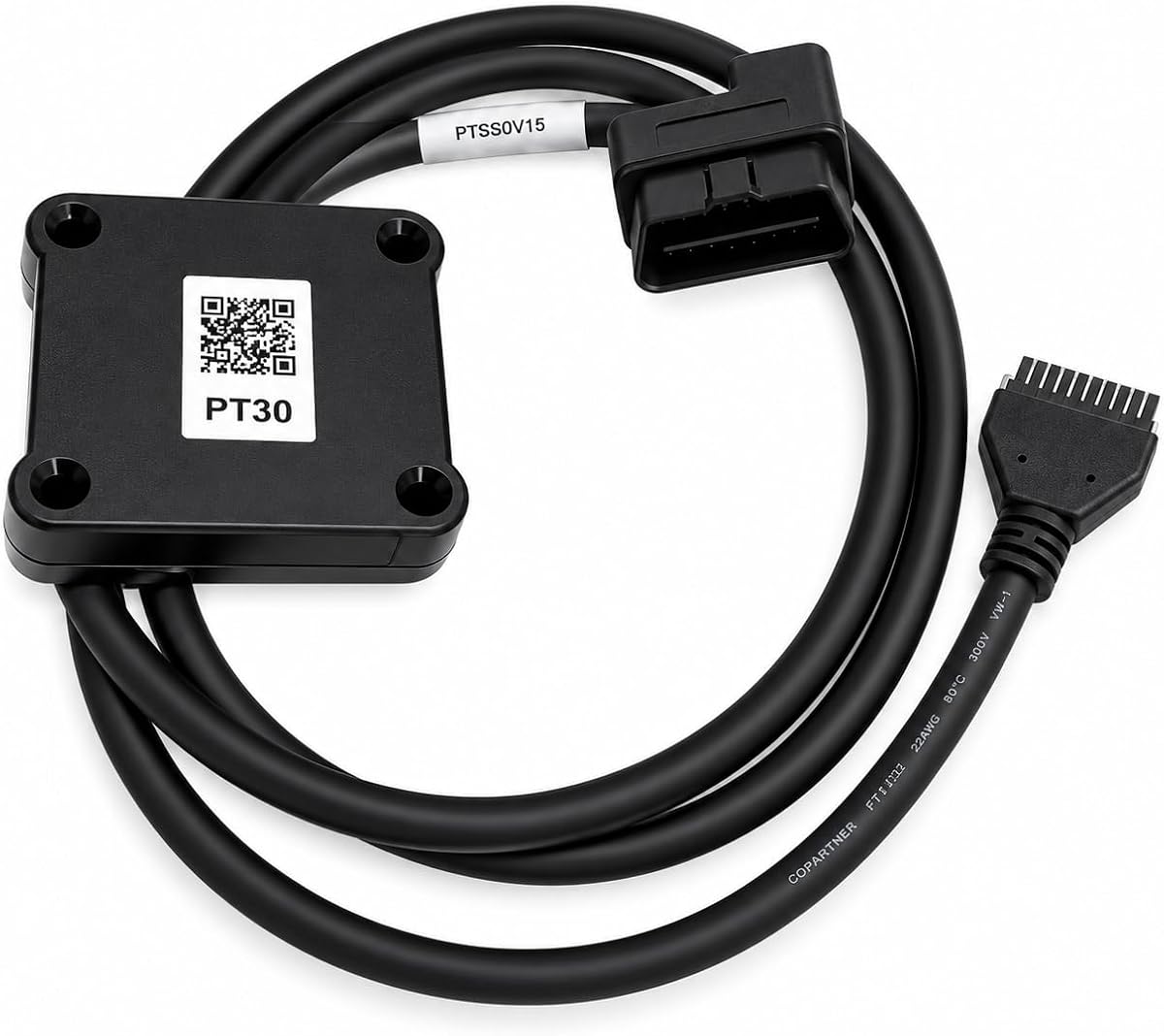
The PT30 Medium-Duty ELD is a hardware option built for owner-operators, truck drivers, fleet managers, and commercial trucking companies. It pairs a PT30 electronic logging device with a 16-pin OBD-II medium/light-duty cable, while offering hours-of-service logbook functions and GPS fleet tracking. No customer rating is listed for this specific product.
We may earn a commission when you buy through this link, at no additional cost to you.
Its main advantage is a focused package for vehicles that use the included connection method. Instead of buying a generic tracker and attempting to create a separate compliance workflow, the buyer receives hardware designed around ELD and HOS tasks. Fleet-oriented GPS tracking also makes it potentially relevant to managers who want more than a simple duty-status diary.
Compatibility is the decisive issue. The included 16-pin medium/light-duty cable must match the vehicle's diagnostic arrangement, and the listing does not indicate that every truck configuration is supported. Buyers should verify the connector, protocol, model year, and intended application before ordering. They should also confirm how the device works with their selected ELD or HOS application, because hardware capability alone does not establish complete regulatory compliance.
This PT30 configuration is best for a compatible commercial vehicle needing a dedicated HOS-oriented device and fleet tracking functions. It is less suitable for a driver whose truck uses another connector arrangement, a Mac-based workflow, or someone seeking a paper alternative. Its purpose-built design makes it a solid match when its cable and software environment align with the fleet.
The PT30 is not positioned as a general mileage tracker. Its HOS logbook and fleet-tracking functions target commercial transportation workflows, giving drivers and fleet managers a more relevant foundation than a consumer navigation device.
The included 16-pin OBD-II medium/light-duty cable narrows the compatible vehicle pool. Checking the port and software requirements before purchase is essential because a physical connector that appears similar may not match the truck's protocol.
We may earn a commission when you buy through this link, at no additional cost to you.
The Garmin eLog carries a 3.9 rating and is one of the strongest dedicated compliance options in this list. It is designed to record hours-of-service data for FMCSA purposes and supports 9-pin J1939 and 6-pin J1708 diagnostic ports. Its no-subscription model also makes it easier to estimate long-term ownership costs than many app-dependent ELDs.
We may earn a commission when you buy through this link, at no additional cost to you.
The device records to a compatible smartphone, and the Garmin eLog app is used to complete the compliance workflow. Records can be accessed for inspection through the device's USB port or through FMCSA Web Services over Bluetooth. This combination offers a practical inspection path while allowing the hardware to remain relatively compact and dedicated to vehicle data collection.
Compatibility limitations deserve careful attention. Garmin states that the eLog is not compatible with vehicles using the OBD-II protocol known as SAE J1979. Vehicles with a Volvo engine and a 16-pin J1962 connection also require a separate cable that is not included. A compatible smartphone is another requirement, and the buyer must still download and configure the app correctly.
Garmin eLog is best for owner-operators and fleets with supported J1939 or J1708 vehicles that want HOS recording without a recurring subscription. It is a less natural fit for light-duty OBD-II cars, unsupported Volvo configurations, or users unwilling to rely on smartphone software. For its intended heavy-duty audience, the combination of compliance focus and fee-free use is a clear advantage.
The purchase includes the core hardware and app workflow without ongoing subscription fees. For a driver who will use the ELD throughout a working career, eliminating recurring service charges can make the long-term financial picture more predictable.
Saved records can be reached through USB or Bluetooth-connected FMCSA Web Services. Having both access routes can be useful during roadside inspections, provided the phone, pairing, and required services are properly configured beforehand.
We may earn a commission when you buy through this link, at no additional cost to you.
The PT40 Heavy-Duty ELD is presented as a new version of the PT30 and is advertised as DOT and FMCSA certified. It includes a heavy-duty OBD-II straight cable for Volvo applications, along with a pre-programmed device intended for HOS logging and GPS tracking. No customer rating is provided for this listing.
We may earn a commission when you buy through this link, at no additional cost to you.
Installation convenience is the central feature. The unit is pre-programmed and described as ready to install by connecting it to the vehicle, reducing the setup burden for a driver or fleet technician. The included Volvo-oriented cable is a meaningful convenience because it avoids the need to source a separate heavy-duty straight cable for a compatible vehicle.
The trade-off is that this configuration is less broadly flexible than a device offered with several connector options. Buyers should confirm that their Volvo vehicle uses the expected 16-pin heavy-duty arrangement and that their chosen HOS app supports the PT40. Certification stated in a listing should also be verified against current agency databases and the exact hardware version being purchased.
The PT40 is a good candidate for a compatible heavy-duty Volvo operator seeking a ready-to-install HOS device. It may be less suitable for trucks with other diagnostic ports, mixed fleets that need standardized interchangeable hardware, or anyone seeking broad cross-platform app flexibility. When the vehicle and app match, its preconfigured approach can simplify deployment.
A pre-programmed unit can reduce the number of steps required to introduce an ELD into a daily workflow. This is useful for fleets that want consistent hardware without every driver learning a more complex configuration process.
The included straight cable makes the package more complete for its intended vehicle type. Drivers operating other makes should verify connector and protocol compatibility because a heavy-duty label alone does not guarantee that every truck can use the supplied lead.
We may earn a commission when you buy through this link, at no additional cost to you.
The PT30 Heavy-Duty ELD combines a PT30 device with a 16-pin heavy-duty diagnostic cable. It is intended for compatible commercial vehicles and includes HOS electronic logbook and GPS fleet-tracking functions. The listing appropriately warns that connector configurations can vary by truck model and year, making compatibility verification a central part of the purchase decision.
We may earn a commission when you buy through this link, at no additional cost to you.
A complete package simplifies initial setup. The buyer can connect the included cable to the truck's diagnostic port and then connect the PT30 unit, rather than needing to identify and source a separate lead first. That convenience is meaningful for an owner-operator or fleet technician who already knows the vehicle uses the required 16-pin arrangement.
The primary limitation is narrow applicability. The package is specifically intended for 16-pin applications, and a connector that appears to have the same number of pins may still involve a different protocol or vehicle configuration. No rating is listed, so there is no customer feedback value in the supplied data to help gauge long-term reliability. Buyers should also ensure their selected HOS application supports the device.
This configuration is best for a driver with a verified compatible 16-pin truck who wants a straightforward ELD package. It is not a universal solution for a mixed fleet or a vehicle with another diagnostic arrangement. Its appeal lies in simplicity: one unit, one included cable, and a direct connection designed around HOS and GPS tracking workflows.
Bundling the PT30 with a 16-pin heavy-duty cable creates a more coherent setup than purchasing a generic device and separate lead. It also makes the intended application clear before installation begins.
Model year, connector shape, and protocol all matter. Checking the vehicle's diagnostic arrangement can prevent the common mistake of ordering a visually similar cable that does not provide the required connection.
We may earn a commission when you buy through this link, at no additional cost to you.
My20 ELD has a 3.4 rating and is positioned as a phone-connected logging system for U.S. owner-operators and small fleets. It meets federal Hours-of-Service requirements and combines ELD recording with GPS tracking, DVIR, and IFTA-related tools. The product also advertises support for truck drivers who are setting up their first electronic logging system.
We may earn a commission when you buy through this link, at no additional cost to you.
The broader software feature set is a key attraction. Instead of limiting the device to duty status, the My20 app places several fleet-management functions in one interface. Bluetooth pairing connects the truck hardware to the phone, while the support team assists with account setup and pairing. That combination may be particularly useful for small operators that want more visibility without a full transportation management system.
The subscription requirement is the main caution. Buyers should evaluate the service in the context of long-term operating cost rather than looking only at the hardware. The listing also explicitly says the device is not Canadian certified, which is an important limitation for cross-border operations. Separate adapter cables may be needed for 6-pin J1708 or OBD-II arrangements, and app support should be confirmed for the exact vehicle.
My20 ELD is best for U.S. owner-operators and small fleets that value a broad mobile toolkit and are comfortable with a subscription service. It is less suitable for drivers needing Canadian certification, those seeking a one-time-purchase compliance model, or anyone whose vehicle requires a connector not included with the primary nine-pin setup.
GPS tracking, DVIR capabilities, and IFTA-related functions make this a broader operational tool. For small fleets, consolidating those tasks on a phone can make daily recordkeeping more convenient and easier to review.
The required service and lack of Canadian certification should shape the buying decision. U.S. drivers who understand the ongoing service model may gain flexibility, but cross-border operators need a different certified solution.
We may earn a commission when you buy through this link, at no additional cost to you.
The Truck Driver Daily Log Book has a 4.2 rating and provides a traditional paper alternative for professional drivers. Each book contains 31 sets of two-ply carbonless forms with seven- and eight-day recap pages. Although it is not an electronic device, its portability and dependable duplicate records make it a useful low-cost companion or backup for drivers who want written documentation.
We may earn a commission when you buy through this link, at no additional cost to you.
The compact 8.5-by-5.5-inch format is designed around the limited space in a truck cab. It can fit in a glove compartment, on a clipboard, or in a side-door pocket, making it easy to access during stops. The two-ply design creates an immediate duplicate: the top sheet serves as the original entry, while the backing provides a second record for dispatch or personal files.
There is no automation, app, or live GPS trail, so it cannot replace an ELD where electronic records are required. Handwritten forms may also require more time than app-based logging, and users must follow the instructions and retention rules that apply to their operation. The listing's description of DOT paper should not be interpreted as a substitute for certified electronic compliance equipment.
This log book is best for drivers who want a straightforward paper record, an offline backup, or a compact way to maintain additional daily notes. It is also approachable for people who prefer writing and want duplicate copies without managing an application. For regulated electronic records, pair it with the appropriate certified ELD rather than treating it as a standalone compliance system.
The carbonless construction produces two copies as each entry is written. That is useful for dispatch, owner-operator records, and personal documentation, and it continues to work when a phone is uncharged or connectivity is unavailable.
Its compact dimensions reduce storage and handling problems compared with a full-size binder. The wraparound cover provides a writing surface, while tear-out lines allow completed forms to be removed without disturbing the remaining book.
We may earn a commission when you buy through this link, at no additional cost to you.
The Jeppesen Professional Pilot Logbook has the highest listed rating in the group at 4.8. It is purpose-built for pilots rather than road drivers, offering a familiar professional record format in a dark brown cover. The simple product information emphasizes quality construction and a professional appearance, two attributes that matter in a frequently handled reference book.
We may earn a commission when you buy through this link, at no additional cost to you.
A paper logbook has practical advantages for aviation. It can accompany a pilot without requiring power, connectivity, or an app, and it allows flight information to be recorded immediately. Its portable form makes it straightforward to keep complete at the aircraft, review during a trip, and submit when a flight or duty record is needed. The professional cover also presents the records in an orderly, dedicated format.
The limitation is that there is no automatic data transfer, calculation, or synchronization. Flight details must be entered correctly by hand, and the book does not replace an aircraft's certified or approved electronic records where those are required. Buyers should also consider whether their airline, operation, or regulatory environment expects a particular logbook format, number of entries, or retention procedure.
This is the leading pilot-specific choice for anyone seeking a professional paper log. It is less appropriate for commercial-truck HOS recording, and pilots who want live integration with aircraft systems or electronic flight logs may want a more automated alternative. For a conventional, durable record book with the strongest customer feedback in this roundup, the Jeppesen format remains an attractive choice.
The logbook is designed specifically for pilot records, giving aviation users a more relevant format than a general notebook or road-driver form. Its professional presentation supports careful, chronological documentation of flight and duty information.
Paper records continue to function without charging, pairing, or network access. That simplicity is valuable in aviation environments and for pilots who want a tangible backup alongside electronic flight tools.
We may earn a commission when you buy through this link, at no additional cost to you.
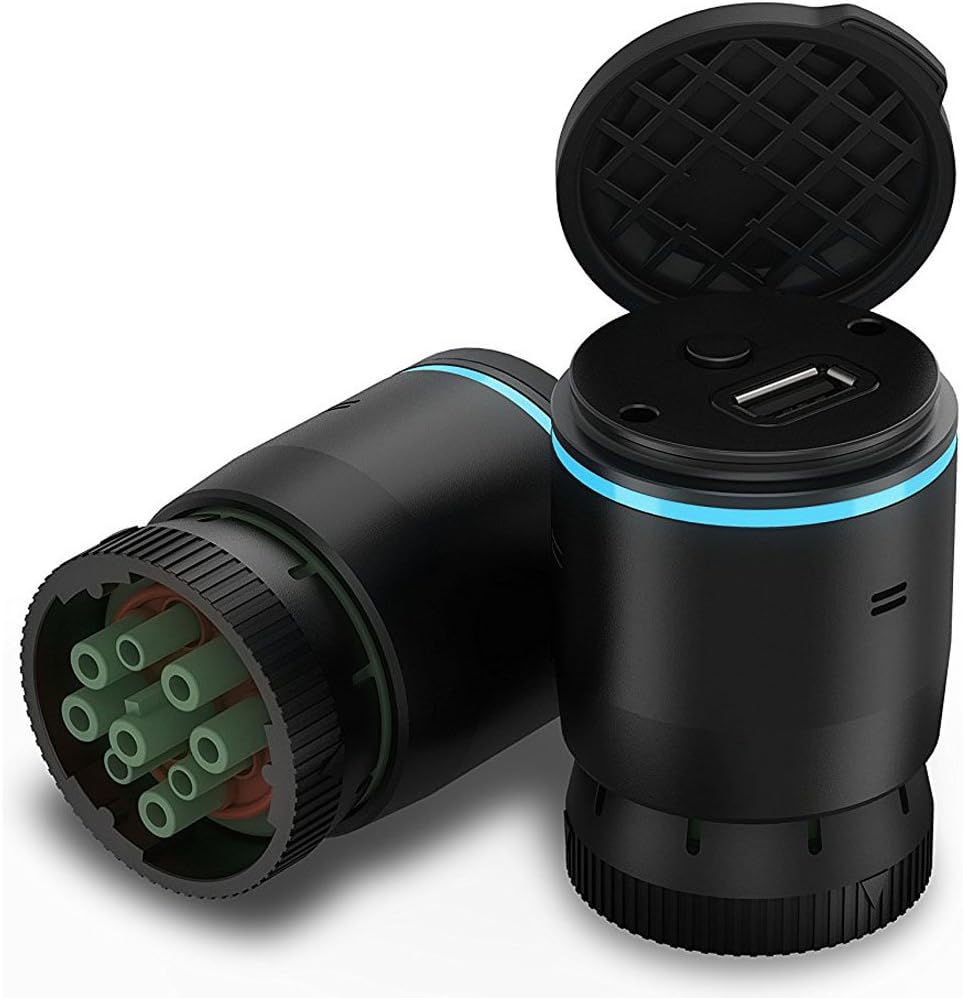
The TEMEDA PT 30 ELD has a 4.5 rating and combines a PT30 unit with a green round nine-pin cable. It is described as HOS and FMCSA compliant, easy to install, and suitable for work with compatible ELD or HOS applications. The device also supports GPS-related workflows, engine diagnostics, and multiple connection standards.
We may earn a commission when you buy through this link, at no additional cost to you.
Large-capacity storage for offline operation is the standout feature. Keeping a substantial record set on the device can improve resilience when cellular service is limited, while Bluetooth Low Energy provides a relatively compact wireless link to a phone or tablet. Because the unit works with compatible ELD and HOS apps, buyers are not restricted to a single software ecosystem.
The included green round nine-pin cable does not make the device compatible with every truck. Although the unit supports J1939, J1708/J1587, and OBD-II connections, vehicles with different port arrangements may require an appropriate cable. The need for a compatible phone or tablet and a supporting application also means the full workflow involves more than the box itself. Confirm certification and fit for the exact vehicle before ordering.
TEMEDA is best for a compatible driver who values offline record capacity, broad app choice, and a device that can read engine diagnostics. It is less suitable for someone who wants a completely self-contained system with no phone, tablet, or software dependency. Within those limits, its 4.5 rating and flexible connectivity make it one of the most versatile options in the roundup.
Large internal storage supports continued operation when a phone cannot maintain a live connection. This is helpful for long routes and areas with inconsistent cellular coverage, provided the relevant app and inspection process are configured correctly.
Support for compatible ELD applications and several diagnostic standards gives drivers more choice than a tightly closed system. The tradeoff is that buyers must confirm the correct cable, app, and vehicle protocol rather than assuming universal support.
We may earn a commission when you buy through this link, at no additional cost to you.
The right electronic logbook depends on whether you are recording regulated driving hours, tracking mileage, maintaining pilot duty records, or organizing reusable paper-based plans. Start with the required record, then verify hardware, connectivity, software, connector, and certification compatibility before considering convenience features.
A broad search term covers several distinct categories. Commercial drivers may need certified hours-of-service records, a daily driver log, a vehicle mileage trail, or fleet location data. Pilots need a professional flight and duty record, while students and professionals may want a reusable planner for goals, calendars, and notes. Choosing the required record first prevents an attractive general-purpose planner from being mistaken for a regulated ELD or a GPS tracker from being mistaken for complete HOS documentation.
Truck ELDs communicate with the vehicle through a diagnostic connection, and supported protocols differ. Common references in the products above include 9-pin J1939, 6-pin J1708, 16-pin J1962, and OBD-II, but connector appearance alone is not enough. The vehicle's make, model, model year, engine, port shape, and protocol must all be checked. Some packages include one cable while supporting others through separately purchased leads.
FMCSA compliance is not a vague feature label. A product marketed as compliant should be checked against current requirements, and the exact device, software, vehicle, and installation should match the intended operation. In addition, U.S. certification may not extend to Canada, as the My20 listing explicitly notes. A paper DOT log can be useful as a backup or supplemental record, but it does not automatically perform the functions of a certified ELD.
Several ELDs use a phone or tablet to display records, pair with hardware, or complete the compliance workflow. Garmin eLog, My20, and the PT40 are described in ways that make app compatibility important, while Little LogBook is specified for Windows 10 or newer and is not Mac compliant. Check the operating system, phone model, Bluetooth method, and app availability before ordering. A device that is excellent in the truck can still be inconvenient if it cannot pair with the equipment the driver uses every day.
Cellular coverage can disappear along long routes, in mountains, or inside dense industrial areas. The TEMEDA PT 30 explicitly highlights large-capacity storage for offline operations, while other systems may depend more heavily on a phone connection. Offline capability is especially important when records must remain available for inspection, corrections, or transfer after a shift. Ask how long the device can operate without a network and how records are synchronized when connectivity returns.
Some loggers use a one-time hardware purchase with free software updates, while others require a subscription for continued ELD functions. Garmin eLog and Little LogBook emphasize the absence of recurring monthly or annual fees, whereas My20 requires a subscription service. The total cost of ownership should reflect app access, support, firmware updates, storage, accessories, and the number of vehicles or drivers who will use the system.
A logbook travels between the office, vehicle, home, and inspection location. A paper driver log must fit safely in a cab without bending or tearing, while an electronic device needs a stable mount or secure placement and a protected connection. The Rocketbook's flexible spiral binding suits frequent writing sessions, and the paper driver's compact dimensions support roadside use. Durability matters because the record is often created in a working environment rather than at a desk.
The usefulness of a logbook depends on whether a record can be presented clearly when needed. Garmin eLog offers USB and Bluetooth access through FMCSA Web Services, and other phone-based systems may provide review or sharing functions. For paper records, the duplicate carbonless copy, recap pages, and tear-out format are important for organization. Check the complete inspection workflow rather than assuming every record appears automatically in a useful format.
Begin by matching the logbook or ELD to the exact record you need, then review its setup requirements before the first shift. For an ELD, identify the diagnostic port, connect the correct cable, install the required app, create or access the appropriate account, and pair the device with the phone or tablet. For a paper log, read the form instructions and determine how the duplicate sheet should be stored. For the Jeppesen pilot book, enter flight and duty information in the required sequence.
Keep the record current according to your profession's rules. Commercial drivers should follow the approved HOS application and record prompts rather than assuming a disconnected device has captured every change. Mileage-log users should allow the GPS system to initialize and confirm that trips appear as expected. Pilots and paper users should write clearly, avoid leaving unnecessary gaps, and preserve duplicate or completed forms according to the applicable retention policy.
Care for the equipment according to its format. Keep electronic devices dry, protect connectors from strain, and follow the manufacturer's guidance for updates, storage, and cleaning. Wipe the Rocketbook pages with a damp cloth only as directed and avoid excessive moisture near the binding. Store paper logs in a clean, dry place, and preserve carbonless copies flat until they are no longer needed. Periodically test app pairing, review stored records, and replace damaged hardware before reliability becomes an issue.
An electronic logbook stores activity records digitally or in a hybrid paper-and-cloud system. Commercial drivers commonly use certified ELDs to record duty status, driving time, and vehicle information, while mileage loggers track trips and pilot systems preserve flight and duty records. A reusable digital planner can also serve as an electronic logbook for goals, tasks, and schedules. The required use determines whether certified hardware is necessary.
No. An ELD is a specialized type of electronic logging device designed to meet specific commercial motor-vehicle hours-of-service requirements. The broader electronic logbook category also includes GPS trip recorders, reusable planners, and professional paper pilot records. A product that can store a schedule or trip trail may not satisfy the regulatory requirements that apply to a commercial driver's certified ELD.
Compatibility depends on the vehicle's diagnostic port and the chosen ELD or HOS application. Products in this roundup mention 9-pin J1939, 6-pin J1708, 16-pin J1962, and OBD-II connections, but not every package includes every cable. Check the truck's exact configuration before ordering and confirm that the device and app are certified for the intended operation.
A paper log may be useful for additional records or as a backup, but it does not perform the automated functions of a certified electronic logging device. Drivers subject to electronic logging requirements should use an approved ELD and follow current federal, state, and company recordkeeping rules. A paper book can still complement an ELD when written notes or duplicate records are useful.
It depends on the product. The TEMEDA PT 30 highlights large-capacity storage for offline operation, while other devices may store records on a phone or rely more heavily on active connectivity. Drivers should review offline behavior, record synchronization, and inspection access before choosing a unit for routes with unreliable coverage.
Not necessarily. A GPS trip logger can document movement, but it may not provide the certified duty-status records required of an ELD. Little LogBook is described as an automatic GPS mileage solution rather than a complete HOS-certified device. Commercial drivers should verify certification, supported ports, and app functions before using any product for compliance.
A pilot should look for a professional flight-record format, durable construction, a manageable size, and a layout suited to recording flight and duty information consistently. The Jeppesen Professional Pilot Logbook emphasizes quality construction and a dark brown professional cover. Pilots should also confirm that the format satisfies their airline, operation, and applicable regulatory requirements.
Erase completed pages with a damp cloth as directed, avoiding excessive moisture near the spiral binding and cover. Keep the associated app and cloud account information current so digitized pages remain organized and accessible. Periodically check that pages scan correctly, the writing surface wipes cleanly, and the book is stored flat when not in use to preserve its shape and binding.
The Garmin eLog stands out for U.S. heavy-duty drivers seeking FMCSA-compliant HOS recording without subscription fees, while the TEMEDA PT 30 offers broad app choice, engine diagnostics, and substantial offline storage. For a pilot-specific professional record, the Jeppesen Professional Pilot Logbook offers the highest listed customer rating. The paper driver log and Rocketbook Fusion serve different needs, providing dependable written duplicates and reusable hybrid planning rather than certified ELD functionality.
Prioritize the record type first, then move through vehicle compatibility, certification, app requirements, offline behavior, inspection access, and ongoing service costs. An attractive interface or inexpensive hardware cannot compensate for an incompatible connector or an inadequate record workflow. Check the exact vehicle and software environment, read the current listing details, and test the setup before relying on it during an active route.
Prices and product availability can change, so review current listings and company support information before purchasing. Also confirm current regulatory requirements and whether your fleet, airline, or organization mandates a particular record format. With those checks completed, the right electronic logbook becomes easier to identify: one that fits the record, the equipment, and the working routine.
